
The Capital and Operational Economics of Establishing a Custom Stone Quarry Crushing Plant
Introduction
The construction aggregates industry forms the backbone of global infrastructure development. From highways and residential foundations to massive commercial complexes, the demand for processed stone—crushed limestone, granite, basalt, and gravel—remains inextricably linked to economic growth. For quarry operators, investors, and contractors, the decision to install a custom stone crushing plant represents a significant capital commitment. Unlike off-the-shelf, standardized equipment, a custom crushing plant is engineered to match specific geological conditions, production targets, product gradation requirements, and site topography. Consequently, the cost structure of such a plant is highly variable and requires a granular, engineering-driven analysis. This article provides a comprehensive, objective examination of the costs associated with designing, procuring, installing, and operating a custom stone quarry crushing plant, detailing the key variables that influence capital expenditure (CAPEX) and operational expenditure (OPEX).
1. Defining a Custom Crushing Plant
A custom crushing plant is not a single machine but an integrated system of interdependent components: feeders, crushers (primary, secondary, tertiary), screens, conveyors, washing equipment, and stockpiling systems. The “custom” aspect implies that the plant flowsheet—the arrangement and selection of equipment—is tailored to the unique characteristics of the deposit and the market specifications. Factors such as rock hardness (Mohs scale), abrasiveness, moisture content, clay contamination, and desired product shape (e.g., cubical aggregate for concrete) dictate the engineering design. Therefore, the first cost driver is the front-end engineering design (FEED) and metallurgical testing, which can range from $50,000 to $250,000 depending on the complexity and the need for pilot-scale testing.
2. Capital Expenditure (CAPEX) Breakdown
The total CAPEX for a custom stone quarry crushing plant typically ranges from $1.5 million for a small-scale, mobile unit (50–100 tph) to over $30 million for a large stationary plant (500–1,000+ tph) . The following subsections detail the primary cost centers.
2.1 Primary Crushing Equipment
The primary crusher is the first stage of size reduction. The choice between a jaw crusher, gyratory crusher, or impact crusher depends on the feed size and rock hardness. For hard rock (e.g., granite, basalt), a jaw or gyratory crusher is standard. A 500-tph jaw crusher can cost between $300,000 and $800,000, while a gyratory crusher of similar capacity may exceed $1.5 million. For softer materials like limestone, a horizontal shaft impactor (HSI) might be selected, costing $250,000–$600,000. Customization—such as specialized jaw plates for abrasive rock or hydraulic adjustment systems—adds 15–30% to the base price.
2.2 Secondary and Tertiary Crushing
Secondary crushing (cone or impact) further reduces material to 2–4 inches. A high-performance cone crusher (e.g., Sandvik CH or Metso HP series) for 300 tph can cost $400,000–$900,000. Tertiary crushing, often using a short-head cone or vertical shaft impactor (VSI) for shaping, adds another $350,000–$1.2 million. Custom liners, automated control systems (e.g., ASRi), and vibration monitoring are cost multipliers.
2.3 Screening and Conveying Systems
Screens are critical for product separation. A custom plant may require multiple decks (2, 3, or 4) and sizes. A heavy-duty 8×20 ft triple-deck screen costs $80,000–$150,000 per unit; a typical plant needs 3–6 screens. Conveyors, including idlers, pulleys, belts, and structural steel, are priced per linear foot: $300–$800 per foot for standard widths (36–48 inches). A 500-foot conveyor system can easily exceed $250,000. Custom chutes, wear liners (ceramic or AR steel), and dust suppression systems add $100,000–$300,000.
2.4 Structural Steel, Foundations, and Civil Works
Custom plants require engineered steel structures to support crushers, screens, and chutes. Structural steel costs $2,500–$4,500 per ton; a medium plant may use 150–400 tons, totaling $375,000–$1.8 million. Foundations, including concrete, rebar, and excavation, cost $200,000–$800,000 depending on soil conditions and seismic requirements. In remote locations, access roads and site preparation can add $500,000 or more.
2.5 Electrical, Control, and Automation
Motor control centers (MCCs), variable frequency drives (VFDs), wiring, and PLC-based automation are essential. A basic control system costs $150,000–$300,000; advanced systems with SCADA, remote monitoring, and predictive maintenance can reach $500,000. Custom plants often integrate weighbridges, belt scales, and camera systems, adding $80,000–$200,000.
2.6 Mobile vs. Stationary Configuration
Mobile track-mounted plants (e.g., Metso Lokotrack) offer flexibility but carry a premium: a 300-tph mobile jaw + cone + screen train can cost $2.5–$4 million. Stationary plants have lower per-ton CAPEX but higher site preparation costs. Custom stationary plants typically achieve economies of scale above 400 tph.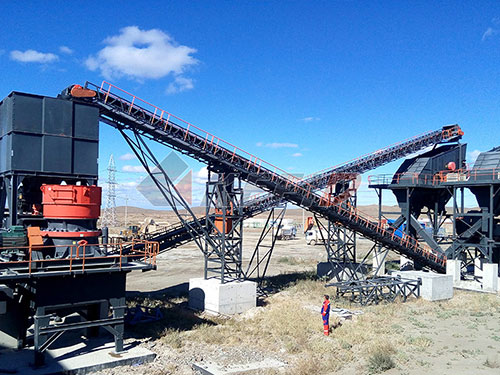
3. Operational Expenditure (OPEX)
OPEX determines long-term viability. Key components include:
4. Factors Influencing Cost Variability
Several site-specific and market factors cause costs to deviate from benchmarks:
5. Cost Estimation Example: 300-tph Granite Plant
To illustrate, consider a custom stationary plant producing 300 tph of 0–3/4 inch aggregate from medium-hard granite.
OPEX per ton: energy $0.22, wear parts $0.45, labor $0.30, maintenance $0.25, mobile equipment $0.20 = $1.42 per ton. At a selling price of $8–$12 per ton, the payback period is 3–5 years under normal market conditions.
6. Strategies for Cost Optimization
To manage costs without compromising quality:
7. Conclusion
The cost of a custom stone quarry crushing plant is a function of geological, engineering, and market variables. CAPEX ranges from $1.5 million for mobile units to over $30 million for large stationary systems, while OPEX typically falls between $0.80 and $2.50 per ton. The “custom” nature of the plant—tailored to specific rock properties and product requirements—means that no two projects share identical cost structures. Investors must prioritize thorough material testing, accurate flowsheet design, and lifecycle cost analysis over initial purchase price. By understanding the interplay between equipment selection, site conditions, and operational efficiency, stakeholders can make informed decisions that balance capital outlay with long-term profitability. Ultimately, a well-designed custom crushing plant is not merely a cost center but a strategic asset that converts raw stone into high-value construction materials for decades.
If you have any questions about our products, please feel free to contact us. We take all inquiries and suggestions very seriously.