
Title: The Economics of Comminution: A Comprehensive Guide to Sourcing Affordable Gold Ore Crushing Equipment from Reputable Dealers
Introduction
In the mineral processing industry, the transition from run-of-mine (ROM) ore to a particle size suitable for downstream extraction (leaching, flotation, or gravity concentration) is fundamentally dependent on crushing. For gold operations—ranging from small-scale artisanal mines to mid-tier producers—the crushing circuit represents not only a critical technical bottleneck but also a significant capital expenditure (CAPEX) and operational expenditure (OPEX) line item. Consequently, the search for “gold ore crushing equipment dealer affordable” is not merely a procurement exercise; it is a strategic decision that impacts throughput, recovery rates, and long-term financial viability.
This article provides a professional, objective, and detailed examination of the market for gold ore crushing equipment, focusing on the role of dealers, the definition of “affordable” in an industrial context, key equipment categories, selection criteria, and the hidden costs that often undermine superficially low prices. The goal is to equip procurement managers, mine owners, and project engineers with the analytical framework necessary to navigate this complex market without compromising operational integrity.
Section 1: Defining “Affordable” in the Context of Crushing Equipment
The term “affordable” is relative and often misinterpreted in heavy machinery markets. For a dealer to offer affordable gold ore crushing equipment, the price point must be evaluated against the total cost of ownership (TCO), not merely the invoice value. TCO encompasses:
A truly affordable dealer does not simply offer the lowest sticker price. Instead, they offer a balanced package where the initial cost is competitive, but the operational costs are predictable and manageable. In the gold sector, where ore hardness (Bond Work Index) can vary dramatically, a cheap machine that fails to handle the feed size or produces excessive fines (slimes) that hinder cyanide leaching is a false economy.
Section 2: The Role of the Dealer – Beyond a Middleman
A professional dealer in gold ore crushing equipment serves multiple functions that justify their margin:
Section 3: Key Equipment Categories in Gold Ore Crushing
To understand what an affordable dealer should offer, one must understand the equipment types. The crushing circuit for gold ore typically follows a multi-stage approach:
Primary Crushing (Jaw Crushers): The first stage reduces ROM ore (often 600-1000 mm) to a manageable size (100-200 mm). Affordable options include single-toggle jaw crushers from established Asian manufacturers (e.g., Chinese brands like Shanbao, or Indian brands like Terex Finlay) or reconditioned European/Japanese units (Metso, Sandvik, Komatsu). The dealer should provide options with hydraulic adjustment and automatic lubrication to reduce manual intervention.
Secondary Crushing (Cone Crushers): For harder ores, cone crushers are the industry standard. They reduce material to 20-50 mm. Affordable cone crushers may be “symons-type” (older technology but robust and cheap to maintain) or modern hydraulic models with higher efficiency. A dealer offering a used, fully rebuilt Symons 4.25 ft or 5.5 ft cone crusher with new liners and bearings is often the most cost-effective route for a mid-scale operation.
Tertiary/Quaternary Crushing (Impact Crushers or High-Pressure Grinding Rolls – HPGR): For gold ore requiring fine crushing before ball milling, vertical shaft impactors (VSI) or horizontal shaft impactors (HSI) are used. However, these are more sensitive to abrasive ores. An affordable dealer might recommend a tertiary cone crusher in closed circuit with a screen instead of an impactor, as the latter has higher wear costs.
Mobile vs. Stationary: For small-scale or short-life mines, mobile crushing plants (track-mounted jaw or cone) offer affordability through reduced civil works and relocation costs. Dealers often have used mobile units that are significantly cheaper than new stationary installations.
Section 4: How to Identify an Affordable Dealer – Objective Criteria
Not all dealers advertising “affordable” prices are equal. The following objective criteria should be applied during the vetting process:
Section 5: The Used vs. New Debate – A Cost-Benefit Analysis
For many gold projects, the most affordable route is purchasing used equipment through a dealer. However, this requires rigorous inspection:
A professional dealer mitigates these cons by offering “reconditioned” units. This means the crusher is fully stripped, inspected, crack-tested (dye penetrant or magnetic particle inspection on the main frame), and rebuilt with new bearings, seals, and wear liners. The dealer should provide a “reconditioning report” with photographs and measurements. This is the only acceptable way to buy used. A “used, as-is” machine is rarely affordable in the long run.
Section 6: Regional Market Dynamics – Where to Find Affordable Dealers
The global market for gold ore crushing equipment is segmented. The most affordable options, without sacrificing quality, often come from:
Section 7: Hidden Costs That Destroy Affordability
An objective article must warn against the following pitfalls: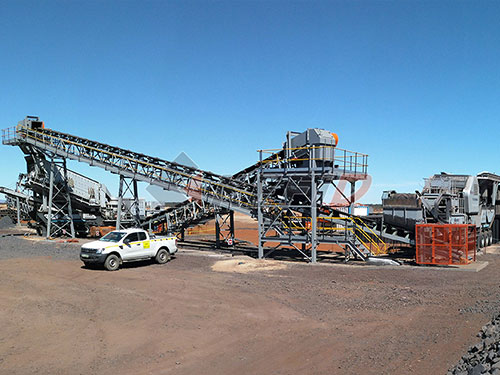
Section 8: Case Study – The Affordable Choice in Practice
Consider a hypothetical gold mine in West Africa processing 100 tons per hour of quartz-vein ore with a Bond Work Index of 18 kWh/t. A dealer offers two options:
At first glance, Option A is more affordable. However, the Metso C106 has a higher inertia flywheel, better crushing chamber geometry, and a more efficient toggle plate angle. It will produce a more consistent product size, reducing the load on the secondary crusher. Over a 5-year life, the Metso will consume 10% less energy (saving ~$20,000/year in diesel or electricity) and require fewer liner changes (saving ~$8,000/year in manganese). The total cost of ownership for Option B is actually lower by year three. A professional, affordable dealer would have presented this TCO analysis upfront.
Section 9: Negotiation and Contractual Safeguards
To secure an affordable deal, the buyer must negotiate beyond the price:
Conclusion
The search for “gold ore crushing equipment dealer affordable” is a journey that requires technical literacy, financial discipline, and a clear understanding of the total cost of ownership. Affordability is not the lowest bid; it is the optimal balance between initial capital outlay, operational efficiency, maintenance costs, and the reliability of the dealer’s after-sales network.
A professional dealer distinguishes themselves by offering transparent pricing, reconditioned or well-sourced used equipment, engineering support, and a robust spare parts supply chain. For the gold miner, the crushing circuit is the gateway to recovery. Investing time in selecting the right dealer—not just the right machine—is the most cost-effective decision one can make. By applying the objective criteria outlined in this article, procurement teams can secure equipment that is genuinely affordable in the long run, ensuring that the gold ore is crushed efficiently, safely, and economically for the entire life of the mine.
If you have any questions about our products, please feel free to contact us. We take all inquiries and suggestions very seriously.