
Title: Premium Gold Mining Equipment at the Best Price: A Comprehensive Guide to Quality, Value, and Operational Efficiency
Introduction
The global gold mining industry, spanning from artisanal small-scale operations to large multinational corporations, is fundamentally dependent on the efficiency, durability, and reliability of its equipment. In an environment where profit margins are increasingly squeezed by rising operational costs, environmental regulations, and fluctuating gold prices, the acquisition of “premium gold mining equipment at the best price” has become a strategic imperative rather than a mere purchasing decision. This article provides a detailed, objective analysis of what constitutes premium equipment in the gold mining sector, how to evaluate the “best price” beyond the initial capital outlay, and the critical factors that ensure long-term value, safety, and productivity.
Section 1: Defining “Premium” in Gold Mining Equipment
The term “premium” is often misused in marketing to imply high cost or exclusivity. In the context of gold mining equipment, premium refers to a combination of superior engineering, material quality, performance metrics, and after-sales support. Premium equipment is characterized by:
Metallurgical Excellence: The use of high-grade steel, abrasion-resistant alloys, and corrosion-resistant components. For example, a premium jaw crusher or ball mill will feature manganese steel liners designed to withstand extreme impact and wear, extending operational life by thousands of hours compared to standard models.
Precision Engineering: Components are manufactured to tight tolerances, ensuring optimal alignment, reduced vibration, and lower energy consumption. In gravity separation equipment like centrifugal concentrators or shaking tables, precision directly impacts recovery rates—the percentage of gold captured from the ore.
Advanced Technology Integration: Modern premium equipment often incorporates automation, real-time monitoring, and data analytics. For instance, a premium leaching tank or thickener may include sensors for pH, temperature, and density, allowing for automated reagent dosing and improved gold dissolution efficiency.
Safety and Compliance: Premium equipment meets or exceeds international safety standards (e.g., ISO, CE, MSHA). This includes fail-safe mechanisms, emergency shut-offs, and ergonomic designs that reduce operator fatigue and injury risk.
Modularity and Scalability: Premium designs often allow for easy upgrades, component replacement, and expansion. This is crucial for mining operations that plan to scale production without replacing entire systems.
Section 2: The True Meaning of “Best Price”
The “best price” is a deceptive concept if evaluated solely on the purchase invoice. In mining, the total cost of ownership (TCO) is the only valid metric. TCO includes:
A premium machine with a higher initial price may have a lower TCO if it offers 20% lower energy consumption, 50% longer component life, and 30% less downtime. Conversely, a cheap machine may fail prematurely, leading to catastrophic losses.
Example: Consider two centrifugal concentrators. Machine A costs $50,000 but has a recovery rate of 92% and a lifespan of 5 years. Machine B costs $35,000 but has a recovery rate of 85% and a lifespan of 3 years. Over a 5-year period, Machine A will recover more gold (assuming consistent feed grade) and require fewer replacements, making it the “best price” despite the higher initial cost.
Section 3: Key Categories of Premium Gold Mining Equipment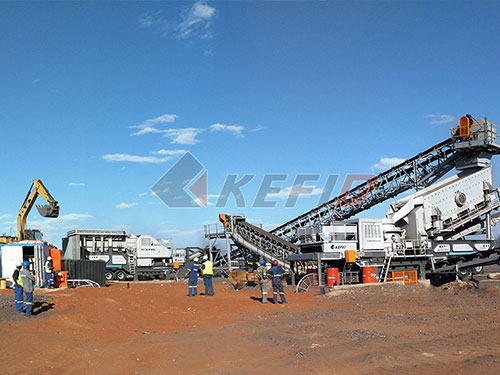
To achieve the best price-to-performance ratio, miners must evaluate equipment across the entire process flow: crushing, grinding, classification, gravity concentration, flotation, leaching, and refining.
3.1 Crushing and Grinding
3.2 Gravity Separation
3.3 Leaching and Adsorption
3.4 Dewatering and Tailings Management
Section 4: Strategies for Securing the Best Price
Achieving the best price requires a systematic approach:
Conduct a Feasibility Study: Understand your ore characteristics (hardness, grade, particle size distribution) and throughput requirements. This prevents over- or under-specifying equipment.
Request Detailed Quotations: Ask for TCO projections, including energy consumption, spare parts costs, and recommended maintenance schedules. Compare not just the machine price but the cost per ton of ore processed.
Leverage Global Sourcing: While local suppliers may offer convenience, direct sourcing from manufacturers in China, India, or Europe can yield significant savings. However, ensure that the supplier has a proven track record and offers after-sales support.
Consider Refurbished or Certified Pre-Owned Equipment: Premium brands like Caterpillar, Komatsu, and FLSmidth often have certified pre-owned programs. These machines are rebuilt to factory specifications and come with warranties, offering a lower CAPEX without sacrificing reliability.
Negotiate Service Agreements: Many premium equipment suppliers offer bundled packages that include installation, training, and a year of maintenance. This can reduce hidden costs and ensure optimal performance from day one.
Utilize Financing and Leasing Options: Some manufacturers or third-party financiers offer equipment leasing, which converts a large CAPEX into manageable OPEX. This can be particularly advantageous for junior mining companies.
Section 5: Case Study – Small-Scale Hard Rock Gold Mine
Consider a hypothetical small-scale mine processing 50 tons per day of ore with an average grade of 5 g/t. The operator initially purchased a low-cost jaw crusher and ball mill for $80,000. Within six months, the crusher jaw plates wore out, the ball mill trunnion bearings failed, and the recovery rate was only 70% due to poor grinding.
After replacing with premium equipment (a Metso C80 jaw crusher and a 4×6 ball mill with VFD) for $150,000, the operator achieved:
The additional gold recovered (18% of 5 g/t = 0.9 g/t, or 45 grams per day) at $60/gram yields $2,700/day in extra revenue. The premium equipment paid for itself in under 3 months. This demonstrates that the “best price” is the one that maximizes net present value (NPV).
Section 6: Risks of Choosing the Cheapest Option
Selecting equipment based solely on low price carries significant risks:
Section 7: The Role of Technology and Innovation
Premium equipment increasingly incorporates Industry 4.0 technologies. For example:
These technologies add to the initial cost but significantly reduce OPEX and improve recovery. The best price for a technologically advanced machine is often justified by the data-driven efficiency gains.
Section 8: Conclusion
In the gold mining industry, the pursuit of “premium gold mining equipment at the best price” is not a contradiction but a strategic objective. Premium equipment, defined by superior materials, engineering, and technology, offers lower total cost of ownership, higher recovery rates, and greater operational reliability. The best price is not the lowest sticker price but the one that delivers the highest net present value over the equipment’s life.
Miners must conduct thorough due diligence, evaluate TCO, and consider factors like energy efficiency, spare parts availability, and after-sales support. By investing in premium equipment, operators can protect their margins, enhance safety, and ensure long-term profitability—even in a volatile commodity market. Ultimately, the cheapest equipment is often the most expensive mistake, while premium equipment, acquired at a fair price, is the foundation of a successful gold mining operation.
If you have any questions about our products, please feel free to contact us. We take all inquiries and suggestions very seriously.