White Label Gyratory Crusher Factory: Engineering Excellence, OEM/ODM Capabilities, and Global Supply Chain Dynamics

Introduction

In the heavy industrial machinery sector, few pieces of equipment are as critical to the primary reduction of run-of-mine ore as the gyratory crusher. Unlike jaw crushers, which operate on a reciprocating principle, gyratory crushers utilize a continuous crushing action between a fixed concave surface and a gyrating mantle. This design allows for higher throughput, a more uniform product size, and the ability to handle extremely hard and abrasive materials. For decades, original equipment manufacturers (OEMs) dominated this niche market. However, the rise of the white label gyratory crusher factory has fundamentally altered the procurement landscape, offering mining companies, engineering contractors, and equipment distributors a viable alternative to traditional brand-name purchases.

A white label gyratory crusher factory is a manufacturing facility that produces complete crusher units, sub-assemblies, or fully integrated crushing systems that are then rebranded and sold by another company. The “white label” aspect implies that the factory does not market the equipment under its own brand name; instead, it provides a blank canvas for the buyer—be it a global mining house or a regional dealer—to apply their own branding, warranty, and aftermarket service network. This article provides a professional, objective, and comprehensive analysis of the white label gyratory crusher factory model, examining its operational structure, engineering standards, quality control protocols, commercial advantages, and the inherent risks that buyers must mitigate.

1. The Technical Architecture of a Gyratory Crusher

To understand the value proposition of a white label factory, one must first appreciate the mechanical complexity of the product. A modern primary gyratory crusher (typically ranging from 42-65 inches up to 63-114 inches in feed opening) consists of several critical subsystems:

  • Main Shaft and Mantle Assembly: The main shaft is a forged or cast high-alloy steel component that supports the mantle. The eccentric motion is generated by a hydraulic or mechanical drive.
  • Top Shell and Spider Assembly: This section supports the main shaft at the top and provides the feed opening. It must withstand immense impact loads from dumped ore.
  • Bottom Shell and Eccentric Assembly: The bottom shell houses the eccentric bushing, pinion shaft, and gear set. This is where the rotational motion is converted into the gyrating motion.
  • Hydraulic Adjustment and Overload Relief System: Modern crushers use hydraulic cylinders to adjust the closed side setting (CSS) and to provide tramp iron protection. This system must be highly responsive and reliable.
  • Lubrication and Cooling System: A dedicated oil circulation system with coolers and filters is essential for bearing longevity and thermal stability.

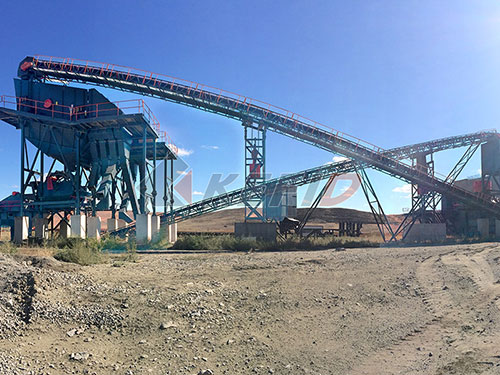
A white label factory must possess the metallurgical knowledge, machining capabilities (large vertical turning lathes, horizontal boring mills), and assembly expertise to produce these components to OEM-equivalent tolerances. The term “white label” does not imply inferior engineering; rather, it indicates a separation between the manufacturer and the brand owner.White Label Gyratory Crusher Factory
2. The Operational Model of a White Label Factory

The business model of a white label gyratory crusher factory is distinct from that of a traditional OEM. It operates on a B2B (business-to-business) basis, with three primary operational modes:

  • Full Unit OEM/ODM Production: The factory designs, casts, machines, and assembles a complete crusher. The client company provides its own brand name, paint color, and specific control system requirements. The factory may also offer design modifications (ODM – Original Design Manufacturer) to meet specific client needs, such as increased eccentric throw or a different spider design.
  • Component and Spare Parts Manufacturing: Many white label factories also serve as high-volume producers of wear parts (mantles, concaves) and spare parts (eccentric bushings, pinion shafts, hydraulic cylinders). These parts are sold under the client’s brand, often at a significant discount compared to the original OEM’s parts.
  • Sub-Assembly and Final Integration: In some cases, the factory purchases major components (e.g., motors, gearboxes) from third-party suppliers, performs the machining of critical castings, and handles final assembly and load testing. The client then handles logistics and site installation.

This model allows the factory to maximize its production capacity and specialize in manufacturing efficiency, while the client focuses on sales, distribution, and local service. The factory typically does not engage in direct end-user sales, thereby avoiding channel conflict with its clients.

3. Engineering Standards and Metallurgical Compliance

One of the most common misconceptions about white label equipment is that it lacks the engineering rigor of established brands. In reality, reputable white label factories adhere to international standards, often because they are the same factories that historically supplied castings to major OEMs. Key engineering considerations include:

  • Material Grades: The mantle and concaves are typically made from 12-14% manganese steel (Hadfield steel) with specific alloying additions (chromium, molybdenum) to enhance work hardening. The main shaft is usually forged from 4140 or 4340 alloy steel, heat-treated to achieve a yield strength of over 600 MPa. A credible white label factory will provide material test certificates (MTCs) traceable to the heat number.
  • Machining Tolerances: The critical interface between the eccentric bushing and the main shaft requires tolerances in the range of 0.05 mm to 0.10 mm. Poor machining here leads to premature bushing failure and excessive vibration. White label factories that invest in CNC-controlled large boring mills can achieve these tolerances consistently.
  • Finite Element Analysis (FEA): Advanced factories use FEA software to validate the structural integrity of the top shell and bottom shell under maximum crushing forces. They can simulate various ore conditions to ensure the casting wall thickness is optimized for strength without excessive weight.
  • Certifications: A professional white label factory should hold ISO 9001:2015 certification for quality management, ISO 14001 for environmental management, and often ISO 45001 for occupational health and safety. Additionally, they may comply with CE marking or ASME standards if required for the target market.

4. Quality Control and Factory Acceptance Testing (FAT)White Label Gyratory Crusher Factory

The reliability of a gyratory crusher is non-negotiable. A failure at the primary crushing stage halts the entire mineral processing plant. Therefore, a white label factory must implement a rigorous quality control (QC) regime, which is often more stringent than that of a smaller OEM because the factory must prove its competence to multiple clients.

The QC process typically involves:

  • Incoming Material Inspection: Spectrographic analysis of all castings and forgings to verify chemical composition.
  • Non-Destructive Testing (NDT): Ultrasonic testing (UT) of the main shaft and top shell for internal defects; magnetic particle inspection (MPI) of the eccentric assembly; and dye penetrant testing on weld seams.
  • Dimensional Inspection: Using laser trackers and CMM (Coordinate Measuring Machines) to verify critical dimensions against the engineering drawings.
  • Assembly and Run Test: The crusher is fully assembled in the factory, and a no-load test is conducted. This includes checking the hydraulic system pressure, oil flow rate, bearing temperatures, and vibration levels. A full-load test with a dummy load is sometimes performed for larger units.
  • Documentation: The factory provides a comprehensive FAT report, including torque values for all fasteners, hydraulic pressure test results, and a signed certificate of conformance.

For the white label client, it is essential to have a third-party inspection agency (e.g., SGS, Bureau Veritas) present during the FAT. This provides an objective verification that the equipment meets the agreed-upon specification.

5. Commercial Advantages of the White Label Model

From a procurement perspective, the white label gyratory crusher factory offers several distinct commercial benefits:

  • Cost Reduction: By eliminating the brand premium and the extensive R&D and marketing overheads of major OEMs, white label factories can offer the same physical equipment at a cost that is typically 15-30% lower. This is particularly attractive for greenfield projects with tight capital expenditure (CAPEX) budgets.
  • Supply Chain Security: Relying on a single OEM for a primary crusher creates a monopoly on spare parts. White label factories provide an alternative source, enabling clients to negotiate better pricing on wear parts and reduce lead times for critical components like concaves and mantles.
  • Customization and Flexibility: A white label factory is often more willing to accommodate specific client requests, such as modifying the feed chute design, changing the base frame to suit a specific civil foundation, or integrating a different PLC (Programmable Logic Controller) brand for the automation system.
  • Branding and Aftermarket Control: The client company can build its own brand equity in the mining equipment space. They control the warranty terms, service level agreements, and spare parts pricing, allowing them to create a recurring revenue stream from aftermarket sales.

6. Risks and Mitigation Strategies

Despite the advantages, engaging a white label gyratory crusher factory carries inherent risks that require professional management:

  • Intellectual Property (IP) Infringement: Some white label factories may produce clones of patented designs. It is the client’s responsibility to ensure that the factory’s design does not infringe on existing patents held by major OEMs. Mitigation: Request a legal IP clearance report and include an indemnity clause in the contract.
  • Inconsistent Quality Across Batches: A factory may produce excellent prototypes but fail to maintain quality during mass production. Mitigation: Implement a vendor audit program, require first-article inspection (FAI) for every new production run, and maintain a buffer stock of critical spares.
  • Lack of Field Support: The factory typically does not provide on-site installation or commissioning services. The client must have its own engineering team or hire a third-party contractor. Mitigation: Negotiate a technical assistance agreement where the factory provides remote troubleshooting and sends a specialist for a fixed fee.
  • Long Lead Times for Custom Castings: Large gyratory crusher components require specialized foundries. If the factory does not own the foundry, lead times can extend to 6-9 months. Mitigation: Place orders for wear parts well in advance and secure a guaranteed delivery schedule in the contract.

7. The Role of the Factory in the Global Market

The global market for gyratory crushers is dominated by a few major players, but the manufacturing base is increasingly shifting to regions with lower labor and energy costs, particularly China and India. White label factories in these regions have invested heavily in modern CNC equipment and have acquired the technical expertise to produce high-quality crushers. They are now exporting to Africa, South America, Southeast Asia, and even back to Europe and North America.

For a mining company in Chile or Australia, buying a white label crusher from a Chinese factory and branding it under a local engineering firm’s name is a practical way to reduce costs while maintaining local accountability. The factory benefits from high volume and continuous production, while the local brand benefits from a competitive product to offer its clients.

8. Conclusion

The white label gyratory crusher factory is not a passing trend but a mature segment of the heavy equipment manufacturing industry. It represents a rational division of labor: the factory focuses on manufacturing excellence, metallurgy, and precision machining, while the brand owner focuses on market access, customer relationships, and aftermarket service. For buyers, the key to success lies in rigorous due diligence. One must verify the factory’s engineering credentials, inspect its quality control processes, audit its supply chain for raw materials, and negotiate clear contractual terms regarding IP, warranty, and performance guarantees.

When executed correctly, a partnership with a white label gyratory crusher factory can deliver a high-performance, cost-effective primary crushing solution without compromising on safety or reliability. It empowers smaller engineering firms to compete with industry giants and provides mining operators with a powerful alternative to the traditional OEM monopoly. As global demand for minerals continues to rise, the role of these factories will only become more prominent, driving innovation in manufacturing processes and reshaping the competitive dynamics of the mineral processing industry. The objective assessment is clear: white label manufacturing is a legitimate, technically sound, and commercially astute strategy for the modern mining sector.

Leave Message

*

If you have any questions about our products, please feel free to contact us. We take all inquiries and suggestions very seriously.