
Title: Stone Quarry Crushing Plant Vendors: A Comprehensive Analysis of Factory-Direct Pricing, Procurement Strategies, and Operational Value
Introduction
The global construction, infrastructure, and mining sectors are fundamentally reliant on the availability of high-quality aggregates—crushed stone, gravel, and sand. At the heart of this supply chain lies the stone quarry crushing plant, a complex assembly of feeders, crushers (jaw, cone, impact), screens, conveyors, and dust suppression systems. For project owners, contractors, and quarry operators, the decision of where to source this equipment is as critical as the geological assessment of the deposit itself. The phrase “Stone Quarry Crushing Plant Vendors Factory Price” encapsulates a specific market demand: the pursuit of high-capacity, durable machinery directly from manufacturing sources, bypassing intermediaries to achieve capital expenditure (CAPEX) efficiency. This article provides a professional, objective, and detailed examination of the vendor landscape, the true meaning of “factory price,” the factors influencing cost, and the strategic considerations for buyers in this capital-intensive industry.
1. The Ecosystem of Stone Quarry Crushing Plant Vendors
The market for crushing plants is not monolithic. It is stratified into distinct tiers, each offering different value propositions. Understanding this hierarchy is essential for any procurement manager.
1.1 Global Tier-1 OEMs (Original Equipment Manufacturers)
These are multinational corporations with decades of engineering heritage, such as Metso Outotec, Sandvik, Terex, and ThyssenKrupp. Their plants are characterized by:
1.2 Regional and National Tier-2 Manufacturers
This segment includes large domestic players in China, India, Turkey, and Brazil. Examples include companies like SBM, Liming Heavy Industry, and various Turkish manufacturers. They offer:
1.3 Tier-3 Local Fabricators and Assembly Shops
These vendors often purchase key components (crushers, motors) from Tier-2 or Tier-1 suppliers and fabricate the structural steel, chutes, and frames locally. They offer the lowest “factory price” but require the buyer to assume higher technical risk regarding design integrity, safety compliance, and after-sales support.
2. Deconstructing the “Factory Price” Concept
The term “factory price” (often synonymous with EXW – Ex Works) is frequently misunderstood. It is not simply the lowest number on a quotation. In international trade, it has a precise legal and commercial definition.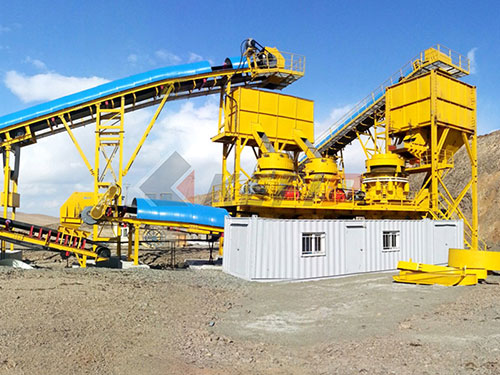
2.1 The EXW Incoterm Reality
When a vendor quotes a “factory price,” they are stating the cost of the goods at their manufacturing facility. This price excludes:
Therefore, a naive buyer comparing a “factory price” from a Chinese vendor with a “delivered and installed” price from a European vendor is making an erroneous comparison. The true landed cost must include logistics, which for a 300-ton crushing plant can be substantial—often 10-15% of the equipment value for cross-continental shipping.
2.2 What the Factory Price Actually Covers
A legitimate factory price from a reputable vendor includes:
It does not include the vendor’s profit margin on after-sales parts, which is where many manufacturers recoup additional revenue. A buyer must scrutinize whether the quoted “factory price” includes a complete plant (feed hopper, primary jaw, secondary cone, screens, conveyors) or just the core crushing unit. Many vendors quote a “skeleton plant” to appear competitive, leaving the buyer to source peripheral equipment at higher costs elsewhere.
3. Critical Cost Drivers in Factory Pricing
To negotiate effectively, a buyer must understand the variables that cause price fluctuations between vendors and over time.
3.1 Rock Type and Abrasiveness
The hardness and abrasiveness of the stone (e.g., basalt vs. sandstone) dictate the crusher type and wear part material. A plant designed for high-silica granite requires:
3.2 Capacity and Reduction Ratio
A 200 tons-per-hour (TPH) plant is not simply twice the cost of a 100 TPH plant. The scaling is non-linear. Larger jaw crushers and cone crushers require heavier castings, larger shafts, and more complex lubrication systems. Additionally, the number of crushing stages (two-stage vs. three-stage) impacts the total component count. A three-stage plant (jaw + cone + VSI) for producing high-quality manufactured sand will command a premium factory price due to the inclusion of a vertical shaft impactor.
3.3 Mobility vs. Stationary
3.4 Automation and Safety Compliance
In 2024, factory prices are increasingly influenced by regulatory compliance. Vendors exporting to the EU must include CE certification, emergency stop systems, and noise reduction enclosures. Vendors exporting to North America must comply with MSHA (Mine Safety and Health Administration) standards. These compliance costs are embedded in the factory price. A plant without these certifications may be cheaper but will fail site audits, leading to fines and shutdowns.
4. The Procurement Process: From Inquiry to Factory Acceptance
Engaging with vendors on a factory-direct basis requires a structured approach to mitigate risks.
4.1 Technical Specification Sheet (TFS)
Before requesting a price, the buyer must provide a detailed TFS including:
4.2 Vendor Audit and Sample Testing
A professional buyer should not rely solely on brochures. A factory audit is essential to verify:
Furthermore, reputable vendors will offer to test the actual quarry rock sample in their pilot plant. This is a non-negotiable step. The results of this test determine the correct crusher cavity configuration and power draw, which directly affects the final factory price. A vendor who refuses sample testing is often hiding a suboptimal design.
4.3 Commercial Negotiation and Payment Terms
Factory prices are often negotiable, but the discount margin depends on:
4.4 Factory Acceptance Test (FAT)
The buyer should insist on a FAT before shipment. This involves running the assembled plant (or major components) under no-load conditions to check for vibration, bearing temperatures, and electrical continuity. The factory price should explicitly include one round of FAT; additional visits should be at the buyer’s cost.
5. Hidden Costs Beyond the Factory Price
The most professional buyers calculate the Total Cost of Ownership (TCO) over a 5-10 year horizon. The factory price is only the entry ticket.
5.1 Freight and Logistics
For a 500 TPH stationary plant, the shipping volume is roughly 15-20 forty-foot containers plus break-bulk items (e.g., the main crusher frame). Port handling, inland transportation to a remote quarry site, and potential road permits for oversized loads can add 20-30% to the factory price.
5.2 Installation and Civil Works
Factory price excludes concrete foundations, rebar, anchor bolts, and crane rental for assembly. For a stationary plant, civil works often cost 30-50% of the equipment price. A vendor offering a “modular” plant design can reduce these costs significantly because the modules are pre-wired and pre-piped.
5.3 Wear Parts and Consumables
The factory price includes the initial set of wear liners. However, the replacement cost of manganese jaws, cone mantles, and screen media over five years will exceed the original purchase price of the crusher. Buyers must negotiate a “wear parts contract” with the vendor at the time of the initial purchase to lock in prices and ensure metallurgical consistency.
5.4 Downtime Cost
A cheaper plant that breaks down for 10 days per year due to inferior bearings or electrical components will lose more money in lost production than the initial savings. For a plant producing 500 TPH at a gross margin of $2 per ton, one day of downtime costs $8,000 in lost profit. Over a year, that is $80,000—potentially wiping out the price difference between a Tier-1 and Tier-2 vendor.
6. Strategic Recommendations for Buyers
Given the complexity, the following objective strategies are recommended for procurement professionals:
6.1 Use a Weighted Evaluation Matrix
Do not award the contract to the lowest factory price. Instead, score vendors on:
6.2 Insist on Performance Guarantees
A professional vendor will guarantee a specific throughput (TPH) and product gradation. The contract should include liquidated damages if the plant fails to meet these guarantees during the commissioning test. The factory price should be tied to these performance metrics.
6.3 Consider a Phased Delivery
Instead of buying a complete plant at once, consider purchasing the primary crusher and feeder first, then adding the secondary and tertiary stages later. This reduces initial CAPEX and allows the vendor to adjust the factory price based on actual site conditions discovered during initial operations.
6.4 Leverage Digital Twin Technology
Some advanced vendors offer a “digital twin” of the plant—a virtual simulation that predicts wear life and energy consumption. While this adds a small premium to the factory price, it provides invaluable data for optimizing operational costs.
Conclusion
The search for “Stone Quarry Crushing Plant Vendors Factory Price” is a search for value, not just a low number. The factory price is the starting point of a complex financial and engineering equation that includes logistics, installation, wear parts, downtime, and regulatory compliance. A professional buyer recognizes that the cheapest factory price often conceals the highest total cost of ownership. Conversely, a premium factory price from a reputable vendor can be the most economical choice over a decade of operation.
The optimal strategy is to engage with a balanced portfolio of vendors—using Tier-1 for critical, high-availability primary crushing stages and Tier-2 for secondary and tertiary stages where redundancy is easier to manage. By demanding transparent cost breakdowns, insisting on rock sample testing, and negotiating performance-based contracts, buyers can transform the “factory price” from a mere quotation into a strategic asset. In the capital-intensive world of aggregate production, the difference between a good vendor and a cheap vendor is measured not in dollars saved on the invoice, but in tons produced per day, year after year. Therefore, the factory price should be viewed as an investment in operational sovereignty, not an expense to be minimized.
If you have any questions about our products, please feel free to contact us. We take all inquiries and suggestions very seriously.