
In the realm of large-scale infrastructure development, commercial mining, and aggregate production, the 250-300 tons per hour (TPH) stone crushing plant represents a critical threshold of operational capacity. This throughput range is ideally suited for medium-to-large construction projects, road building, concrete batching plants, and regional aggregate supply hubs. However, the procurement of such a capital-intensive asset requires a meticulous evaluation of suppliers, a deep understanding of plant configuration, and a strategic approach to securing a competitive price. This article provides an objective, professional analysis of the market for 250-300 TPH stone crushing plant suppliers, focusing on the factors that influence pricing, the key criteria for supplier selection, and the strategies to achieve the best value for investment.
Before engaging with suppliers, it is essential to understand what constitutes a standard 250-300 TPH plant. A plant of this capacity is not a single machine but an integrated system of several heavy-duty units. The typical configuration includes:
The specific configuration—whether it includes a VSI for shaping, a tertiary cone for fine crushing, or a mobile vs. stationary setup—directly impacts the supplier’s quoted price. A standard stationary plant will be significantly less expensive than a fully mobile or semi-mobile track-mounted system of the same capacity.
The market for 250-300 TPH stone crushing plants is dominated by a mix of global giants, regional leaders, and specialized manufacturers. Understanding this landscape is crucial for price benchmarking.
Global Tier 1 Suppliers (Premium Segment): Companies like Metso Outotec (Nordberg), Sandvik (SRP), and Terex (Finlay, Powerscreen) are the industry benchmarks. Their plants are renowned for high reliability, advanced automation, superior after-sales support, and long service life. However, this comes at a premium price. A 250-300 TPH plant from these suppliers can cost 30-50% more than equivalent capacity plants from Chinese or Indian manufacturers. The total cost of ownership (TCO) may be lower over 10+ years due to lower downtime and higher resale value, but the initial capital expenditure (CAPEX) is high.
Chinese Manufacturers (Value Segment): China is the world’s largest producer of crushing equipment. Major players include Shibang Industry & Technology Group (SBM), Zhengzhou Yifan Machinery (YIFAN), Henan Liming Heavy Industry (Liming), Zhengzhou Dingsheng Engineering Technology (DSMAC), and Shanghai SANME Mining Machinery (SANME). These suppliers offer highly competitive pricing, often 40-60% lower than Tier 1 brands. The quality has improved significantly over the past decade, with many adopting European design standards and using high-chrome wear parts. The key risk lies in after-sales service, spare parts availability, and consistency of quality control. However, many Chinese suppliers now have local dealers or service centers in key markets (Africa, Middle East, Southeast Asia, South America).
Indian Manufacturers (Emerging Segment): Companies like Puzzolana, Larsen & Toubro (L&T), Propel Industries, and Marsman offer robust plants tailored for local conditions. Indian suppliers are strong in the secondary and tertiary cone crusher technology. Their pricing is generally between Chinese and European levels, offering a good balance of quality and cost. They are particularly competitive in the South Asian and African markets.
Other Regional Players: Turkish manufacturers (e.g., Fabo, Meka, Constmach) are also significant, especially in Europe, the Middle East, and CIS countries. They offer high-quality plants with competitive pricing, often with a focus on mobile and compact designs.
A “competitive price” is not simply the lowest initial quote. It is the price that offers the best value when considering the total cost of ownership, operational efficiency, and risk mitigation. The following factors critically influence the final price from any supplier:
Material Specifications: The hardness, abrasiveness, and moisture content of the feed material are the single biggest cost drivers. A plant designed for soft limestone (low wear) will be significantly cheaper than one designed for hard, abrasive granite or basalt (requiring manganese steel liners, heavy-duty bearings, and more powerful motors). Suppliers will adjust their quotes based on the required wear part life.
Plant Configuration and Automation Level: A simple 2-stage plant (jaw + cone) is cheaper than a 3-stage plant (jaw + cone + VSI). A plant with a PLC-based automated system, remote monitoring, and automatic lubrication will cost more upfront but can reduce labor costs and downtime. A stationary plant is cheaper than a semi-mobile (skid-mounted) plant, which is cheaper than a fully mobile track-mounted plant.
Wear Parts and Consumables: The cost of replacement wear parts (jaw plates, cone liners, blow bars, screen meshes) over the plant’s lifetime can exceed the initial purchase price. Some suppliers offer “captive” wear parts (only available from them) at high margins. Others use standardized parts that can be sourced from third-party foundries. A competitive price analysis must include a 5-year wear parts cost projection.
After-Sales Support and Warranty: A supplier offering a 2-year warranty, a local service engineer, and a guaranteed 48-hour spare parts delivery is providing significant value. A lower initial price from a supplier with no local support can lead to catastrophic downtime costs. The price of a “service contract” or “maintenance agreement” should be factored into the comparison.
Shipping, Customs, and Installation: The quoted price is often FOB (Free on Board) from the supplier’s port. The total landed cost includes ocean freight, insurance, port handling, inland transportation, customs duties, and import taxes. These costs can add 15-30% to the FOB price, depending on the destination country. Installation, commissioning, and civil works (foundations, steel structures) are typically separate costs that can equal 20-40% of the equipment cost.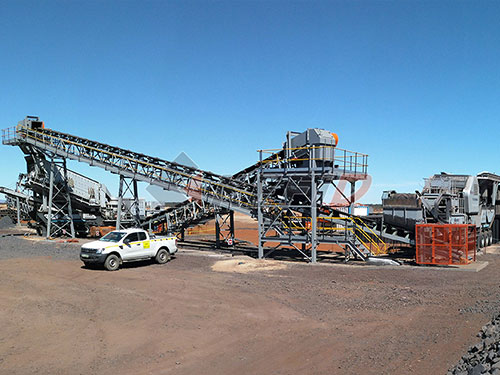
Payment Terms and Financing: Suppliers offering flexible payment terms (e.g., 30% deposit, 40% on shipment, 30% on commissioning) or financing options (e.g., L/C at sight, deferred payment) can effectively lower the financial burden. A supplier demanding 100% upfront payment is a red flag and should be avoided.
To achieve the best price without compromising quality, buyers should adopt a structured procurement strategy:
Develop a Detailed Technical Specification (RFQ): Do not simply ask for a “250 TPH plant.” Provide a detailed Request for Quotation (RFQ) that includes:
Solicit Quotes from a Diverse Pool: Request quotes from at least 3-5 suppliers across different tiers (e.g., one European, two Chinese, one Indian, one Turkish). This provides a clear price range and allows for benchmarking.
Conduct a “Total Cost of Ownership” (TCO) Analysis: For each quote, calculate not just the equipment price but also:
Negotiate on Value, Not Just Price: Instead of demanding a 20% discount, negotiate for value-added services:
Visit the Factory or Request a Virtual Tour: For high-value purchases, a factory visit is invaluable. It allows you to inspect the manufacturing process, quality control, and inventory. If travel is not possible, request a live video tour of the assembly line and a test run of a similar plant.
Check References and Case Studies: Ask for contact details of at least three clients who have purchased a similar capacity plant in the last 2-3 years. Speak to them directly about their experience with the equipment’s performance, downtime, and the supplier’s after-sales support.
Consider a Phased Approach: If the budget is tight, consider purchasing a 2-stage plant initially (jaw + cone) and adding a VSI or tertiary crusher later when cash flow improves. Many suppliers offer modular designs that allow for easy expansion.
The market for 250-300 TPH stone crushing plants is highly competitive, with a wide range of suppliers offering vastly different price points. A “competitive price” is not a single number but a function of quality, reliability, after-sales support, and total cost of ownership. While Chinese and Indian manufacturers offer the most attractive initial CAPEX, buyers must rigorously evaluate their technical capabilities, service network, and wear parts costs. European and American brands offer premium reliability and support but at a significantly higher upfront cost.
The optimal strategy for a buyer is to define their technical requirements precisely, solicit quotes from a diverse set of suppliers, perform a detailed TCO analysis, and negotiate for value-added services rather than just a lower base price. By approaching the procurement process with a professional, data-driven mindset, a buyer can secure a 250-300 TPH stone crushing plant that delivers reliable performance, low operating costs, and a strong return on investment for years to come. The cheapest plant is rarely the most profitable; the most competitive plant is the one that balances initial cost with long-term operational efficiency and support.
If you have any questions about our products, please feel free to contact us. We take all inquiries and suggestions very seriously.