
Title: Stone Crusher Plant OEM Factory: Delivering Affordable, High-Performance Solutions for the Aggregate Industry
Introduction
In the global construction and mining sectors, the demand for crushed stone, gravel, and sand continues to rise, driven by infrastructure development, urbanization, and industrial expansion. At the heart of this production chain lies the stone crusher plant—a complex assembly of feeders, crushers, screens, conveyors, and control systems designed to transform raw rock into specification-grade aggregates. For project owners, contractors, and quarry operators, the decision of where to source this equipment is as critical as the plant’s design itself. In recent years, the concept of an OEM (Original Equipment Manufacturer) factory has gained significant traction, particularly when paired with the promise of affordability. This article provides a professional, objective, and detailed examination of stone crusher plant OEM factories, focusing on their operational advantages, cost structures, quality assurance, and the factors that make them an economically viable choice without compromising engineering integrity.
1. Understanding the OEM Model in Crushing Equipment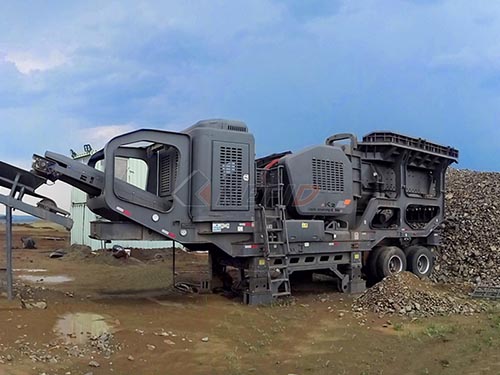
An OEM factory is a manufacturing entity that designs, engineers, and produces machinery under its own brand, often supplying directly to end-users or to other companies that rebrand the equipment. In the context of stone crusher plants, an OEM factory is responsible for the complete lifecycle of the product—from initial CAD modeling and finite element analysis (FEA) to fabrication, assembly, testing, and after-sales support. The term “affordable” in this context does not imply low-grade or compromised equipment; rather, it refers to a strategic pricing model that eliminates intermediary markups, optimizes production efficiency, and leverages economies of scale.
Unlike trading companies or system integrators that source components from multiple vendors, an OEM factory maintains in-house control over critical parts such as jaw plates, cone liners, vibrating screens, and eccentric shafts. This vertical integration allows for tighter tolerance control, consistent metallurgy, and faster troubleshooting. For buyers, working directly with an OEM factory means access to the original design blueprints, genuine spare parts, and engineering support that is not diluted by third-party layers.
2. Core Components and Engineering Excellence
A typical stone crusher plant, regardless of capacity (ranging from 50 tph to 500+ tph), consists of several key subsystems. An OEM factory’s expertise is demonstrated in how these subsystems are designed and integrated:
The engineering excellence of an OEM factory is not just about individual components but about the system balance. For example, an affordable plant must have a surge hopper sized correctly to prevent choke feeding, and the crusher settings must be coordinated with the screen apertures to avoid recirculation overload. OEM factories use simulation software (e.g., DEM – Discrete Element Method) to model material flow, ensuring that the plant operates at its designed capacity from day one.
3. The Affordability Factor: How OEM Factories Reduce Costs
The term “affordable” is often misconstrued as “cheap.” In the OEM factory context, affordability is a result of deliberate cost engineering. The following factors contribute to a lower total cost of ownership (TCO) without sacrificing performance:
4. Quality Assurance and Compliance
A common misconception is that affordability comes at the expense of quality. In reputable OEM factories, the opposite is true. These factories adhere to international quality management systems such as ISO 9001:2015, and their manufacturing processes are subject to rigorous inspection. Key quality control measures include:
Furthermore, OEM factories are increasingly focused on environmental compliance. Affordable plants now include dust suppression systems (water spray nozzles, mist cannons), noise reduction enclosures, and oil spill containment trays. This is not just a regulatory requirement but also a cost-saving measure, as fines for non-compliance can be substantial.
5. Customization vs. Standardization: Finding the Balance
One of the key advantages of working directly with an OEM factory is the ability to customize the plant to specific site conditions. For instance, a project in a high-altitude region (e.g., 4,000 meters above sea level) requires derated motors and thicker insulation. A project with hard granite (compressive strength >300 MPa) requires a different crushing chamber profile than one processing soft limestone. An OEM factory can adjust:
However, excessive customization can erode the affordability advantage. Therefore, professional OEM factories offer a “configurator” approach—a base model with a limited set of options (e.g., motor power, crusher cavity type, conveyor length). This allows buyers to tailor the plant to their needs while keeping production costs low. For example, a standard 100 tph plant might have three variants: standard (for limestone), hard rock (for basalt), and recycle (for concrete/asphalt). This modularity is a hallmark of a mature OEM factory.
6. After-Sales Support and Spare Parts Availability
The true measure of affordability is not the purchase price but the cost per ton of crushed material over the plant’s lifetime. OEM factories excel in this area through:
7. Case Study: A Comparative Cost Analysis
To illustrate the affordability of an OEM factory, consider a hypothetical 150 tph stationary stone crusher plant. A buyer receives two quotes: one from a trading company offering a plant assembled from various imported components, and one from an OEM factory offering a directly manufactured plant.
Over a 5-year period, the OEM factory plant saves the buyer $170,000 in initial cost, plus an estimated $45,000 in reduced downtime (assuming 2% less downtime per year) and $30,000 in lower spare parts costs. The total cost of ownership is significantly lower, even before considering the higher resale value of a well-documented OEM machine.
8. Risks and Mitigation Strategies
While the OEM factory model offers clear advantages, buyers must exercise due diligence. Not all factories that claim to be OEM are truly original manufacturers. Some are assembly shops that import cheap components from multiple sources. To mitigate risks:
9. Future Trends in Affordable OEM Crushing Plants
The industry is moving toward smart and green crushing plants. OEM factories are investing in:
These innovations are not necessarily more expensive; in fact, they often reduce operational costs, further enhancing the affordability proposition.
Conclusion
A stone crusher plant from an OEM factory represents a paradigm shift in how the aggregate industry procures heavy machinery. The combination of direct manufacturing, standardized modular design, in-house quality control, and comprehensive after-sales support creates a compelling value proposition. “Affordable” in this context is not a compromise—it is a strategic outcome of eliminating waste, optimizing engineering, and focusing on the total cost of ownership. For quarry operators, contractors, and infrastructure developers, partnering with a professional OEM factory is not just a cost-effective choice; it is a decision that ensures long-term operational reliability, consistent product quality, and a faster return on investment. As global demand for aggregates continues to grow, the OEM factory model will undoubtedly become the benchmark for procurement in the crushing industry.
If you have any questions about our products, please feel free to contact us. We take all inquiries and suggestions very seriously.