
Slag Crusher Plant Factory Customization: Engineering Turnkey Solutions for Metallurgical By-Product Processing
Introduction
In the metallurgical, steelmaking, and thermal power industries, slag is an inevitable by-product generated in substantial volumes. While historically regarded as a waste stream, modern industrial practice recognizes slag as a valuable secondary resource containing recoverable ferrous and non-ferrous metals, as well as mineral fractions suitable for construction aggregates, cementitious materials, and road base applications. The efficient recovery of these resources depends fundamentally on the design and configuration of the slag crushing plant. Because slag characteristics vary widely—depending on furnace type (blast furnace, basic oxygen furnace, electric arc furnace), cooling method, and chemical composition—standardized, off-the-shelf crushing solutions frequently underperform. This has driven the emergence of slag crusher plant factory customization as a specialized engineering discipline, in which equipment manufacturers design, fabricate, and commission plants tailored to specific site conditions, material properties, and production objectives.
The Technical Rationale for Customization
Slag is an abrasive, heterogeneous, and often refractory material. Its physical properties differ markedly from those of natural rock. Blast furnace slag, for example, may be dense and glassy when water-quenched, whereas steel slag typically exhibits high hardness, irregular morphology, and entrained metallic inclusions. These characteristics create distinct engineering challenges: excessive wear on crushing surfaces, risk of equipment blockage from elongated metal pieces, dust generation, and the need to liberate metallic fractions without over-comminuting the mineral matrix.
A customized plant addresses these variables through a systematic design process. The first stage involves comprehensive material characterization, including particle size distribution, bulk density, Mohs hardness, moisture content, magnetic susceptibility, and the proportion of free metal. This data informs the selection of the primary crusher—typically a jaw crusher or impact crusher for coarse reduction—followed by secondary and tertiary stages such as cone crushers, hammer mills, or roller crushers. Magnetic separation units, screening decks, and conveyor systems are then integrated to achieve the target product specification.
Core Components of a Customized Slag Crusher Plant
A typical customized facility comprises several interdependent subsystems. The feeding system is designed to accommodate the irregular lump size and bulk density of raw slag, often incorporating apron feeders or vibrating grizzly feeders that pre-screen fines and protect downstream equipment. The primary crushing stage reduces run-of-yard slag to a manageable size, with jaw crushers favored for hard, abrasive steel slag and impact crushers selected where a more cubical product shape is desired.
The secondary and tertiary crushing circuits are configured according to the required final granulometry. For metal recovery applications, the objective is often to crush the slag to a size at which metallic inclusions are liberated from the mineral matrix—commonly below 30 mm or even 10 mm—without generating excessive fines. This requires careful selection of crushing chamber geometry, closed-side settings, and throughput rates.
Magnetic separation is a critical customization point. Overband magnets, cross-belt separators, and drum magnets are positioned at strategic points in the flow sheet to extract ferrous scrap. For stainless steel or non-ferrous recovery, eddy current separators and sensor-based sorting systems may be integrated. The screening system, using multi-deck vibrating screens, classifies the crushed product into distinct size fractions, each destined for different markets or further processing.
Auxiliary systems—dust suppression, water spray, noise enclosure, and automated control—are engineered to meet environmental regulations and operational safety standards. In customized plants, these systems are scaled and positioned according to site layout, prevailing wind conditions, and local emission limits.
The Customization Process: From Inquiry to Commissioning
Factory customization follows a structured engineering workflow. It begins with a detailed technical consultation in which the client provides slag samples, site constraints, capacity requirements, and product specifications. Laboratory testing—including crushability tests, abrasion index measurement, and magnetic separation trials—establishes the design basis.
The manufacturer then develops a process flow diagram, mass balance, and equipment layout. Computer-aided design and discrete element modeling (DEM) are increasingly used to simulate material flow, predict wear patterns, and optimize chamber geometry. Upon client approval, fabrication proceeds in the factory, where modular construction allows for pre-assembly and factory acceptance testing before shipment.
Installation and commissioning are typically supervised by the manufacturer’s engineering team, followed by operator training and a performance guarantee period. This end-to-end approach ensures that the customized plant achieves its specified throughput, recovery rate, and product quality.
Economic and Operational Benefits
Customization yields measurable advantages. Throughput is optimized for the actual slag feed, avoiding the derating that occurs when standard equipment is applied to non-standard material. Wear life is extended through the selection of appropriate liner materials—manganese steel, chrome alloy, or ceramic composites—matched to the abrasiveness of the slag. Energy consumption per ton is reduced by eliminating unnecessary crushing stages and recirculating loads.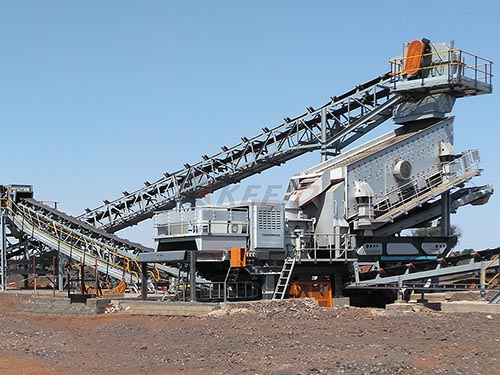
Metal recovery rates improve significantly when magnetic separation is engineered around the actual liberation size of the slag. For steel mills, this translates directly into revenue from recovered scrap and reduced disposal costs. For aggregate producers, customized grading ensures compliance with end-user specifications, such as those for Portland cement clinker, concrete aggregate, or railway ballast.
Environmental performance is also enhanced. Dust and noise control measures are integrated at the design stage rather than retrofitted, and closed-loop water systems minimize discharge. In jurisdictions with stringent environmental regulation, these features are often prerequisites for permitting.
Technological Trends in Plant Customization
Several technological developments are shaping the future of slag crusher plant customization. Automation and digitalization—including programmable logic controllers, SCADA systems, and real-time wear monitoring—allow plants to adapt to variations in feed material and maintain consistent output. Modular and mobile plant designs offer flexibility for sites with limited space or temporary operations. Advanced sorting technologies, such as X-ray fluorescence and near-infrared sensors, enable precise separation of metallurgical fractions.
Furthermore, the growing emphasis on circular economy principles is driving demand for plants capable of producing high-purity recycled aggregates and recovering critical metals from legacy slag dumps. Customization is therefore not merely a commercial service but a means of aligning industrial processing with resource efficiency and sustainability objectives.
Conclusion
Slag crusher plant factory customization represents a mature, engineering-driven response to the inherent variability of metallurgical by-products. By integrating material characterization, process design, equipment fabrication, and commissioning into a single tailored solution, manufacturers enable steel producers, slag processors, and aggregate suppliers to maximize metal recovery, minimize operating costs, and meet stringent product and environmental standards. As slag resources become increasingly valued and regulations more demanding, the demand for customized, high-performance crushing plants is set to grow, reinforcing the importance of close collaboration between plant engineers and equipment manufacturers.
If you have any questions about our products, please feel free to contact us. We take all inquiries and suggestions very seriously.