Title: Innovation and Engineering Excellence: The Role of R&D in Stone Quarry Crushing Plant Manufacturing
Introduction
The global construction and infrastructure sectors are fundamentally reliant on the availability of high-quality aggregates. These materials—crushed stone, sand, and gravel—form the backbone of concrete, asphalt, and road base. At the heart of aggregate production lies the stone quarry crushing plant, a complex assembly of machinery designed to reduce large rocks into specified sizes. The manufacturers of these plants are not merely assemblers of off-the-shelf components; they are engineering-driven organizations where Research and Development (R&D) is the critical differentiator between commodity equipment and high-performance, sustainable solutions.
This article provides a detailed, objective examination of the R&D landscape among stone quarry crushing plant manufacturers. It explores the driving forces behind innovation, the specific technical domains under development, the challenges faced by R&D teams, and the future trajectory of crushing technology. The focus is on how R&D transforms raw mechanical concepts into reliable, efficient, and environmentally responsible industrial systems.
1. The Strategic Imperative of R&D in Crushing Plant Manufacturing
In a mature industry characterized by heavy machinery and high capital expenditure, the impetus for continuous R&D is multifaceted. Manufacturers who neglect innovation risk obsolescence, while those who invest strategically gain competitive advantages in several key areas:
- Operational Efficiency: The primary cost drivers in a quarry are energy consumption (electricity for motors and diesel for mobile equipment) and wear part replacement (liners, jaws, cones). R&D directly targets reducing the specific energy consumption (kWh per ton of crushed material) and extending the lifespan of wear components. A 5% improvement in energy efficiency across a fleet of plants translates into millions of dollars in annual savings for operators.
- Regulatory Compliance: Environmental regulations are tightening globally. R&D is essential for developing dust suppression systems, noise reduction enclosures, and water recycling circuits. Furthermore, the push for lower carbon footprints is driving research into electrification of mobile plants and the use of alternative, lower-emission power sources.
- Material Processing Capabilities: Deposits of high-quality, easily crushed stone are depleting. Quarries are increasingly forced to process more difficult materials—highly abrasive river gravel, sticky clay-bound ores, or hard, fractured igneous rock. R&D enables manufacturers to design crushers and screens that can handle these challenging feedstocks without sacrificing throughput or product quality.
- Automation and Digitalization: The modern quarry is becoming a data-driven operation. R&D in control systems, sensors, and software allows for remote monitoring, predictive maintenance, and autonomous optimization of the crushing process. This reduces downtime, improves safety, and allows for consistent product quality with fewer human interventions.
2. Core R&D Domains in Crushing Plant Technology
The R&D efforts of leading manufacturers are concentrated in several interconnected technical domains. These are not isolated projects but are integrated into the design of complete plants.
2.1. Crushing Chamber Geometry and Kinematics
The heart of any crushing plant is the crusher itself—whether a jaw, cone, impact, or gyratory type. R&D in this area is highly empirical and computational.
- Finite Element Analysis (FEA) and Discrete Element Method (DEM): Engineers use FEA to analyze stress distribution in crusher frames, shafts, and eccentric assemblies, ensuring structural integrity while minimizing weight. DEM simulates the flow of rock particles through the crushing chamber. This allows for virtual prototyping of new chamber profiles, optimizing the crushing zone for maximum reduction ratio, cubical product shape, and minimal wear. For example, a modern cone crusher chamber is no longer a simple straight-sided cone; it is a complex, multi-curved profile designed to create a “multi-layer” crushing action that improves particle shape.
- Eccentric Throw and Speed Optimization: R&D teams systematically vary the eccentric throw (stroke) and rotational speed of cone and gyratory crushers to find the “sweet spot” for specific applications. A higher throw increases reduction ratio but may increase fines generation. A higher speed can improve throughput but may lead to higher wear rates. Advanced hydraulic systems now allow for on-the-fly adjustment of these parameters, a direct result of R&D into real-time process control.
2.2. Wear Materials and Metallurgy
Crushing is an abrasive process. The cost and availability of wear parts (manganese steel liners, blow bars, impact plates) are critical to plant economics.
- Advanced Alloys and Heat Treatment: R&D metallurgists develop new grades of austenitic manganese steel (e.g., 14% Mn, 18% Mn, with additions of chromium, molybdenum, or vanadium). These alloys work-harden under impact, becoming harder on the surface while remaining tough in the core. Research into heat treatment cycles (quenching and tempering) is used to optimize the balance between hardness and toughness for specific applications.
- Composite and Ceramic-Enhanced Liners: For extreme abrasion, manufacturers are developing composite wear parts. These may consist of a steel backing with a ceramic insert (e.g., alumina or zirconia) or a matrix of tungsten carbide particles in a metallic binder. While more expensive, these parts can last 2-5 times longer than standard manganese in high-wear zones, reducing downtime and maintenance costs.
- Predictive Wear Modeling: R&D is integrating wear sensor data (e.g., ultrasonic thickness measurement, liner profile scanning) with machine learning algorithms. This allows for predictive maintenance, alerting operators when a liner is approaching its end of life, preventing catastrophic failure and optimizing liner change schedules.
2.3. Screening and Separation Efficiency
Screening is the unsung hero of a crushing plant. Inefficient screening leads to recirculation of fines, over-crushing, and reduced plant capacity.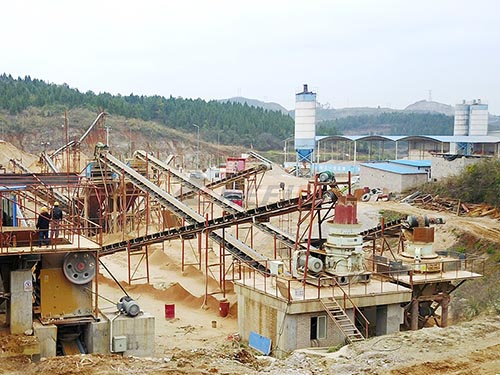
- Vibration Analysis and Screen Deck Design: R&D teams use modal analysis and high-speed video to study the vibration patterns of screen decks. They optimize the amplitude, frequency, and angle of throw to maximize material stratification and separation efficiency. New deck designs, such as modular polyurethane panels with specialized opening shapes (e.g., harp wire, flip-flop), are developed to handle wet, sticky materials that blind traditional wire mesh.
- Multi-Frequency and Banana Screens: Advanced screening technologies, such as banana screens (multi-slope) and high-frequency screens, are the result of extensive R&D. Banana screens use a variable slope to accelerate material flow at the feed end and decelerate it at the discharge end, maximizing capacity. High-frequency screens use rapid, low-amplitude vibration to separate fine particles (< 5 mm) with high efficiency.
2.4. Automation, Control Systems, and Digital Twins
The modern crushing plant is a cyber-physical system. R&D in this domain is perhaps the most rapidly evolving.
- Advanced Process Control (APC): R&D teams develop algorithms that automatically adjust crusher settings (closed side setting, feed rate, speed) based on real-time feedback from power draw, pressure sensors, and product size analyzers. This maintains optimal operation even as feed material characteristics change.
- Predictive Maintenance and IoT: Sensors on bearings, motors, and conveyors monitor vibration, temperature, and oil quality. Data is transmitted to a cloud-based platform where machine learning models detect anomalies and predict failures before they occur. This reduces unplanned downtime and extends equipment life.
- Digital Twin Technology: Manufacturers are creating virtual replicas of entire crushing plants. These digital twins are used for operator training, process optimization, and “what-if” scenario analysis. An engineer can simulate changing a crusher setting or adding a new screen deck and see the impact on throughput, product quality, and energy consumption without touching the physical plant.
2.5. Environmental and Sustainability Engineering
R&D is increasingly focused on reducing the environmental footprint of crushing operations.
- Dust Suppression Systems: Research into water spray nozzle design, chemical dust suppressants (e.g., foaming agents), and enclosed transfer points. R&D teams use computational fluid dynamics (CFD) to model dust dispersion and optimize the placement of collection hoods and baghouse filters.
- Noise Reduction: Acoustic engineering is used to design quieter crusher enclosures, conveyor covers, and screen housings. Research into low-noise drive systems (e.g., direct drive vs. belt drive) and vibration isolation mounts is ongoing.
- Water Recycling and Sludge Management: Closed-loop water systems are becoming standard. R&D focuses on efficient thickeners, filter presses, and flocculant dosing systems to minimize water consumption and produce a dry, stackable filter cake from the sludge.
- Electrification and Hybrid Power: For mobile crushing plants, R&D is moving away from pure diesel-hydraulic drives. Hybrid systems (diesel-electric) and fully electric plants (powered by grid or battery) are being developed to reduce CO2 emissions, lower fuel costs, and enable operation in noise-sensitive environments.
3. The R&D Process: From Concept to Commercialization
The journey from an idea to a reliable, field-proven crushing plant is long and rigorous. The typical R&D process involves several stages:
- Market and Customer Needs Analysis: R&D begins with understanding the problems faced by quarry operators. This involves site visits, customer surveys, and analysis of operational data.
- Conceptual Design and Simulation: Engineers generate multiple design concepts. These are evaluated using FEA, DEM, and CFD simulations to predict performance.
- Prototyping and Lab Testing: Promising concepts are built as physical prototypes. These are tested in controlled laboratory environments using standardized feed materials. Key metrics (power draw, throughput, product gradation, wear rates) are measured.
- Field Trials: The most critical stage. Prototypes are installed in a cooperating quarry and operated under real-world conditions for months or even years. Data is collected continuously, and design modifications are made based on field feedback.
- Design for Manufacturability (DFM): Once the design is validated, R&D works with manufacturing engineers to ensure the product can be built efficiently, cost-effectively, and with consistent quality.
- Release and Continuous Improvement: The product is launched, but R&D does not stop. Field performance data is monitored, and design improvements are incorporated into subsequent versions.
4. Challenges Facing R&D in Crushing Plant Manufacturing
Despite the clear benefits, R&D in this industry faces significant hurdles:
- High Capital Cost and Long Development Cycles: Developing a new crusher or screen can take 3-5 years and cost millions of dollars. The return on investment is not immediate.
- Testing Complexity: Real-world quarry conditions are highly variable. It is difficult to replicate the exact combination of rock type, moisture content, and feed gradation in a lab. Field trials are essential but expensive and time-consuming.
- Balancing Performance and Cost: There is a constant tension between adding advanced features (e.g., complex automation, premium wear parts) and keeping the plant affordable for a broad market. R&D must find the optimal cost-performance point.
- Talent Acquisition: Finding engineers with expertise in both mechanical design and digital technologies (software, data science) is challenging. The industry competes with higher-profile tech sectors for talent.
- Intellectual Property Protection: The crushing equipment market is global and competitive. Protecting proprietary designs and algorithms through patents and trade secrets is crucial but can be difficult to enforce across different jurisdictions.
5. The Future of R&D in Stone Quarry Crushing Plants
Looking ahead, several trends will shape the R&D agenda for manufacturers:
- Autonomous Quarries: The ultimate goal is a fully autonomous crushing plant that can be operated remotely, with self-optimizing crushers and self-diagnosing systems. R&D is moving towards this vision with advanced sensor fusion and AI-driven decision-making.
- Circular Economy and Recycling: R&D will focus on plants designed specifically for recycling construction and demolition waste (concrete, asphalt, brick). These plants require different crushing technologies (e.g., impact crushers with adjustable rotor configurations) and sophisticated contaminant removal systems (magnets, eddy current separators, air classifiers).
- Modular and Scalable Designs: To reduce installation time and cost, manufacturers are developing highly modular plant designs. These can be pre-assembled in a factory, shipped in containers, and quickly connected on site. R&D is optimizing the interfaces between modules for ease of transport and assembly.
- Integration with Quarry Management Software: The crushing plant will become a node in a broader digital ecosystem. R&D will focus on seamless data integration with drilling, blasting, and haulage systems, enabling end-to-end optimization of the entire quarry operation.
Conclusion
The role of R&D in stone quarry crushing plant manufacturing is far more than incremental improvement. It is the engine that drives the industry towards higher efficiency, lower environmental impact, and greater operational intelligence. From the atomic-level design of wear-resistant alloys to the system-level architecture of digital twins, R&D transforms the fundamental physics of rock breakage into reliable, profitable, and sustainable industrial solutions. Manufacturers that invest deeply and strategically in R&D will not only lead the market but will also shape the future of how the world produces the essential materials for its built environment. The stone quarry of tomorrow will be quieter, cleaner, more efficient, and increasingly autonomous—a direct result of the rigorous, ongoing R&D efforts of today’s leading manufacturers.
