Title: Strategic Procurement Analysis for the Jc5000 Jaw Crusher: Sourcing, Evaluation, and Supply Chain Optimization
Abstract
The procurement of heavy machinery, particularly a high-capacity jaw crusher such as the Jc5000, represents a significant capital investment and a critical operational decision for mining, quarrying, and aggregate production companies. This article provides a comprehensive, professional, and objective analysis of the procurement process for the Jc5000 Jaw Crusher. It covers the technical specifications that define the equipment, the strategic sourcing methodology, the evaluation of original equipment manufacturers (OEMs) versus aftermarket suppliers, the total cost of ownership (TCO) framework, risk management in the supply chain, and best practices for contract negotiation and logistics. The objective is to equip procurement professionals with a structured approach to acquiring a Jc5000, ensuring alignment with production targets, maintenance capabilities, and long-term financial sustainability.
1. Introduction
The Jc5000 Jaw Crusher is a robust, high-throughput primary crushing unit typically employed in hard rock mining and large-scale construction aggregate operations. Its name, often associated with a specific model series from leading manufacturers (e.g., Sandvik, Metso Outotec, or Terex), denotes a machine with a feed opening of approximately 1,200 mm x 1,000 mm and a capacity ranging from 200 to 600 tonnes per hour, depending on the closed side setting (CSS) and material characteristics. Procurement of such a unit is not a simple transactional purchase; it is a multi-faceted project that requires deep technical knowledge, market intelligence, and strategic foresight.
The primary challenge in Jc5000 procurement lies in balancing initial capital expenditure (CAPEX) against long-term operational expenditure (OPEX). A low purchase price may be offset by higher wear part costs, lower reliability, or poor after-sales support. Conversely, a premium-priced machine from a market leader may offer superior durability, lower energy consumption, and a comprehensive service network. This article dissects these trade-offs.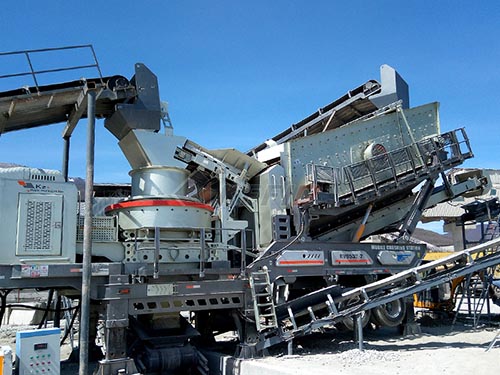
2. Technical Specifications and Procurement Requirements
Before initiating the sourcing process, the procurement team must establish a clear, quantified set of technical requirements. For the Jc5000, these typically include:
- Feed Opening: 1,200 mm x 1,000 mm (or equivalent metric).
- Motor Power: 160–200 kW (typically 200 kW for hard rock).
- Capacity: 250–500 tph at a CSS of 150–200 mm.
- Weight: Approximately 50–60 tonnes (excluding motor and base frame).
- Eccentric Throw: Adjustable (e.g., 25–40 mm).
- Hydraulic Setting Adjustment: For CSS changes and tramp iron relief.
- Lubrication System: Automatic grease or oil circulation.
The procurement specification document (RFQ – Request for Quotation) must include:
- Material Type: Abrasiveness (e.g., silica content), compressive strength (e.g., 300 MPa granite vs. 150 MPa limestone).
- Site Conditions: Altitude (affects motor power), ambient temperature, dust exposure.
- Regulatory Compliance: Local safety standards (e.g., CE, ISO 9001, AS/NZS), noise limits, and emission controls for diesel-hydraulic variants.
3. Supplier Identification and Market Analysis
The market for Jc5000-class jaw crushers is dominated by a few global OEMs, but regional manufacturers also offer competitive alternatives. A professional procurement strategy involves a three-tier supplier evaluation:
Tier 1 – Global OEMs:
- Examples: Sandvik (CJ615), Metso Outotec (C160), Terex Finlay (J-1480).
- Advantages: Proven reliability, extensive R&D, global service network, high resale value.
- Disadvantages: Higher initial cost, longer lead times (often 12–16 weeks), proprietary wear parts.
Tier 2 – Regional/National OEMs:
- Examples: Thyssenkrupp (Jawmaster), FLSmidth, or Chinese manufacturers (e.g., SBM, Shanghai Shibang).
- Advantages: Competitive pricing, faster delivery, localized support, flexible customization.
- Disadvantages: Variable quality control, less established global parts network, potential intellectual property concerns.
Tier 3 – Reconditioned/Used Equipment:
- Advantages: Lowest CAPEX, immediate availability.
- Disadvantages: Unknown wear history, higher risk of downtime, limited warranty.
4. Total Cost of Ownership (TCO) Analysis
A professional procurement decision cannot be based solely on the purchase price. The TCO model for a Jc5000 includes:
- Acquisition Cost: Machine price, freight, insurance, import duties, and installation.
- Operating Costs:
- Power Consumption: A 200 kW motor running 16 hours/day at $0.10/kWh costs $32,000/year in electricity alone. Higher efficiency machines (e.g., with optimized toggle plate geometry) can reduce this by 5–10%.
- Wear Parts: Jaw dies (fixed and movable) are the largest consumable. For a Jc5000, a set of manganese steel dies costs $15,000–$25,000 and lasts 3–6 months depending on abrasiveness. OEM dies may last 20% longer than aftermarket equivalents but cost 40% more.
- Maintenance: Planned maintenance (bearings, toggle plates, pitman assembly) and unplanned downtime.
- Downtime Cost: A single day of lost production at 500 tph with a $10/tonne margin equals $40,000 lost revenue. Reliability is paramount.
- Residual Value: After 10 years, a well-maintained Jc5000 retains 30–40% of its original value.
Example TCO Calculation (5-year horizon):
- OEM Machine: $450,000 purchase + $200,000 operating costs/year = $1.45M total.
- Regional Machine: $350,000 purchase + $230,000 operating costs/year (higher wear, lower efficiency) = $1.50M total.
- Conclusion: The OEM machine is cheaper over 5 years despite a higher upfront cost.
5. Risk Management in Procurement
Procurement of a Jc5000 involves several risks that must be mitigated:
- Supply Chain Disruption: Global shortages of steel, bearings, or hydraulic components can delay delivery. Mitigation: Include penalty clauses for late delivery; maintain a buffer stock of critical spares (e.g., bearings, toggle plates) in the contract.
- Quality Risk: Non-conformance to specifications (e.g., incorrect eccentric throw, poor weld quality). Mitigation: Require factory acceptance testing (FAT) with witnessed performance curves; third-party inspection (e.g., SGS, Bureau Veritas).
- Currency Fluctuation: If sourcing from a foreign OEM, exchange rate volatility can increase costs. Mitigation: Negotiate fixed pricing for the contract duration or use hedging instruments.
- After-Sales Support Risk: Lack of local service engineers or parts availability. Mitigation: Require a service level agreement (SLA) with guaranteed response times (e.g., 48 hours for critical breakdowns).
6. Contract Negotiation and Legal Considerations
The procurement contract for a Jc5000 should be a detailed legal document covering:
- Payment Terms: Typically 30% deposit, 40% on shipment, 20% on delivery, 10% on commissioning. Avoid paying 100% before delivery.
- Warranty: Minimum 12 months from commissioning or 2,000 operating hours, whichever comes first. Coverage should include defects in materials and workmanship, but exclude normal wear parts (jaw dies, toggle plates).
- Performance Guarantees: The supplier must guarantee throughput (tph) at a specified CSS and material hardness. Failure to meet guarantees should trigger liquidated damages (e.g., 1% of contract value per 1% shortfall).
- Intellectual Property: If the buyer requests modifications (e.g., custom base frame), ownership of the resulting designs should be clarified.
- Force Majeure: Clearly define events (e.g., pandemics, natural disasters) that excuse delay.
7. Logistics and Installation
The Jc5000 is a heavy, oversized item requiring specialized logistics:
- Transport: Flatbed trucks with low-loaders for the main frame (up to 30 tonnes). Disassembly may be required for road transport (e.g., separate pitman, flywheels, and motor).
- Customs Clearance: Ensure correct HS code (e.g., 8474.20) and tariff classification. Pre-clear documentation to avoid demurrage charges.
- Installation: Requires a reinforced concrete foundation (typically 50–80 m³ of concrete) with anchor bolts. The procurement contract should include supervision of installation by the supplier’s engineer (cost: $500–$1,000/day plus travel).
- Commissioning: A phased start-up: dry run (no load), then gradual loading to full capacity. Monitor bearing temperatures, vibration levels, and power draw.
8. Sustainability and Future-Proofing
Modern procurement must consider environmental and regulatory trends:
- Energy Efficiency: Look for machines with variable frequency drives (VFDs) on the motor or hydraulic systems that reduce power consumption during low-load periods.
- Noise and Dust: Specify sound enclosures and dust suppression systems (e.g., water spray nozzles at the feed hopper).
- Digital Integration: The Jc5000 should be compatible with IoT sensors for predictive maintenance (e.g., vibration monitoring, oil analysis). This reduces unplanned downtime and extends component life.
- Circular Economy: Negotiate a buy-back or trade-in clause for the old crusher. Some OEMs offer refurbishment programs.
9. Conclusion
Procurement of a Jc5000 Jaw Crusher is a strategic investment that demands rigorous analysis beyond the initial price tag. A successful procurement process integrates technical specification clarity, multi-tier supplier evaluation, total cost of ownership modeling, risk mitigation, and robust contract terms. By prioritizing reliability, after-sales support, and long-term operating costs over short-term savings, companies can secure a crushing solution that delivers consistent throughput, minimal downtime, and optimal return on investment. The key takeaway for procurement professionals is to treat the Jc5000 not as a commodity, but as a critical asset whose performance directly impacts the profitability of the entire operation. A well-executed procurement strategy will result in a machine that operates efficiently for 15–20 years, providing a competitive edge in the demanding world of mineral processing and construction aggregates.
