
Export Slag Crusher Plant Manufacturing: A Comprehensive Analysis of Global Market Dynamics, Engineering Challenges, and Strategic Opportunities
Introduction
The global export slag crusher plant manufacturing sector occupies a critical niche within the broader heavy machinery and environmental engineering industries. As steel production and metallurgical activities continue to expand, particularly in emerging economies, the management and processing of slag—a byproduct of smelting operations—have become both an environmental imperative and an economic opportunity. Slag crusher plants are specialized industrial installations designed to crush, screen, and process slag into reusable aggregates, metals, and mineral products. The export-oriented manufacturing of these plants involves a complex interplay of mechanical engineering, international trade regulations, supply chain logistics, and technological innovation. This article provides a detailed examination of the export slag crusher plant manufacturing landscape, covering market drivers, technical specifications, manufacturing processes, export challenges, and future trends.
Market Drivers and Global Demand
The demand for exported slag crusher plants is fundamentally linked to the growth of the steel and cement industries. According to the World Steel Association, global crude steel production exceeded 1.8 billion tonnes in recent years, with slag generation typically accounting for 15–20% of crude steel output. This translates to hundreds of millions of tonnes of slag annually, much of which requires processing. Countries such as India, China, Japan, Turkey, and Brazil are major producers of steel slag, while nations in Southeast Asia, Africa, and Latin America are increasingly investing in slag processing infrastructure.
Export-oriented manufacturers typically target regions where local fabrication capabilities are limited but industrial demand is rising. For instance, African countries with expanding steel sectors—such as Nigeria, South Africa, and Egypt—rely on imported slag crusher plants from China, India, and Europe. Similarly, Middle Eastern nations undergoing infrastructure booms require slag processing equipment for construction aggregates. The export market is also driven by environmental regulations that mandate slag recycling rather than landfill disposal. The European Union’s Circular Economy Action Plan and similar policies in other regions have incentivized the adoption of advanced slag processing technologies, creating export opportunities for manufacturers in Germany, Italy, and the United Kingdom.
Technical Components and Engineering Specifications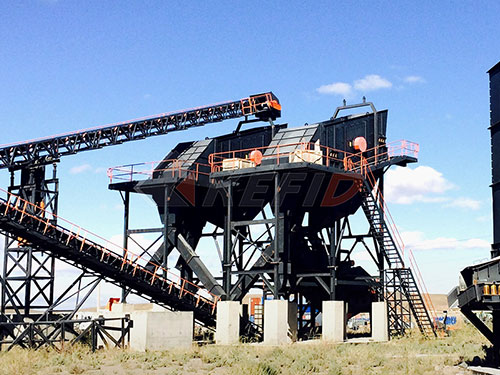
An export slag crusher plant is not a single machine but an integrated system comprising several key components. These include:
Feeding System: Vibrating feeders or apron feeders that regulate the flow of raw slag into the crushing circuit. These must be robust enough to handle irregular, abrasive, and often hot slag lumps.
Crushing Units: Primary crushers (jaw crushers or impact crushers) reduce large slag blocks to manageable sizes. Secondary and tertiary crushers (cone crushers or vertical shaft impactors) further refine the material. For slag with high metal content, specialized crushers with wear-resistant liners (e.g., manganese steel or ceramic composites) are essential.
Screening Equipment: Vibrating screens classify crushed slag into different size fractions. Multi-deck screens are common in export plants to produce multiple product grades simultaneously.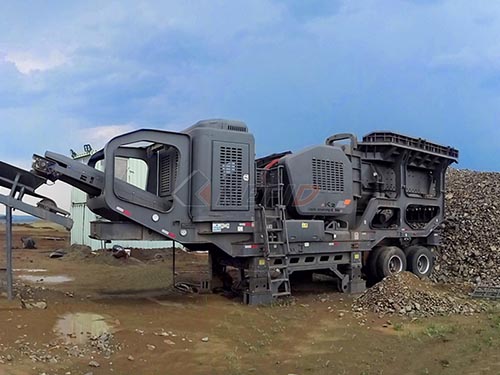
Metal Separation: Magnetic separators (overband magnets, drum magnets, or eddy current separators) extract ferrous and non-ferrous metals from the crushed slag. This is a crucial value-added step, as recovered scrap metal can be sold back to steel mills.
Conveying and Storage: Belt conveyors, hoppers, and silos transport and store processed materials. Dust suppression systems (e.g., water sprays or bag filters) are integrated to meet environmental standards in the destination country.
Control Systems: Programmable logic controllers (PLCs) and human-machine interfaces (HMIs) enable automated operation, remote monitoring, and fault diagnostics. Export plants often include telemetry for overseas technical support.
The engineering of these plants must account for the abrasive nature of slag, which contains hard minerals such as silicates, oxides, and metallic inclusions. Wear parts are typically manufactured from high-chromium alloys or polyurethane. Additionally, slag can be chemically reactive (e.g., free lime content), requiring corrosion-resistant materials in wet processing sections.
Manufacturing Process and Quality Assurance
Export slag crusher plant manufacturing begins with customer requirement analysis, including feed material characteristics (slag type, moisture, lump size), desired output capacity (typically 50–500 tonnes per hour), product specifications, and site conditions. Design engineers use computer-aided design (CAD) and finite element analysis (FEA) to optimize structural integrity and fatigue life.
Fabrication involves cutting, welding, machining, and assembly of steel structures. Heavy plate rolling and CNC machining ensure dimensional accuracy. Crusher bodies are stress-relieved to prevent cracking under cyclic loads. Quality control follows international standards such as ISO 9001, CE marking for European exports, and sometimes ASME or ASTM for specific markets.
Before shipment, each plant undergoes a factory acceptance test (FAT), which may include no-load and load testing with simulated slag. Performance parameters—capacity, power consumption, product gradation, and noise levels—are documented. Packaging for export must withstand sea transport, often using seaworthy wooden crates, anti-corrosion coatings, and desiccants.
Export Logistics and Trade Considerations
Exporting a slag crusher plant involves complex logistics. Plants are often modularized into transportable units (e.g., skid-mounted or containerized) to reduce shipping costs. Heavy components like crusher frames may require flat-rack containers or break-bulk vessels. Incoterms (e.g., FOB, CIF, DAP) define risk transfer and cost allocation. Customs documentation includes commercial invoices, packing lists, bills of lading, certificates of origin, and compliance certificates (e.g., CE, EAC, or SONCAP for Nigeria).
Tariffs and trade barriers vary by destination. For example, India imposes import duties on certain mining machinery, while African nations may offer tax incentives for environmental equipment. Exporters must also navigate anti-dumping regulations and technical standards. After-sales support is a critical differentiator: leading manufacturers establish overseas service centers or partner with local distributors to provide spare parts, training, and maintenance.
Challenges in Export Manufacturing
Several challenges confront export slag crusher plant manufacturers:
Technological Trends and Innovation
The export slag crusher plant manufacturing sector is witnessing several technological advances:
Modular and Mobile Designs: Mobile crushing plants mounted on tracks or wheels offer flexibility for slag processing at multiple sites. These are particularly attractive for export to construction and demolition recycling markets.
Automation and AI: Smart sensors and AI algorithms optimize crusher settings, predict wear, and reduce downtime. Export plants can be monitored from the manufacturer’s headquarters via cloud platforms.
Energy Efficiency: Variable frequency drives (VFDs) and high-efficiency motors reduce power consumption, a key selling point in regions with high electricity costs.
Dust and Noise Reduction: Enclosed crushing chambers, acoustic insulation, and advanced filtration systems help meet stringent environmental norms in Europe and North America.
Metal Recovery Optimization: Advanced eddy current separators and sensor-based sorting increase metal recovery rates, improving the economic viability of slag processing.
Strategic Recommendations for Exporters
To succeed in the global export slag crusher plant market, manufacturers should:
Conclusion
Export slag crusher plant manufacturing is a technically demanding and strategically significant industry. It sits at the intersection of heavy engineering, environmental sustainability, and international trade. As global steel production continues to rise and environmental regulations tighten, the demand for efficient, reliable, and export-ready slag processing plants will grow. Manufacturers that can combine robust engineering, modular logistics, regulatory compliance, and strong after-sales support will be well-positioned to capture opportunities in both developed and emerging markets. The future of this sector lies in automation, energy efficiency, and circular economy integration—transforming slag from a waste burden into a valuable resource, one exported plant at a time.
If you have any questions about our products, please feel free to contact us. We take all inquiries and suggestions very seriously.