
Title: RoHS Compliance in the Stone Quarry Crushing Plant Sector: A Strategic Imperative for Modern Aggregate Producers
Introduction
The global construction and aggregates industry is undergoing a profound transformation driven by increasingly stringent environmental regulations, rising corporate sustainability commitments, and shifting customer expectations. Among the many compliance frameworks shaping the modern quarrying and crushing sector, the Restriction of Hazardous Substances (RoHS) directive—originally enacted by the European Union and now mirrored in jurisdictions worldwide—has emerged as a critical benchmark for equipment manufacturers, plant integrators, and quarry operators alike. While RoHS is most commonly associated with consumer electronics, its reach now extends deeply into industrial machinery, including the electrical and electronic components embedded in stone quarry crushing plants. This article examines the implications of RoHS compliance for companies operating in the stone quarry crushing plant space, explores how leading firms are adapting their supply chains and product designs, and outlines the strategic advantages of embracing RoHS conformity as a differentiator in an increasingly regulated global marketplace.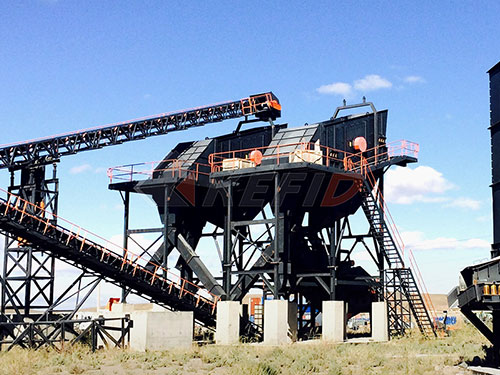
Understanding RoHS and Its Relevance to Crushing Plants
The RoHS directive, first adopted in 2003 and subsequently revised (RoHS 2 and RoHS 3), restricts the use of specific hazardous substances—including lead, mercury, cadmium, hexavalent chromium, polybrominated biphenyls (PBBs), polybrominated diphenyl ethers (PBDEs), and certain phthalates—in electrical and electronic equipment (EEE). Although a stone quarry crushing plant is fundamentally a mechanical system involving crushers, feeders, conveyors, screens, and washing equipment, modern plants are heavily electrified and automated. Variable frequency drives, programmable logic controllers (PLCs), human-machine interfaces, sensors, motor starters, control panels, cabling, and lighting systems all fall within the scope of RoHS-regulated EEE. Consequently, a crushing plant supplied to a European customer—or to any market that has adopted RoHS-equivalent legislation, such as the United Kingdom, Switzerland, Turkey, and various Asian and Middle Eastern jurisdictions—must demonstrate that its electrical and electronic content complies with the restricted substance thresholds.
For companies positioning themselves as RoHS-compliant stone quarry crushing plant providers, this entails rigorous supplier qualification, material declarations, and documentation trails extending from component manufacturers through to the final installed system. It is no longer sufficient to assemble a plant from the lowest-cost electrical components available; the compliance status of every relay, terminal block, and drive unit must be verified and traceable.
The Business Case for RoHS Compliance
The rationale for pursuing RoHS compliance in the crushing plant sector extends well beyond mere regulatory obligation. First, market access is at stake. Quarry operators in the European Union and associated markets increasingly require their equipment suppliers to furnish declarations of conformity, and procurement departments routinely embed RoHS requirements in tender specifications. A crushing plant company unable to provide such documentation risks exclusion from major projects, particularly those involving public infrastructure funding where compliance verification is mandatory.
Second, RoHS compliance aligns with broader environmental, social, and governance (ESG) objectives. Major quarry groups and construction materials companies have published ambitious sustainability targets, including commitments to responsible sourcing and environmentally sound equipment. Suppliers who can demonstrate RoHS conformity strengthen their position as preferred partners within these supply chains. Moreover, the restricted substances in question—lead and cadmium in particular—pose genuine occupational health and environmental risks during equipment manufacture, maintenance, and end-of-life recycling. Compliance therefore contributes to safer workplaces and more responsible lifecycle management.
Third, RoHS compliance reduces regulatory risk and total cost of ownership. Equipment containing restricted substances may face restrictions on resale, incur penalties, or require costly remediation if regulations tighten. By designing for compliance from the outset, manufacturers avoid the expense of retrofitting or redesigning control systems when regulations expand—as they have repeatedly since 2003. Forward-looking crushing plant companies treat RoHS as a design parameter rather than an afterthought, embedding compliance into their engineering change management processes.
Operational Implications Across the Supply Chain
Achieving RoHS compliance in a stone quarry crushing plant is fundamentally a supply chain challenge. A typical plant may incorporate hundreds or thousands of individual electrical and electronic components sourced from dozens of suppliers across multiple continents. Each component must be accompanied by a material declaration—often in the IPC-1752A format or via industry databases such as BOMcheck or the IEC 62474 declaration standard—confirming compliance with restricted substance limits. Companies must establish supplier codes of conduct, audit high-risk suppliers, and maintain robust incoming inspection and documentation systems.
Leading crushing plant manufacturers have responded by consolidating their electrical component procurement around suppliers with mature compliance programs, such as major automation and drive manufacturers that publish detailed RoHS declarations for their product ranges. Some firms have gone further, designing standardized control panels and electrical architectures that are pre-certified for RoHS compliance, thereby reducing the compliance burden on individual project configurations. Modular design approaches—whereby plant control systems are assembled from validated, documented modules—simplify both conformity assessment and future maintenance, since replacement parts can be sourced with confidence that they meet the same standards.
It is also important to recognize that RoHS compliance interacts with other regulatory regimes. The Waste Electrical and Electronic Equipment (WEEE) directive, the EU Machinery Regulation, and the REACH chemicals regulation impose complementary obligations. Crushing plant companies serving European markets must navigate this regulatory landscape holistically, often appointing compliance officers or engaging specialized consultancies to manage declarations, technical files, and CE marking procedures. The documentation burden is substantial, but it is increasingly viewed as a cost of doing business in regulated markets—and as a barrier to entry that favors established, well-resourced players.
Challenges and Practical Considerations
Despite its clear rationale, RoHS compliance presents several practical challenges for the stone quarry crushing plant sector. The first is information asymmetry: smaller component suppliers, particularly in emerging markets, may lack the technical capacity to produce accurate material declarations. Companies must therefore invest in supplier development or favor suppliers with recognized compliance credentials. The second is the dynamic nature of the regulations themselves. RoHS 3 added four phthalates to the restricted list in 2015, with compliance required from 2019, and further reviews of the restricted substance list are ongoing. Exemptions—such as those historically available for certain lead-containing alloys—are time-limited and subject to renewal, requiring continuous monitoring.
A third challenge concerns the boundary between equipment and infrastructure. A crushing plant is often integrated into a larger quarry installation involving conveyors, stockpiling systems, and site electrical distribution. Determining where RoHS obligations begin and end requires careful legal and technical analysis, particularly where fixed installations may fall outside the scope of the directive. Companies must work closely with customers to define scope and responsibilities, ideally codifying these in contractual documentation.
Finally, there is the question of verification and enforcement. Market surveillance authorities in the EU have become more active in checking industrial equipment, and customers increasingly conduct their own audits. Companies must therefore ensure that their declarations are not merely paper exercises but reflect genuine engineering and procurement practices. Internal audit programs, periodic supplier re-evaluation, and traceability systems are essential components of a credible compliance posture.
Strategic Outlook: Compliance as Competitive Advantage
Looking ahead, RoHS compliance is likely to become even more deeply embedded in the procurement criteria for stone quarry crushing plants. The global trend toward harmonized chemicals regulation—evidenced by China’s RoHS 2, Korea’s K-RoHS, and similar frameworks in other economies—means that equipment designed for one regulated market is increasingly expected to meet comparable standards elsewhere. Manufacturers who adopt a “design for global compliance” philosophy will enjoy greater market flexibility and reduced customization costs.
Moreover, the transition toward electrification and digitalization in quarrying—including the adoption of electric-driven crushers, telematics, and automated plant control—will expand the electronic content of crushing plants and, with it, the scope of RoHS obligations. Companies that have already built robust compliance management systems will be better positioned to absorb these changes. Conversely, firms that treat RoHS as a bureaucratic nuisance risk finding themselves excluded from premium projects and exposed to regulatory action.
Industry associations and standards bodies are also playing a constructive role. Guidance documents, harmonized declaration formats, and shared compliance databases reduce the transaction costs of conformity assessment, enabling even mid-sized crushing plant companies to participate credibly in regulated markets. Collaboration across the value chain—from component manufacturers to plant integrators to quarry operators—will be essential to maintaining compliance as product portfolios and regulations evolve in tandem.
Conclusion
RoHS compliance has evolved from a niche concern for electronics manufacturers into a mainstream requirement for the stone quarry crushing plant industry. For companies operating in this sector, compliance is no longer optional: it is a precondition for market access, a component of ESG performance, and a safeguard against regulatory and reputational risk. Achieving it requires disciplined supply chain management, robust documentation, thoughtful engineering design, and continuous vigilance as regulations change. Yet the companies that embrace RoHS compliance as a strategic priority—rather than a compliance burden—stand to gain a meaningful competitive advantage, positioning themselves as trusted suppliers to the quarrying industry’s most demanding and sustainability-conscious customers. In an era of accelerating environmental regulation, RoHS-compliant crushing plant providers are not merely meeting obligations; they are helping to define the responsible standard for the industry’s future.
If you have any questions about our products, please feel free to contact us. We take all inquiries and suggestions very seriously.