
Private Label Gyratory Crusher Specification: A Comprehensive Technical Overview
In the heavy industrial sectors of mining, quarrying, and mineral processing, the gyratory crusher stands as a cornerstone of primary crushing operations. Unlike jaw crushers, which are often used for smaller-scale or less demanding applications, gyratory crushers are designed for high-capacity, continuous-duty scenarios where throughput and reliability are paramount. In recent years, the concept of “private label” equipment has gained significant traction. A private label gyratory crusher is a machine manufactured by an Original Equipment Manufacturer (OEM) but branded and sold under a different company’s name. This arrangement allows distributors, engineering firms, or mining operators to offer high-quality crushing solutions without the overhead of in-house design and manufacturing. This article provides a detailed, professional, and objective specification analysis of private label gyratory crushers, covering design parameters, mechanical components, performance metrics, material selection, and quality assurance standards.
1. General Design Philosophy and Application Scope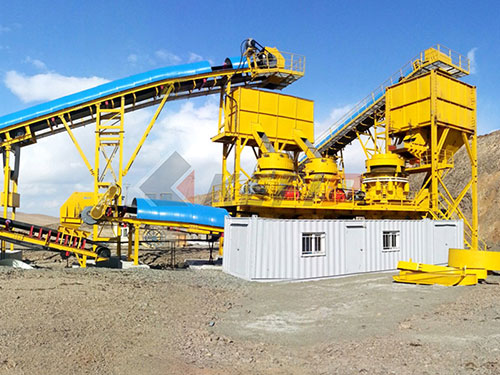
A private label gyratory crusher is fundamentally identical in engineering principle to its branded OEM counterpart. The design is based on a conical crushing head (the mantle) gyrating eccentrically within a stationary concave bowl. The feed material enters from the top, and as the mantle rotates, it compresses and breaks the rock against the concave surfaces. The crushed product exits through a bottom discharge opening, known as the closed side setting (CSS).
Private label specifications typically adhere to international standards such as ISO 21873-1 for crushing machinery and relevant ASTM material standards. The intended applications include primary crushing of hard rock (granite, basalt, quartzite), abrasive ores (copper, iron, gold), and large-scale aggregate production. These machines are designed for 24/7 operation in harsh environments, with capacities ranging from 500 to over 10,000 metric tons per hour (tph), depending on the model.
2. Key Mechanical Specifications
2.1. Feed Opening and Capacity
The feed opening is a critical specification, typically defined by the gape (the distance between the mantle and concave at the top) and the diameter of the mantle. For private label models, common gape sizes range from 42 inches (1067 mm) to 72 inches (1829 mm) or larger. The capacity is directly proportional to the gape and the eccentric throw. A standard 54-inch gyratory crusher, for example, may have a capacity of 2,500 to 3,500 tph at a CSS of 6 inches (152 mm). Private label specifications must clearly state the capacity range under standard conditions (e.g., bulk density of 1.6 t/m³, feed size distribution, and moisture content).
2.2. Closed Side Setting (CSS) and Adjustment Range
The CSS determines the product size. Most modern gyratory crushers, including private label units, feature hydraulic CSS adjustment. The specification should list the minimum and maximum CSS, typically from 4 inches (100 mm) to 10 inches (250 mm) for primary crushers. The adjustment mechanism must be robust, often using a hydraulic cylinder system that can be operated remotely or automatically via an automated control system (ACS). The accuracy of CSS adjustment is typically within ±5 mm.
2.3. Eccentric Throw and Speed
The eccentric throw (the stroke of the mantle) is a design parameter that influences both capacity and product shape. For gyratory crushers, the throw is usually fixed or adjustable within a narrow range (e.g., 20 mm to 40 mm). The eccentric speed (revolutions per minute, RPM) is another critical factor. Standard speeds range from 200 to 400 RPM, with larger crushers operating at lower speeds to reduce wear and power consumption. The specification must include the relationship between speed, throw, and power draw to optimize performance for specific feed materials.
2.4. Power and Drive System
Private label gyratory crushers are typically driven by a large electric motor via a V-belt or direct drive system. Motor power ratings vary significantly: a 42-inch crusher may require a 300–400 kW motor, while a 72-inch crusher may demand 1,000–1,500 kW. The specification should list the motor type (e.g., squirrel cage induction motor, synchronous motor), voltage (e.g., 6.6 kV, 11 kV), and enclosure type (e.g., TEFC, IP55). The drive system must include a high-torque starting capability, often achieved through a fluid coupling or soft starter, to handle the inertia of the crushing chamber.
3. Structural and Material Specifications
3.1. Main Frame and Shell
The main frame is the structural backbone of the crusher. It is typically fabricated from heavy-duty steel plate (e.g., ASTM A36 or A572 Grade 50) or cast steel (e.g., ASTM A27 Grade 65-35). The frame must be stress-relieved and machined to tight tolerances to ensure alignment of the eccentric assembly and concave ring. Private label specifications should include the frame’s weight, wall thickness, and the type of welding (e.g., full penetration, ultrasonic tested). The top shell and bottom shell are often bolted together, with the concave ring mounted inside the top shell.
3.2. Mantle and Concave (Liners)
The wear parts—the mantle (moving part) and concave (stationary part)—are the most critical components for performance and cost. They are made from high-manganese steel (e.g., ASTM A128 Grade B-2, containing 12–14% manganese) or alloyed white iron for extreme abrasion. The specification must detail the liner profile (e.g., straight, curved, or stepped), the number of concave segments (typically 3 to 6 per ring), and the hardness (e.g., 400–550 BHN). Private label suppliers often offer multiple liner designs (e.g., standard, fine, or coarse) to match specific feed characteristics. The expected wear life, expressed in tons crushed per set of liners, should be provided as a guideline, though it varies with material abrasiveness.
3.3. Eccentric Assembly and Bearings
The eccentric assembly consists of the eccentric shaft, counterweight, and bearings. The shaft is typically forged from alloy steel (e.g., 4340 or 4140) and heat-treated to a hardness of 300–350 HB. The bearings are critical: the main shaft is supported by a large spherical roller bearing or a babbitted sleeve bearing, while the eccentric is supported by two tapered roller bearings or a single large roller bearing. Private label specifications must list bearing type, manufacturer (e.g., SKF, FAG, Timken), and lubrication method (oil bath or circulating oil system). The bearing clearance and preload are set to ensure smooth operation under heavy loads.
3.4. Hydraulic and Lubrication Systems
Modern gyratory crushers rely on hydraulic systems for CSS adjustment, tramp release (protection against uncrushable material), and sometimes for mantle lifting. The specification should include the hydraulic pump capacity (e.g., 50 L/min at 200 bar), cylinder stroke, and pressure relief settings. The lubrication system is equally important: it must provide continuous oil flow to the bearings and gears. Typical specifications include an oil reservoir capacity (e.g., 500–2,000 liters), oil viscosity (e.g., ISO VG 150 or 220), and filtration level (e.g., 10 microns). The system should include temperature sensors, flow switches, and pressure gauges for condition monitoring.
4. Performance and Efficiency Metrics
4.1. Reduction Ratio and Product Gradation
The reduction ratio (feed size to product size) for a gyratory crusher is typically 4:1 to 6:1, though it can be higher in certain configurations. The specification should provide a typical product gradation curve for a given CSS and feed material. For example, at a CSS of 6 inches, the product may contain 80% passing 8 inches and 50% passing 4 inches. This data is essential for downstream circuit design.
4.2. Energy Consumption
Specific energy consumption (kWh per ton) is a key economic metric. For a well-designed gyratory crusher, this value typically ranges from 0.3 to 0.8 kWh/t for hard rock. The specification should include the motor power draw at full load and the expected efficiency of the drive system (e.g., 95% for V-belt drives). Private label units often incorporate energy-saving features such as variable frequency drives (VFDs) for the feed conveyor or crusher motor, though VFDs on the crusher itself are less common due to torque requirements.
4.3. Availability and Maintenance
Reliability is measured by mechanical availability (percentage of time the crusher is operational). Private label specifications should target a mechanical availability of 95% or higher under normal operating conditions. Mean time between failures (MTBF) for major components (e.g., bearings, seals) should be stated, typically exceeding 10,000 hours. Maintenance intervals for liner changes (e.g., every 6–12 months), oil changes (e.g., every 2,000 hours), and bearing inspections (e.g., annually) must be clearly documented.
5. Quality Assurance and Compliance
5.1. Manufacturing Standards
Private label gyratory crushers must be manufactured in facilities that adhere to ISO 9001 quality management systems. Key manufacturing processes—such as casting, forging, welding, and machining—should be certified. The specification should include non-destructive testing (NDT) requirements: ultrasonic testing (UT) for critical welds and shafts, magnetic particle inspection (MPI) for surface cracks, and radiographic testing (RT) for castings. Dimensional tolerances for critical interfaces (e.g., mantle seat, eccentric bore) are typically within ±0.1 mm.
5.2. Safety and Environmental Compliance
Safety features are non-negotiable. The specification must include emergency stop systems, lockout/tagout (LOTO) provisions, guarding for moving parts, and dust suppression or containment systems. Environmental compliance includes noise levels (typically below 85 dB(A) at 1 meter) and oil containment to prevent leaks. Private label units should meet CE marking (for European markets) or ASME standards (for North America), depending on the target region.
5.3. Documentation and Support
A comprehensive specification package should include:
6. Advantages and Considerations for Private Label
Advantages:
Considerations:
7. Conclusion
A private label gyratory crusher specification is a detailed technical document that defines the machine’s design, performance, and quality parameters. It must be precise, objective, and comprehensive to ensure that the equipment meets the demanding requirements of primary crushing applications. Key specifications—including feed opening, CSS range, power rating, material selection, and quality assurance—should be clearly stated to facilitate informed purchasing decisions. While private label crushers offer cost and customization benefits, buyers must verify that the OEM has a proven track record, robust manufacturing capabilities, and a reliable aftermarket support network. Ultimately, a well-specified private label gyratory crusher can deliver the same level of performance and reliability as a branded unit, provided that the specification is rigorous and the supplier is reputable. For mining and aggregate operators seeking to optimize capital expenditure without compromising on quality, private label gyratory crushers represent a viable and increasingly popular solution.
If you have any questions about our products, please feel free to contact us. We take all inquiries and suggestions very seriously.