Gyratory Crusher Producer Customization: Engineering Tailored Solutions for High-Throughput Comminution
Introduction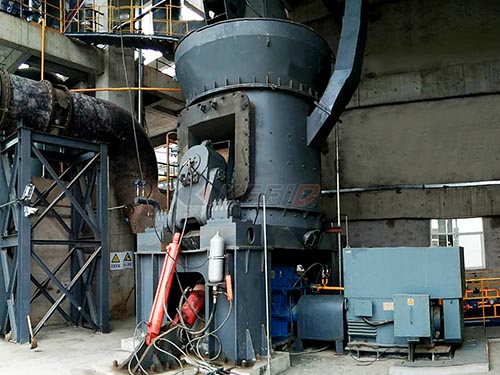
In the realm of mineral processing and heavy industrial comminution, the gyratory crusher stands as a colossus. Designed for primary crushing of hard, abrasive materials such as copper ore, iron ore, and hard rock, these machines are the workhorses of large-scale mining operations. Unlike jaw crushers, which are limited by their reciprocating motion and feed opening dimensions, gyratory crushers offer continuous crushing action, higher capacity, and a larger feed acceptance capability. However, the one-size-fits-all approach is rarely viable in modern mining, where ore bodies vary in hardness, moisture content, abrasiveness, and geological structure. This is where Gyratory Crusher Producer Customization becomes a critical value proposition. This article provides a professional, objective, and detailed examination of the customization process, the engineering parameters involved, the benefits, and the challenges faced by producers in delivering bespoke gyratory crusher solutions.
Section 1: The Rationale for Customization
Standard gyratory crusher models are designed to cover a broad operational envelope. However, several factors necessitate a departure from off-the-shelf designs:
-
Ore Characteristics: The Bond Work Index (Wi), compressive strength, and abrasiveness of the feed material directly influence crusher wear rates, power draw, and throughput. A crusher designed for a soft limestone quarry will fail prematurely in a hard granite or taconite operation. Customization allows for the selection of specific mantle and concave profiles, eccentric throw, and drive power to match the ore’s specific breakage behavior.
-
Site-Specific Constraints: Mine sites are rarely identical. Underground operations have strict height and width limitations. Open-pit mines may have variable bench heights and truck sizes. Customization can involve adjusting the crusher’s overall height, the design of the spider assembly, or the arrangement of the feed hopper to fit within existing infrastructure or to optimize material flow from haul trucks.
-
Throughput and Product Size Requirements: While gyratory crushers are known for high capacity, the required product size (P80) and the desired throughput (tons per hour) are project-specific. A copper mine may need a coarse product for SAG mill feed, while a gold operation might require a finer product to reduce downstream crushing stages. Customization allows for precise tuning of the crusher’s closed side setting (CSS) range, chamber geometry, and eccentric speed to achieve these targets without over-crushing or under-crushing.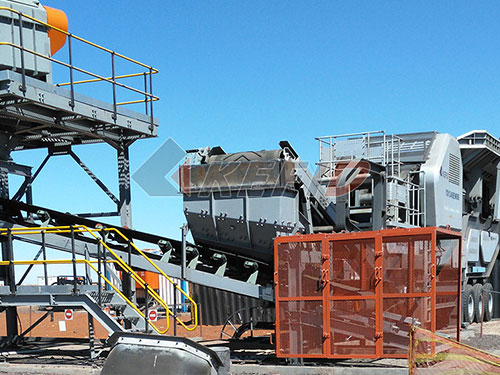
-
Environmental and Operational Conditions: Extreme temperatures, high altitude, corrosive atmospheres (e.g., near saltwater), or dusty environments demand specialized materials and design features. Customization can include the use of high-alloy steels for wear parts, specialized seals and lubrication systems, and corrosion-resistant coatings for structural components.
Section 2: Key Customization Parameters by the Producer
A reputable gyratory crusher producer offers customization across several critical engineering domains:
2.1. Chamber Geometry and Wear Profile Design
The crushing chamber—the space between the mantle and concave—is the heart of the crusher. Customization here is paramount.
- Profile Selection: Producers can offer different chamber profiles (e.g., straight, curved, or stepped) to control the compression ratio and the material flow. For sticky or wet ores, a non-choking profile with a larger nip angle is often preferred to prevent clogging. For hard, brittle ores, a deep, aggressive profile with a smaller nip angle maximizes breakage efficiency.
- Mantle and Concave Design: Customization extends to the number of crushing zones, the thickness of the wear liners, and the shape of the crushing teeth. For highly abrasive ores, producers can design thicker, more robust liners with a higher manganese content (e.g., 18-22% Mn) or even incorporate ceramic inserts for extreme wear resistance. The design of the concave ring segments can be optimized for ease of replacement and to minimize downtime.
- Eccentric Throw Adjustment: The eccentric throw (the distance the mantle moves from its center) is a critical variable. A larger throw increases the crushing force and capacity but also increases wear and power consumption. Customization allows the producer to offer a range of eccentric bushings or adjustable eccentric assemblies to fine-tune the throw for the specific ore’s breakage characteristics.
2.2. Drive System and Power Rating
- Motor Selection: The crusher’s drive motor must be matched to the required power draw. Customization involves selecting the correct motor type (e.g., squirrel cage induction, synchronous, or wound rotor), voltage (e.g., 4.16 kV, 6.6 kV, 11 kV), and enclosure type (e.g., TEFC, WPII) based on site power availability and environmental conditions.
- Gear and Pinion Design: The gear and pinion set transmits power from the motor to the eccentric assembly. Customization can involve the selection of gear materials (e.g., case-hardened alloy steel), tooth profile (e.g., helical or spur), and lubrication system (e.g., oil bath or forced circulation) to handle the specific torque and speed requirements. For high-torque applications, producers may offer double-reduction gear trains.
- Hydraulic System: Modern gyratory crushers rely on hydraulic systems for CSS adjustment, tramp iron release, and clearing the chamber. Customization includes the design of the hydraulic cylinders, the pressure rating, the control logic (e.g., PLC-based or manual), and the integration of sensors for real-time monitoring of pressure, position, and temperature.
2.3. Structural and Mechanical Design
- Main Shaft and Spider Assembly: The main shaft must withstand immense bending and torsional loads. Customization can involve the selection of shaft material (e.g., forged alloy steel), heat treatment (e.g., induction hardening), and the design of the spider bearing assembly (e.g., spherical roller bearings or sleeve bearings) to handle the specific radial and axial loads.
- Frame and Base: The crusher frame, typically a massive steel casting or fabricated structure, must be designed to absorb shock loads and provide a stable foundation. Customization can include the addition of stiffening ribs, the design of the base plate for bolting to a concrete foundation, or the integration of vibration isolation mounts.
- Feed Opening and Hopper: The feed opening size and shape must match the haul truck dump size. Customization can involve designing a larger or smaller feed opening, adding a rock box or grizzly to scalp fines, or incorporating a feed chute with wear-resistant liners to direct material flow.
2.4. Automation and Control Systems
- Advanced Control Algorithms: Producers can customize the crusher’s control system to implement advanced strategies such as power-based control, pressure-based control, or cascade control. These algorithms automatically adjust the CSS or feed rate to maintain optimal throughput and product size while protecting the crusher from overload.
- Remote Monitoring and Diagnostics: Customization can include the integration of IoT sensors for real-time monitoring of key parameters (e.g., bearing temperature, oil flow, vibration, power draw). Data can be transmitted to a central control room or cloud-based platform for predictive maintenance and performance optimization.
- Safety Interlocks: Customized safety systems can include emergency stop circuits, interlock systems for maintenance access, and automatic shutdown sequences in case of abnormal conditions (e.g., tramp iron detection, high temperature, low oil pressure).
Section 3: The Customization Process – From Inquiry to Commissioning
The journey from a customer’s initial inquiry to a fully operational customized gyratory crusher involves a structured, multi-stage process:
- Feasibility and Data Collection: The producer’s engineering team works closely with the customer to gather detailed data: ore characterization (Bond Work Index, abrasion index, moisture content, particle size distribution), site layout (dimensions, access, utilities), throughput targets, product size requirements, and environmental conditions.
- Conceptual Design and Simulation: Using advanced software (e.g., DEM – Discrete Element Method, FEA – Finite Element Analysis), the producer creates a 3D model of the crusher and simulates its performance under the specified conditions. This allows for optimization of chamber geometry, power draw, and wear life.
- Detailed Engineering and Design: Based on the simulation results, detailed engineering drawings are produced for all components. This includes stress analysis, fatigue life calculations, and tolerance specifications. The design is reviewed with the customer for approval.
- Material Sourcing and Fabrication: Specialized materials (e.g., high-manganese steel for liners, forged alloy steel for shafts) are sourced from qualified suppliers. Fabrication involves precision machining, welding, and heat treatment processes.
- Assembly and Testing: The crusher is assembled in the producer’s facility. A comprehensive test run is conducted, often under load, to verify performance parameters (e.g., power draw, vibration levels, oil pressure, CSS accuracy). Any issues are rectified before shipment.
- Installation and Commissioning: The producer’s field service team supervises the installation at the customer’s site. This includes foundation preparation, alignment, electrical connections, and final adjustments. Commissioning involves a gradual ramp-up to full production, with continuous monitoring and fine-tuning.
- After-Sales Support and Optimization: Customization does not end at commissioning. The producer provides ongoing support, including wear part replacement, performance monitoring, and optimization recommendations based on operational data.
Section 4: Benefits and Challenges of Customization
Benefits:
- Optimized Performance: A customized crusher delivers higher throughput, better product quality, and lower energy consumption per ton of material processed.
- Extended Wear Life: By matching the chamber geometry and liner material to the ore, wear rates are minimized, reducing downtime and replacement costs.
- Reduced Downtime: Customized designs can incorporate features that simplify maintenance, such as quick-release liners, accessible lubrication points, and modular components.
- Improved Safety: Customized safety systems and ergonomic designs reduce the risk of accidents during operation and maintenance.
- Long-Term Cost Savings: While the initial capital expenditure may be higher, the total cost of ownership (TCO) is often lower due to increased efficiency, reduced wear, and lower maintenance costs.
Challenges:
- Higher Initial Cost: Customization requires significant engineering effort, specialized materials, and longer lead times, resulting in a higher upfront price compared to standard models.
- Longer Lead Times: The design, fabrication, and testing process for a customized crusher can take several months, which may not suit projects with tight schedules.
- Complexity in Design: Customization introduces more variables, increasing the risk of design errors or performance mismatches if the data provided by the customer is inaccurate.
- Dependence on Customer Data: The success of customization hinges on the accuracy and completeness of the customer’s ore characterization and site data. Inaccurate data can lead to a suboptimal design.
- Aftermarket Support: Customized parts may not be readily available from third-party suppliers, making the customer dependent on the original producer for spare parts and service.
Section 5: Future Trends in Gyratory Crusher Customization
The industry is moving towards greater digitalization and data-driven customization:
- Digital Twins: Producers are creating digital twins of customized crushers, allowing for real-time simulation and optimization of performance based on actual operational data.
- AI-Driven Design: Artificial intelligence and machine learning algorithms are being used to analyze historical performance data and automatically generate optimized chamber geometries and wear profiles.
- Modular Customization: Instead of fully bespoke designs, producers are developing modular platforms where key components (e.g., eccentric assembly, hydraulic system, drive train) can be swapped out to adapt to different ore types or throughput requirements.
- Sustainable Customization: There is a growing focus on designing crushers for energy efficiency and reduced environmental impact. Customization can include the use of energy-efficient motors, regenerative braking systems, and materials with a lower carbon footprint.
Conclusion
Gyratory crusher producer customization is not merely a luxury; it is a strategic necessity for modern mining operations seeking to maximize productivity, minimize costs, and ensure operational reliability. By tailoring the crusher’s chamber geometry, drive system, structural design, and automation to the specific ore and site conditions, producers deliver a machine that is truly optimized for its intended application. While the process is complex, costly, and time-consuming, the long-term benefits in terms of throughput, wear life, and total cost of ownership are substantial. As the mining industry continues to face challenges of declining ore grades, deeper deposits, and stricter environmental regulations, the demand for highly customized, intelligent, and efficient gyratory crushers will only intensify. The producers who master the art and science of customization will be best positioned to lead the market in the decades to come.
