
Coke Vibration Screen ODM Manufacturer: Comprehensive Technical Datasheet and Engineering Guide
Introduction
In the metallurgical, chemical, and energy sectors, coke—a porous, carbon-rich solid derived from the destructive distillation of coal—serves as a critical reducing agent and fuel source, particularly in blast furnace ironmaking and foundry operations. The physical quality of coke, including its particle size distribution, uniformity, and structural integrity, directly influences furnace permeability, thermal efficiency, and the overall economics of smelting. To achieve the stringent specifications required by modern blast furnaces, the screening of coke after quenching and crushing is an indispensable process. This is where the coke vibration screen plays a pivotal role.
An Original Design Manufacturer (ODM) specializing in coke vibration screens does not merely assemble standard equipment; it designs, engineers, and customizes screening solutions tailored to the unique abrasive, high-temperature, and high-impact characteristics of coke. This article provides a comprehensive, professional, and objective datasheet and engineering overview of a leading ODM manufacturer’s coke vibration screen product line, covering technical parameters, design principles, material selection, application scenarios, and quality assurance protocols.
1. Core Functional Requirements for Coke Screening
Before delving into the datasheet, it is essential to understand the specific operational demands that differentiate a coke vibration screen from a conventional aggregate screen. Coke presents three primary challenges:
Therefore, a dedicated coke vibration screen must offer:
2. ODM Manufacturer’s Product Line Overview
Our ODM manufacturer offers three primary series of coke vibration screens, each engineered for specific stages of the coke handling process:
3. Technical Datasheet (Representative Model: CKM-2460)
The following table provides a detailed technical datasheet for a typical medium-fine coke vibration screen, model CKM-2460 (2.4 m width x 6.0 m length, triple-deck). This is a standard configuration but can be fully customized by the ODM team.
| Parameter | Specification | Unit | Notes |
|---|---|---|---|
| General Dimensions | |||
| Screen Width | 2400 | mm | Effective width: 2300 mm |
| Screen Length | 6000 | mm | Effective length: 5800 mm |
| Number of Decks | 3 | – | Configurable from 1 to 4 |
| Screen Area (per deck) | 13.34 | m² | Total effective area: 40 m² |
| Motion Characteristics | |||
| Motion Type | Circular / Elliptical | – | Driven by two counter-rotating vibrators |
| Amplitude (Stroke) | 8 – 12 | mm | Adjustable via counterweight configuration |
| Vibrating Frequency | 750 – 900 | RPM | Variable frequency drive (VFD) optional |
| Vibrating Direction Angle | 45° – 60° | degrees | Relative to horizontal plane |
| Drive System | |||
| Motor Power (per vibrator) | 30 | kW | Two motors total: 60 kW |
| Motor Type | TEFC (Totally Enclosed Fan Cooled) | – | IP55 protection, Class F insulation |
| Transmission | Direct drive via cardan shaft | – | Eliminates belt slippage |
| Feed & Discharge | |||
| Max Feed Size | 100 | mm | For scalping deck; reduced for lower decks |
| Max Feed Capacity | 350 – 450 | t/h | Dependent on bulk density (approx. 0.5–0.8 t/m³) |
| Discharge Clearance | 500 – 800 | mm | Adjustable for chute integration |
| Screen Panels | |||
| Top Deck (Scalping) | AR500 Steel, 10 mm thick | – | Aperture: 50–80 mm (square or slotted) |
| Middle Deck | Polyurethane (PU) with steel backing | – | Aperture: 25–40 mm (slotted, anti-clogging) |
| Bottom Deck | Polyurethane (PU) or Rubber | – | Aperture: 10–15 mm (slotted) |
| Structural Material | |||
| Side Plates | Q345B (S355JR) steel, 12 mm thick | – | Stress-relieved and shot-blasted |
| Cross Members | High-strength rectangular tubes | – | Bolted and welded construction |
| Vibration Isolation | |||
| Springs | Steel coil springs (compression) | – | 8 units, each with 50 mm static deflection |
| Support Frame | Heavy-duty H-beam base | – | Optional rubber shear mounts |
| Noise Level | ≤ 85 | dB(A) | At 1 meter distance, under load |
| Weight | |||
| Screen Body (without motor) | 18,500 | kg | Approximate |
| Total Dynamic Weight | 24,000 | kg | Including material load |
| Operating Conditions | |||
| Material Temperature | ≤ 80 | °C | Continuous operation |
| Moisture Content | ≤ 12 | % | Surface moisture |
| Ambient Temperature | -20 to +50 | °C | For outdoor installation |
4. Engineering Design Principles and ODM Customization
The value of an ODM manufacturer lies in its ability to adapt the base datasheet to specific site conditions. Key engineering customization areas include: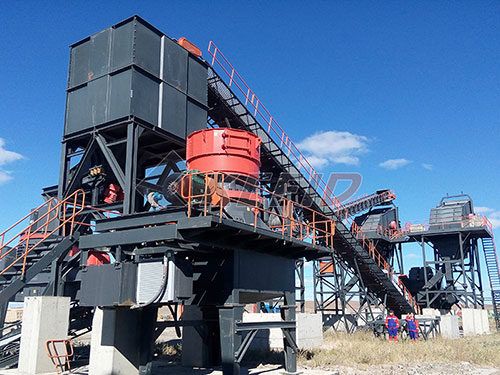
4.1. Vibration Mechanism Selection
4.2. Screen Panel Engineering
4.3. Structural Integrity and Fatigue Life
Coke screening generates high dynamic stresses. Our ODM manufacturer utilizes finite element analysis (FEA) during the design phase to simulate stress distribution across the side plates and cross members. Critical weld joints are subjected to ultrasonic testing (UT) and magnetic particle inspection (MPI). The side plates are fabricated from low-alloy high-strength steel (Q345B) and are stress-relieved in a furnace after welding to eliminate residual stresses. This ensures a fatigue life exceeding 50,000 hours of continuous operation.
4.4. Dust and Environmental Sealing
Coke handling is inherently dusty. The ODM design includes a fully bolted dust cover with rubber gaskets on the top of the screen. The discharge outlets are flanged to allow direct connection to downstream chutes or dust collection ducting. For wet quenching applications, the screen is equipped with a drip pan and drainage spouts to channel excess water away from the bearings.
5. Performance Metrics and Acceptance Testing
Every coke vibration screen manufactured by our ODM facility undergoes a rigorous factory acceptance test (FAT) before shipment. The following performance metrics are verified:
6. Maintenance and Lifecycle Support
An ODM manufacturer provides more than just a machine; it provides a lifecycle partnership. Key maintenance features include:
7. Case Study: ODM Customization for a Steel Mill in India
To illustrate the ODM capability, consider a recent project for a 2.5 Mtpa steel plant in eastern India. The client required a screen to handle 400 t/h of blast furnace coke with a high percentage of elongated, needle-like particles. The standard CKM-2460 datasheet was modified as follows:
8. Conclusion
The selection of a coke vibration screen is a critical engineering decision that impacts the entire metallurgical process. A professional ODM manufacturer brings value through deep process knowledge, advanced design tools (FEA, vibration analysis), and a willingness to customize every component—from the drive system to the screen panel geometry—to match the specific characteristics of the coke and the plant layout.
The datasheet provided in this article represents a baseline for a high-performance, heavy-duty coke screen. However, the true differentiator lies in the ODM’s engineering service: the ability to interpret operational data, predict wear patterns, and deliver a machine that offers not just high throughput, but also low total cost of ownership, minimal downtime, and consistent product quality. For any operation handling coke, investing in a purpose-built, ODM-engineered vibration screen is not an expense—it is a strategic investment in process reliability and metallurgical efficiency.
If you have any questions about our products, please feel free to contact us. We take all inquiries and suggestions very seriously.