
Title: Comprehensive Guide to Sourcing Gold Ore Crushing Equipment from Wholesalers: Market Insights, Selection Criteria, and Global Trade Dynamics
Introduction
The global mining industry, particularly the gold extraction sector, relies heavily on efficient and durable crushing equipment to process raw ore into manageable sizes for further beneficiation. Gold ore crushing is the first and one of the most critical stages in the mining value chain, directly impacting downstream grinding, leaching, and recovery rates. For mining companies, project developers, and plant operators, sourcing this equipment from a reliable wholesaler is not merely a procurement decision—it is a strategic investment that influences operational uptime, total cost of ownership, and project viability.
This article provides a comprehensive, objective analysis for professionals seeking to import gold ore crushing equipment from a wholesaler. It covers the types of equipment available, key technical specifications, global manufacturing hubs, quality assurance protocols, logistics considerations, and emerging market trends. The goal is to equip decision-makers with the knowledge necessary to navigate the complex landscape of international equipment trade.
1. Understanding Gold Ore Crushing Equipment: Types and Functions
Gold ore crushing equipment is designed to reduce large rocks (run-of-mine ore) into smaller particles, typically ranging from 150 mm to 25 mm, depending on the subsequent grinding stage. The primary types of crushers used in gold processing include:
Jaw Crushers: Ideal for primary crushing, jaw crushers use compressive force to break down hard, abrasive gold ores. They are characterized by high capacity, simple structure, and low maintenance. Wholesalers often offer models with hydraulic adjustment systems for closed-side setting (CSS) control.
Cone Crushers: Used for secondary and tertiary crushing, cone crushers provide finer product sizes and higher reduction ratios. Modern cone crushers feature advanced automation, tramp iron relief systems, and wear-resistant liners, making them suitable for hard rock gold deposits.
Impact Crushers (Horizontal Shaft Impactors – HSI, and Vertical Shaft Impactors – VSI): These are used for less abrasive ores or for shaping purposes. VSI crushers are particularly effective for producing high-quality cubical aggregates, though they are less common in primary gold ore crushing due to wear rates.
Hammer Crushers and Roll Crushers: These are sometimes employed in smaller-scale operations or for specific ore types. Hammer crushers use high-speed impact, while roll crushers use compression between rotating cylinders.
Mobile and Portable Crushing Plants: Increasingly popular for remote or temporary mining sites, these integrated units combine a feeder, crusher, conveyor, and screening system on a single chassis. Wholesalers specializing in mobile solutions offer flexibility and reduced site preparation costs.
2. Key Technical Specifications to Evaluate
When importing from a wholesaler, buyers must scrutinize the following technical parameters to ensure the equipment matches their ore characteristics and production targets:
Feed Opening Size: Determines the maximum rock dimension the crusher can accept. For gold ore, primary jaw crushers typically have feed openings from 600 mm to 1500 mm.
Closed Side Setting (CSS) Range: The smallest distance between the crushing surfaces at the discharge point. A narrower CSS produces finer output but reduces throughput.
Throughput Capacity (tph): Measured in tons per hour, this must align with the mine’s planned production rate. Wholesalers should provide capacity curves based on specific ore density and hardness.
Motor Power (kW): Directly correlates with crushing force and energy consumption. Higher power is required for harder ores (e.g., quartzite-hosted gold).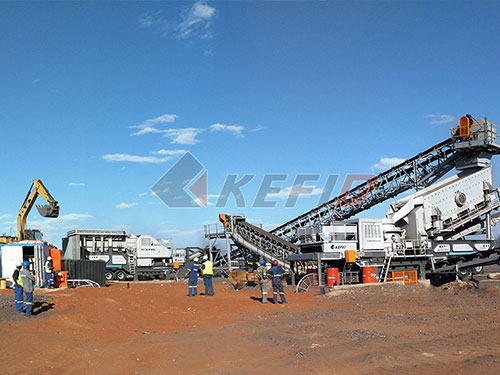
Wear Parts Life: The durability of liners, jaws, and mantles is critical. Wholesalers should specify the expected lifespan in operating hours for typical gold ore (e.g., 12-18% manganese steel or ceramic inserts).
Automation and Control Systems: Modern crushers often include PLC-based controls, remote monitoring, and load-sensing features to optimize performance and prevent overloading.
3. Global Manufacturing Hubs and Wholesale Markets
The global market for gold ore crushing equipment is dominated by several key regions, each offering distinct advantages:
China: The world’s largest manufacturer of mining equipment, China offers a vast range of crushers at competitive prices. Major industrial clusters in Henan, Shandong, and Liaoning provinces host thousands of wholesalers and OEMs. Chinese wholesalers often provide customization, fast lead times, and bundled spare parts. However, quality variability requires rigorous due diligence.
Europe (Germany, Finland, Sweden): European manufacturers (e.g., Metso Outotec, Sandvik, Thyssenkrupp) are renowned for high-quality engineering, advanced automation, and long service life. Wholesalers in this region typically cater to large-scale, high-capacity operations and offer premium pricing. They excel in after-sales support and compliance with stringent safety standards.
North America (USA, Canada): American and Canadian wholesalers focus on robust, heavy-duty equipment designed for harsh mining environments. They often supply used or refurbished crushers, which can be cost-effective for smaller projects. The region also has a strong network of independent dealers and distributors.
India and South Africa: These emerging manufacturing hubs produce mid-range equipment suitable for medium-scale operations. Indian wholesalers, in particular, have gained traction for their balance of cost and reliability.
4. Quality Assurance and Certification
Importing equipment across borders introduces risks related to quality, safety, and compliance. A reputable wholesaler should provide:
5. Logistics and Import Considerations
International procurement of heavy machinery involves complex logistics:
Incoterms: Common terms include FOB (Free on Board) from the wholesaler’s port, CIF (Cost, Insurance, Freight) to the buyer’s destination port, or DDP (Delivered Duty Paid) for full service. Buyers should clarify who bears risk during transit.
Shipping: Crushers are heavy (often 20–100 tons) and require flat-rack or open-top containers, or break-bulk shipping. Wholesalers should provide detailed packing lists, lifting diagrams, and container loading plans.
Customs and Duties: Import duties vary by country (e.g., 5–15% in many developing nations). Buyers must verify HS codes (e.g., 8474.20 for crushing machinery) and ensure the wholesaler provides correct commercial invoices and certificates of origin.
Lead Times: From order to delivery, lead times typically range from 30 to 90 days for standard models, and up to 120 days for customized units. Buyers should factor in port clearance and inland transportation.
6. Cost Analysis: Total Cost of Ownership (TCO)
The purchase price is only one component of TCO. A thorough analysis includes:
7. Emerging Trends in Gold Ore Crushing Equipment
8. How to Select the Right Wholesaler: A Step-by-Step Approach
Conclusion
Importing gold ore crushing equipment from a wholesaler is a multifaceted process that demands technical expertise, market knowledge, and rigorous risk management. The right equipment can significantly enhance recovery rates, reduce operational costs, and extend mine life. By focusing on technical specifications, supplier credibility, logistics, and total cost of ownership, mining professionals can make informed decisions that align with their project’s unique geological and economic conditions. As the gold mining industry continues to evolve toward greater efficiency and sustainability, partnering with a forward-thinking wholesaler will remain a cornerstone of successful operations.
If you have any questions about our products, please feel free to contact us. We take all inquiries and suggestions very seriously.