Quarry Ballast Crushing Equipment Exporters: Securing the Best Price for Infrastructure’s Backbone
The global construction and railway industries rest, quite literally, on a foundation of ballast. This coarse aggregate, typically crushed stone of specific size and gradation, provides drainage, stability, and load distribution for railway tracks and major civil engineering projects. The production of high-quality ballast is a specialized task, reliant on efficient and robust quarry ballast crushing equipment. For buyers worldwide, navigating the market of exporters to secure the best price involves a complex equation balancing cost, quality, reliability, and total lifecycle value. This article delves into the intricacies of this essential sector.
Understanding the Product: What is Ballast Crushing Equipment?
Ballast crushing equipment refers to a coordinated system of machines designed to reduce large blasted rock (typically hard igneous rocks like granite, basalt, or quartzite) into precisely graded aggregates (usually 25-50mm or 1-2.5 inches) suitable for rail ballast. A standard production line includes:
- Primary Crushers: Jaw crushers or gyratory crushers that handle the initial size reduction of large quarry run material.
- Secondary Crushers: Cone crushers are predominantly used here. Their ability to produce a well-graded, cubical product with minimal flaky or elongated particles is critical for ballast interlock and stability.
- Tertiary Crushers: For finer control or harder materials, vertical shaft impactors (VSIs) or high-pressure grinding rolls may be employed to shape the aggregate and improve particle form.
- Screening Equipment: Multi-deck vibrating screens are indispensable for separating crushed material into specified size fractions, ensuring strict adherence to rail authority specifications (e.g., AREMA, UIC).
- Material Handling Systems: Conveyors, feeders, and transfer points that connect the process flow.
- Control Systems: Modern PLC-based automation for optimizing throughput, gradation, and energy use.
The Export Landscape: Key Players and Market Dynamics
The market for exporting this heavy industrial machinery is dominated by several regions and company types:
- Traditional Powerhouses: European exporters (e.g., from Germany, Finland, Sweden) like Sandvik (now part of Sandvik Rock Processing Solutions), Metso Outotec (now Metso), and ThyssenKrupp are renowned for high-end engineering, advanced technology, automation, and durability. Their equipment often commands a premium price but is associated with lower lifetime operating costs and high reliability.
- Emerging Giants: Chinese manufacturers such as SBM Machinery (Shibang), Liming Heavy Industry (Lonking), and Zhejiang MP Mining Equipment have made massive inroads over the past two decades. They compete aggressively on initial capital cost (“best price” in the narrowest sense), offering reasonably reliable equipment with improving technology. Their strength lies in cost-effective solutions for mid-range capacity plants.
- Specialized & Regional Exporters: Companies from Turkey (e.g., Constmach), India (e.g., Propel Industries), and North America also play significant roles in their respective regions and globally with competitive offerings that blend technology with cost-effectiveness.
The “best price” must be evaluated within this context: a lower upfront quote from one region may not equate to a lower total cost of ownership compared to a higher-priced but more efficient and longer-lasting alternative from another.
Decoding “Best Price”: A Total Cost of Ownership Perspective
A professional procurement strategy looks beyond the invoice price (FOB or CIF). The true “best price” is found in minimizing the Total Cost of Ownership (TCO), which includes: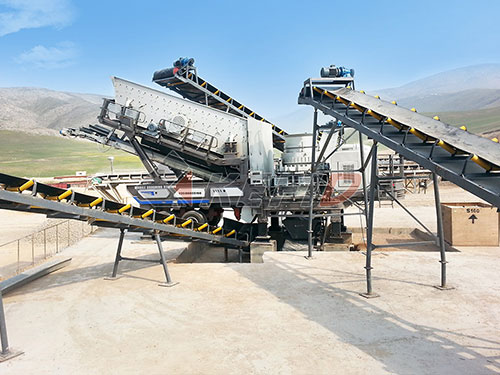
- Capital Expenditure (CAPEX): The purchase price negotiated with the exporter.
- Operational Expenditure (OPEX):
- Energy Consumption: Crusher design directly impacts kWh per ton of ballast produced. More efficient crushing chambers can justify a higher CAPEX.
- Wear Parts Cost & Life: The cost frequency of replacing manganese jaws liners cone mantles concaves screen meshes etc varies drastically between manufacturers Quality metallurgy can triple wear life
- Labor & Maintenance: Easier maintenance designs automated lubrication systems remote monitoring capabilities reduce downtime labor costs
- Output Quality & Yield: Equipment that produces a higher percentage of in-spec product on first pass reduces recirculation load waste Maximizing yield directly improves revenue
- Reliability & Uptime: Unplanned stoppages are catastrophic in quarrying Dependable equipment with global service support minimizes production losses
- After-Sales Support & Parts Availability: An exporter’s ability to provide timely technical support training genuine spare parts locally or through efficient logistics is invaluable Downtime waiting for parts erodes any initial savings
Strategic Considerations When Sourcing from Exporters
To navigate toward an optimal deal buyers should:
- Define Specifications Rigorously: Clearly outline required capacity feed size rock abrasiveness final product gradation Prepare detailed technical data sheets This allows exporters to provide comparable accurate quotations
- Request Comprehensive Quotations: Demand breakdowns that include not only machine prices but also shipping insurance installation commissioning training recommended spare parts list
- Evaluate Technology & Automation Level: Assess if basic PLC control suffices or if an advanced plant optimization system yielding better product shape fraction control is worth investing in
- Visit Reference Sites Insist on Testing Where possible visit existing installations especially those processing similar geology Request factory acceptance tests FATs for key components
- Scrutinize Contractual Terms Payment terms warranty scope exclusions delivery schedule penalties for delays Incoterms clarity are all critical Price alone means little if delivery is unreliable warranty unenforceable
- Consider Local Presence An exporter with regional office service engineers warehouse provides immense long term value reducing risk
The Negotiation Process: Securing Value
Armed with TCO analysis negotiation shifts from haggling over sticker price to discussing value drivers:
- Discuss extended warranty packages bundled with spare parts kits
- Negotiate pricing for critical year-one wear parts upfront as part of deal
- Explore financing options some exporters partner with financial institutions offering attractive terms making higher-quality equipment more accessible
- Consider phased purchasing start with core crushing screening units later add automation dust suppression systems
Future Trends Impacting Price & Selection
Exporters are increasingly competing on these evolving fronts:
- Energy Efficiency Driven by rising power costs ESG goals leading to premium for hybrid electric drives optimized crushing chambers
- Digitalization IoT Remote monitoring predictive maintenance digital twins offer uptime guarantees impacting long-term operational costs
- Modular & Mobile Designs For smaller deposits remote sites modular containerized plants offer flexibility potentially reducing site preparation installation costs exported as pre-assembled units
- Sustainability Focus Equipment enabling water recycling dust suppression noise reduction becoming important selection criteria potentially qualifying projects for better financing
Conclusion
The quest for quarry ballast crushing equipment at the “best price” is fundamentally an exercise in sophisticated value engineering rather than simple bargain hunting Successful buyers partner with exporters who demonstrate not just competitive pricing but deep application expertise reliable build quality comprehensive after-sales support By meticulously analyzing Total Cost Ownership considering strategic operational context leveraging informed negotiation construction companies railway authorities can secure capital assets that form profitable resilient backbone their ballast production operations years come Ultimately best price one where initial investment delivers lowest sustainable cost per ton high specification ballast ensuring both project viability long-term infrastructure integrity
