
Title: Gold Ore Crushing Equipment Exporters: A Comprehensive Technical and Market Overview
Introduction
The global mining industry relies on a robust, efficient, and durable chain of comminution equipment to liberate precious metals from host rock. Among the most critical stages in this chain is primary and secondary crushing of gold ore. Exporters of gold ore crushing equipment occupy a strategic niche, supplying machinery that must withstand extreme abrasive conditions, high throughput demands, and increasingly stringent safety and environmental regulations. This article provides a detailed, professional examination of the gold ore crushing equipment export sector, covering equipment types, engineering specifications, market dynamics, quality standards, logistical considerations, and future trends. The objective is to offer a factual, objective reference for procurement managers, mining engineers, and international trade professionals.
1. The Role of Crushing in Gold Ore Processing
Gold ore, depending on its origin (hard rock, alluvial, or refractory), requires size reduction to expose gold particles for subsequent leaching (typically cyanidation) or gravity concentration. Crushing is the first mechanical stage, reducing run-of-mine (ROM) ore from sizes up to 1,200 mm to a product of 150–250 mm (primary), then to 20–50 mm (secondary), and sometimes to 10 mm or less (tertiary). The efficiency of crushing directly impacts downstream milling energy consumption, reagent usage, and overall recovery rates. Exporters must therefore provide equipment that offers high reduction ratios, consistent product size distribution, and minimal downtime.
2. Core Equipment Categories Exported
Exporters typically supply a portfolio of machinery, each designed for specific ore hardness (e.g., Bond Work Index) and capacity requirements. The primary categories include:
Jaw Crushers: Used for primary crushing. Modern exporters offer single-toggle and double-toggle designs with feed openings ranging from 600×400 mm to 1,500×1,200 mm. Key specifications include eccentric shaft speed (200–300 rpm), closed side setting (CSS) adjustability (50–300 mm), and manganese steel jaw plates (12–18% Mn). Hydraulic wedge adjustment systems are now standard to reduce downtime.
Gyratory Crushers: For high-capacity operations (above 2,000 t/h), gyratory crushers are preferred. Exporters supply units with spider suspension or hydraulic support, capable of handling feed sizes up to 1,500 mm. They offer a continuous crushing action, yielding higher throughput per unit footprint compared to jaw crushers.
Cone Crushers: For secondary and tertiary crushing, cone crushers (Symons, HP, or compound types) are the industry standard. Exporters provide models with eccentric throw adjustment, hydraulic tramp release, and automated setting regulation. Crushing chambers are available in standard, medium, and short-head configurations to match product size requirements (10–50 mm).
Impact Crushers: For softer, less abrasive gold ores (e.g., oxide ores), horizontal shaft impactors (HSI) and vertical shaft impactors (VSI) are offered. They provide high reduction ratios and cubical product shape, but are less suitable for high silica content.
Feeder-Breakers and Sizers: For underground or soft-rock operations, low-speed sizers and feeder-breakers are exported, offering controlled size reduction with minimal fines generation.
3. Engineering and Material Specifications
Professional exporters distinguish themselves through superior metallurgy and engineering. Key technical parameters include:
Wear Parts: Crusher liners, jaws, concaves, and mantles are cast from high-chromium white iron (for impact) or austenitic manganese steel (for compression). Exporters must specify hardness (e.g., 400–550 HB) and impact toughness (e.g., 20–30 J/cm²) to ensure service life of 3,000–10,000 hours depending on ore abrasiveness.
Main Frame and Shafts: Cast or fabricated steel frames (ASTM A148 or equivalent) with stress-relieved welds. Eccentric shafts are forged from alloy steel (e.g., 42CrMo4) and induction-hardened to 50–55 HRC.
Bearings and Lubrication: Spherical roller bearings with high dynamic load ratings. Exporters now integrate automatic grease lubrication systems and oil temperature sensors for predictive maintenance.
Hydraulic Systems: Modern crushers feature hydraulic adjustment of CSS, overload protection, and clearing of uncrushable materials (e.g., tramp metal). These systems must comply with ISO 4413 safety standards.
Electrical and Automation: Exporters offer motor power ratings from 75 kW (small jaw) to 600 kW (large cone). Variable frequency drives (VFDs) and PLC-based control panels with remote monitoring (SCADA) are increasingly standard, enabling real-time data on power draw, bearing temperature, and wear status.
4. Quality Assurance and International Standards
Reputable exporters adhere to a multi-tiered quality framework:
Exporters should provide detailed test certificates, including non-destructive testing (NDT) of critical welds (UT, MT, RT), dimensional inspection reports, and a factory acceptance test (FAT) protocol. Third-party inspection (e.g., SGS, Bureau Veritas) is often required by end buyers in Africa, South America, and Central Asia.
5. Market Dynamics and Major Export Destinations
The demand for gold ore crushing equipment is driven by gold prices, mine development cycles, and the shift toward smaller, high-grade deposits. Key export markets include:
Africa (Mali, Ghana, Burkina Faso, Tanzania): High demand for mobile or semi-mobile jaw crushers and cone crushers due to remote sites and limited infrastructure. Exporters must offer containerized or skid-mounted solutions to reduce on-site assembly time.
Central Asia (Kazakhstan, Uzbekistan, Kyrgyzstan): Large-scale, state-owned or joint-venture mines require heavy-duty gyratory and cone crushers. Cold-weather packages (down to -40°C) are essential, including heated lubrication systems and special steel grades for low-temperature impact resistance.
South America (Peru, Chile, Brazil): High-altitude operations (above 4,000 m) demand derating of motors and hydraulic systems. Exporters must provide altitude-corrected power calculations and oxygen-enriched combustion options for diesel-driven units.
Southeast Asia (Indonesia, Philippines, Myanmar): Artisanal and small-scale gold mining (ASGM) is growing, creating a niche for compact, low-cost jaw crushers with throughputs of 1–20 t/h. Exporters are adapting with diesel-electric hybrid drives and simple manual adjustment mechanisms.
6. Logistics and Export Documentation
Exporting heavy crushing equipment (single units weighing 20–150 metric tons) requires meticulous logistics planning:
Packaging: Machinery must be disassembled into sub-assemblies (main frame, eccentric assembly, hydraulic unit, electrical cabinet) and packed in fumigation-free wooden crates or steel frames. Anti-corrosion VCI (vapor corrosion inhibitor) films are mandatory for sea freight.
Incoterms: Common terms include FOB (e.g., Shanghai, Mumbai, Rotterdam), CIF (destination port), or DAP (mine site). Exporters must clearly define demurrage, port handling, and inland transport responsibilities.
Documentation: A complete export package includes commercial invoice, packing list, bill of lading, certificate of origin (Form A for GSP eligibility), insurance certificate, and, where required, a certificate of conformity (CoC) from the importing country’s standards bureau.
Lead Times: Standard manufacturing lead time is 8–16 weeks for custom-built crushers, plus 4–8 weeks for sea freight. Exporters should offer expedited spare parts (wear liners, bearings) via air freight to minimize downtime.
7. After-Sales Support and Spare Parts
A critical differentiator among exporters is the depth of after-sales service. Leading exporters provide:
Spare Parts Availability: A guaranteed stock of manganese liners, eccentric shafts, and hydraulic seals for at least 10 years after model discontinuation. Parts should be interchangeable with OEM equivalents (e.g., Metso, Sandvik, Terex) to allow retrofitting.
Technical Documentation: Full operation and maintenance manuals, lubrication charts, and hydraulic schematics in multiple languages (English, French, Spanish, Russian).
On-Site Commissioning: Exporters often deploy a service engineer for 2–4 weeks to supervise installation, alignment, and trial runs. Remote diagnostics via IoT sensors are now offered for real-time troubleshooting.
Training: Structured training programs for local operators and maintenance crews, covering safety procedures, wear part replacement, and CSS calibration.
8. Environmental and Safety Considerations
Modern gold ore crushing equipment must address environmental and occupational safety concerns:
Dust Control: Exporters integrate water spray systems, dust collection hoods, and enclosed chutes to minimize respirable silica dust. Compliance with OSHA (US) or EU Directive 2004/37/EC on carcinogens is increasingly demanded.
Noise Reduction: Primary crushers can generate 95–110 dB(A). Exporters offer acoustic enclosures, rubber-lined impact zones, and low-speed designs to reduce noise exposure.
Energy Efficiency: Hydraulic drives with load-sensing pumps and high-efficiency motors (IE3/IE4) reduce specific energy consumption (kWh/t). Some exporters now offer hybrid systems with regenerative braking for downhill conveyor-fed crushers.
Safety Interlocks: Emergency stop systems, anti-spin devices for cone crushers, and lockout/tagout (LOTO) provisions are standard. CE-compliant guarding must prevent access to moving parts during operation.
9. Cost Considerations and Total Cost of Ownership (TCO)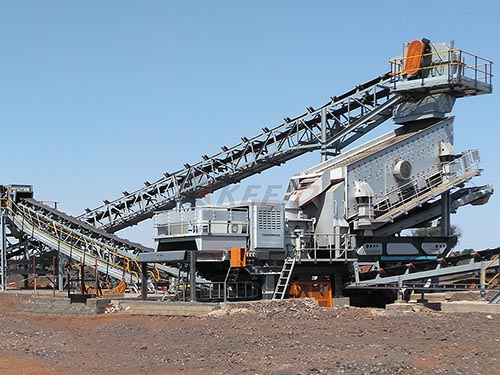
Procurement decisions are rarely based on initial purchase price alone. Exporters must transparently present TCO, which includes:
Capital Cost: Typically $50,000–$500,000 for a jaw crusher, $100,000–$1.5 million for a cone crusher, and $500,000–$3 million for a gyratory crusher.
Installation and Civil Works: Foundation design, anchoring, and alignment can add 15–30% to capital cost.
Wear Parts Consumption: For abrasive gold ores (e.g., quartzite), manganese liners may need replacement every 3–6 months. Exporters should provide cost per ton of crushed ore (e.g., $0.05–$0.20/t).
Maintenance Labor: Hydraulic and bearing maintenance requires skilled technicians. Exporters offering modular designs reduce labor hours by 20–30%.
Energy Costs: A 200 kW crusher operating 6,000 hours/year at $0.10/kWh incurs $120,000 annually in electricity. High-efficiency designs can reduce this by 10–15%.
10. Future Trends in Gold Ore Crushing Equipment Exports
The sector is evolving rapidly, and exporters must anticipate the following trends:
Automation and AI: Self-adjusting crushers using real-time ore hardness sensors (e.g., near-infrared or laser-based) will optimize CSS automatically, improving throughput by 5–10%.
Mobile and Modular Systems: Containerized crushing plants with integrated screens and conveyors are gaining traction for small and medium mines, reducing site civil works by 50%.
Recycling and Circular Economy: Exporters are designing crushers with higher recyclability of steel components and offering refurbishment programs for used equipment.
Digital Twins: Virtual replicas of crushers allow simulation of wear patterns and predictive maintenance scheduling, reducing unplanned downtime by up to 30%.
Alternative Materials: Development of ceramic-metal composites (e.g., tungsten carbide inserts) for wear parts may extend liner life by 2–3 times in extreme abrasive conditions.
Conclusion
Gold ore crushing equipment exporters operate at the intersection of heavy engineering, metallurgy, logistics, and international trade compliance. Success requires not only manufacturing robust machines but also providing comprehensive technical documentation, responsive after-sales support, and transparent cost models. As gold mining expands into more remote and challenging environments, exporters who invest in automation, cold-weather packages, and modular designs will gain a competitive edge. For buyers, a thorough evaluation of TCO, certification, and spare parts availability is essential to ensure long-term operational reliability. The future of this sector lies in intelligent, energy-efficient, and environmentally responsible crushing solutions that maximize gold recovery while minimizing operational risk.
If you have any questions about our products, please feel free to contact us. We take all inquiries and suggestions very seriously.