
Top Ten Stone Crusher Machine Assembly Plant Specifications: A Comprehensive Engineering Overview
The stone crushing industry forms the backbone of modern infrastructure, supplying essential aggregates for road construction, concrete production, and building foundations. At the heart of this industry lies the assembly plant—a highly engineered facility where crushers, screens, conveyors, and auxiliary systems are integrated into functional units. While individual crusher models vary by manufacturer, the assembly plant specifications dictate throughput, reliability, safety, and operational efficiency. This article presents a detailed, professional analysis of the top ten critical specifications that define a world-class stone crusher machine assembly plant, based on international standards (ISO, CE, ASTM) and field-proven engineering practices.
1. Structural Steel Framework and Load-Bearing Capacity
The assembly plant’s primary frame must be fabricated from high-grade structural steel, typically ASTM A36 or S355JR, with a minimum yield strength of 250 MPa. For stationary plants, the base frame is designed to support dynamic loads from the crusher’s eccentric motion, which can generate forces up to 3–5 times the static weight of the machine. Specifications require a safety factor of at least 1.5 against overturning and fatigue failure. For mobile or semi-mobile plants, the frame must incorporate integrated axles, hydraulic leveling jacks, and towing points, with a maximum gross vehicle weight (GVW) compliant with regional road transport regulations (e.g., 40 tonnes in the EU, 36 tonnes in the US). The frame’s vibration damping characteristics are quantified by a natural frequency that must be at least 20% higher than the crusher’s operating frequency to avoid resonance.
2. Primary Crushing Unit: Jaw Crusher Specifications
The jaw crusher, typically the first stage, is specified by its feed opening, capacity, and setting adjustment range. A standard assembly plant uses a jaw crusher with a feed opening of 900×750 mm to 1200×1000 mm, capable of accepting rocks up to 800 mm in diameter. The crushing chamber is designed with a V-shaped cavity, where the toggle plate angle (typically 20–30 degrees) determines the mechanical advantage. Key specifications include: eccentric shaft speed (220–350 RPM), closed side setting (CSS) range of 75–200 mm, and throughput of 150–350 tonnes per hour (tph) depending on material hardness. The jaw plates must be made of manganese steel (12–14% Mn) with a hardness of 400–500 HB, and the toggle plate must be designed as a sacrificial element to protect the main frame from uncrushable materials. Hydraulic wedge adjustment systems are now standard, allowing CSS changes in under 10 minutes without manual shimming.
3. Secondary Crushing Unit: Cone Crusher Specifications
For secondary and tertiary stages, cone crushers are specified by their mantle diameter, eccentric throw, and power rating. A typical assembly plant uses a 1200–1500 mm cone crusher with a motor power of 160–250 kW. The crushing chamber profile (standard, medium, or short head) is selected based on the required product gradation. Critical specifications include: eccentric throw (18–32 mm), base RPM (600–900), and hydraulic tramp release system with a preset pressure of 150–200 bar. The crusher must achieve a reduction ratio of 4:1 to 6:1, with a product size distribution where 80% passing (P80) is below 25 mm for downstream screening. The main shaft is forged from alloy steel (AISI 4140) and heat-treated to a tensile strength of 850 MPa. Lubrication systems must maintain oil temperature between 35–45°C, with a flow rate of 100–150 L/min and filtration to 25 microns.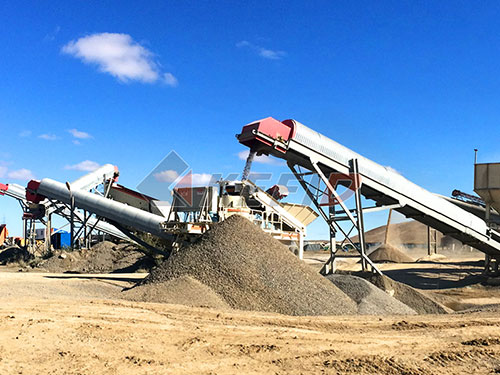
4. Screening and Classification Modules
The assembly plant’s screening system is specified by the number of decks, screen area, and vibration parameters. A dual-deck inclined screen (15–20 degrees) with a vibrating mechanism generating 800–1200 RPM and an amplitude of 8–12 mm is standard. Screen mesh apertures range from 5 mm to 80 mm, with polyurethane or rubber panels for wear resistance. The total screening area must be sized to handle 1.5–2 times the crusher’s nominal throughput to prevent blinding. For precise classification, a horizontal screen with a triple-shaft mechanism may be specified, providing a linear motion that reduces plugging. The plant must include a fines recovery system, typically a hydrocyclone or dewatering screen, to handle the 0–5 mm fraction with a moisture content below 10%.
5. Conveyor System Specifications
Conveyor belts are the arteries of the assembly plant. Specifications include belt width (800–1400 mm), belt speed (1.5–2.5 m/s), and motor power (15–75 kW per conveyor). The belt must be made of EP (polyester-nylon) or steel cord fabric, with a tensile strength of 400–1000 N/mm. Idler spacing is 1.0–1.2 m on the carrying side and 3.0 m on the return side, with troughing angles of 30–45 degrees. Transfer points require impact beds with rubber-lined idlers to absorb drop energy from heights up to 3 meters. The conveyor system must include belt scales (accuracy ±0.5%), metal detectors, and emergency pull-cord switches at 50-meter intervals. For dust control, the conveyors are fitted with full-length covers and skirt boards with a minimum clearance of 25 mm above the belt.
6. Power and Drive System
The assembly plant’s electrical specification is critical for continuous operation. The main crusher motors are typically squirrel-cage induction motors with a voltage rating of 400V (50 Hz) or 480V (60 Hz), with a power factor correction capacitor bank to maintain a PF above 0.9. The total installed power for a 300 tph plant ranges from 400–600 kW, including crushers, screens, conveyors, and auxiliary systems. Soft starters or variable frequency drives (VFDs) are specified for all motors above 30 kW to reduce inrush current and mechanical shock. The plant must have a dedicated transformer (e.g., 1000 kVA) with a short-circuit withstand rating of 25 kA for 1 second. Emergency stop systems must be hardwired, with a redundant PLC-based safety relay meeting SIL 2 (Safety Integrity Level) requirements.
7. Hydraulic and Lubrication Systems
Modern assembly plants rely heavily on hydraulics for setting adjustments, tramp release, and lifting. The hydraulic power unit (HPU) is specified with a pump flow of 40–80 L/min, a working pressure of 180–220 bar, and a reservoir capacity of 200–400 liters. The system must include accumulators (10–20 L) to maintain pressure during power loss, and a nitrogen pre-charge of 60–70 bar. All hydraulic hoses must meet SAE 100R2AT standards, with a burst pressure of at least 4 times the working pressure. The centralized lubrication system uses a progressive divider block, delivering grease (NLGI 2) to each bearing at intervals of 5–15 minutes, with a pressure of 40–60 bar. Oil analysis ports must be installed at all critical return lines to enable scheduled sampling.
8. Dust Suppression and Environmental Control
Environmental compliance is a mandatory specification. The assembly plant must be equipped with a water spray system using atomizing nozzles (0.5–2.0 mm orifice) at all transfer points, crusher feed chutes, and screen discharge areas. The system requires a water flow of 5–10 L/min per nozzle at a pressure of 5–8 bar, with a total plant consumption of 50–150 L/min. For dry operations, a baghouse or cartridge dust collector with a filtration efficiency of 99.9% (PM10) is specified, with an air-to-cloth ratio of 1.2–1.5 m/min. The plant’s noise level must not exceed 85 dB(A) at a 1-meter distance from the crusher enclosure, requiring acoustic panels with a minimum sound transmission class (STC) of 30. Wastewater from dust suppression must be collected in a settling pond with a capacity of 24-hour plant runoff.
9. Automation and Control System
The assembly plant’s brain is a Programmable Logic Controller (PLC) with a Human-Machine Interface (HMI) touchscreen (15-inch minimum). The control system must monitor and log: crusher power draw, CSS, bearing temperatures, oil pressure, conveyor belt speed, and screen vibration amplitude. Interlocks are specified to prevent start-up unless all safety guards are in place and all downstream equipment is running. The PLC must support remote monitoring via Ethernet/IP or Modbus TCP, with a data logging interval of 1 second. For advanced plants, a Level 2 optimization system uses a PID controller to adjust the crusher’s CSS automatically based on feed size analysis from a laser-based particle size analyzer. The system must include a fail-safe mode that shuts down the plant in a predefined sequence (crusher first, then screens, then conveyors) within 30 seconds.
10. Maintenance, Safety, and Ergonomic Specifications
Finally, the assembly plant must be designed for maintainability and operator safety. All major components (jaw plates, mantle, concave, screen panels) must be replaceable using overhead cranes with a capacity of 10–20 tonnes and a hook height of 6–8 meters. Access platforms and walkways must be made of serrated grating with a minimum width of 800 mm, and guardrails at 1100 mm height with a mid-rail. Emergency lighting and exit signs must be battery-backed with a 90-minute runtime. The plant must include a lockout/tagout (LOTO) system with a minimum of 20 lockable energy isolation points. For ergonomics, the control room must be soundproofed (below 60 dB), air-conditioned, and positioned to provide a clear view of the entire plant. A maintenance schedule must be integrated into the PLC, with predictive alerts based on vibration sensors (accelerometers) mounted on crusher bearings, with alarm thresholds set at 4.5 mm/s RMS.
Conclusion
The top ten specifications outlined above represent the minimum engineering baseline for a high-performance stone crusher machine assembly plant. However, real-world projects demand customization based on rock abrasiveness (e.g., granite vs. limestone), moisture content, and local regulatory requirements. A well-specified plant not only achieves the target throughput (e.g., 250–400 tph) but also ensures uptime above 90%, mean time between failures (MTBF) exceeding 500 hours, and total cost of ownership (TCO) reduced by 15–20% over a 10-year lifecycle. Engineers and procurement managers must therefore treat these specifications not as a checklist, but as a dynamic framework that integrates mechanical, electrical, hydraulic, and environmental disciplines into a single, cohesive production system. Only then can the assembly plant deliver the reliability and profitability demanded by the modern aggregate industry.
If you have any questions about our products, please feel free to contact us. We take all inquiries and suggestions very seriously.