
High Quality Coke Vibration Screen: Engineering, Performance, and Industrial Applications
Introduction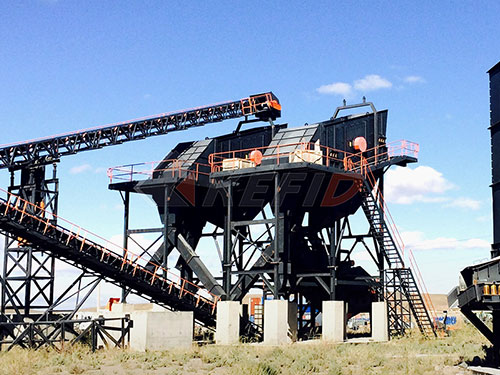
In the metallurgical and chemical industries, coke serves as a critical fuel and reducing agent in processes such as ironmaking, calcium carbide production, and ferroalloy smelting. The quality of coke directly influences the efficiency of these processes, particularly in blast furnaces where particle size distribution, mechanical strength, and uniformity are paramount. To achieve the desired specifications, coke must undergo rigorous screening after quenching and crushing. This is where the high quality coke vibration screen becomes indispensable. Unlike standard vibrating screens, those designed specifically for coke must withstand extreme abrasion, high temperatures, and heavy impact loads while maintaining precise separation efficiency. This article provides a comprehensive, objective analysis of high quality coke vibration screens, covering their design principles, mechanical features, operational parameters, material selection, maintenance strategies, and their role in optimizing downstream processes.
1. The Role of Vibration Screens in Coke Processing
Coke produced in a byproduct or heat-recovery coke oven emerges as a heterogeneous mixture of lumps ranging from fines (<10 mm) to large blocks (>100 mm). After quenching (wet or dry), the coke is crushed to a target top size, typically 25–80 mm for blast furnace use. The screening stage separates the product into fractions: oversize (re-crushed), product size (e.g., 25–80 mm), and undersize (nut coke, breeze, or fines). A high quality vibration screen ensures that:
2. Design Principles for Coke Screening
Coke is one of the most challenging materials to screen due to its angular shape, high abrasiveness (silica content), and tendency to generate dust. A high quality coke vibration screen must incorporate the following design elements:
2.1 Excitation Mechanism
Most industrial coke screens use circular motion or linear motion exciters. Linear motion screens are preferred for high-capacity, high-efficiency applications because they provide a constant acceleration vector, promoting material stratification and minimizing pegging. The exciter assembly must be robust, often employing heavy-duty bearings with sealed housings to prevent dust ingress. For high quality screens, the exciter is typically driven by a pair of counter-rotating shafts with adjustable eccentric weights, allowing fine-tuning of amplitude (typically 4–8 mm) and frequency (800–1200 rpm).
2.2 Screen Deck Configuration
Coke screens commonly feature two or three decks to achieve multiple cuts. The top deck handles the coarsest separation (e.g., >80 mm), the middle deck the product fraction (e.g., 25–80 mm), and the bottom deck removes fines (<10 mm). The deck angle is critical: for coke, a slope of 15–25 degrees is typical to balance material travel speed and retention time. High quality screens use modular polyurethane panels or self-cleaning wire mesh on the lower decks to resist abrasion and reduce blinding. The top deck often employs heavy-duty grizzly bars or perforated steel plates with tapered openings to prevent jamming.
2.3 Structural Integrity
The screen body must be constructed from high-strength steel (e.g., S355 or equivalent) with reinforced cross-members and side plates. Vibration-induced fatigue is a primary failure mode; therefore, all welds are stress-relieved, and critical joints are bolted rather than welded to allow replacement. The screen is supported by heavy-duty coil springs or rubber buffers that isolate vibration from the supporting structure. For high quality units, finite element analysis (FEA) is used during design to optimize natural frequencies and avoid resonance.
3. Material Selection for Durability
Given the abrasive nature of coke, material selection is a key differentiator between standard and high quality screens.
4. Operational Parameters and Performance Metrics
To achieve high screening efficiency (typically >90% for the product fraction), the following parameters must be optimized:
5. Advanced Features of High Quality Coke Screens
Modern high quality vibration screens integrate several advanced technologies:
6. Maintenance and Longevity
A high quality coke vibration screen, when properly maintained, can operate for 10–15 years with periodic component replacement. Key maintenance practices include:
7. Common Problems and Solutions
Even high quality screens face challenges:
8. Economic and Operational Impact
Investing in a high quality coke vibration screen yields tangible benefits:
For a typical 2-million-ton-per-year coke plant, a 1% improvement in screening efficiency can translate into thousands of tons of additional product annually, justifying the premium cost of a high quality screen.
9. Selection Criteria for Buyers
When specifying a high quality coke vibration screen, consider:
Conclusion
The high quality coke vibration screen is far more than a simple separation device; it is a critical component in the value chain of coke production. Its design must balance mechanical robustness, screening efficiency, and operational flexibility to handle the unique challenges posed by coke—abrasion, heat, moisture, and variable particle shapes. By investing in advanced materials, precision engineering, and smart monitoring systems, operators can achieve consistent product quality, lower operating costs, and extended equipment life. As the steel and metallurgical industries continue to demand higher productivity and stricter environmental compliance, the role of the high quality coke vibration screen will only grow in importance. Whether for a new plant or a retrofit, selecting the right screen is a decision that pays dividends for decades.
If you have any questions about our products, please feel free to contact us. We take all inquiries and suggestions very seriously.