
Commercial Stone Quarry Crushing Plant Manufacturers: An In-Depth Industry Analysis
The global construction and infrastructure development sectors are heavily reliant on the availability of high-quality aggregates, which are produced through the crushing and processing of natural stone. At the heart of this production chain lies the commercial stone quarry crushing plant—a complex assembly of machinery designed to reduce large rocks into specific sizes for use in concrete, asphalt, road base, and other construction materials. The manufacturers of these plants play a pivotal role in determining the efficiency, cost-effectiveness, and environmental compliance of quarry operations. This article provides a comprehensive, professional, and objective examination of commercial stone quarry crushing plant manufacturers, covering their market landscape, key technologies, selection criteria, and future trends.
1. The Role of Crushing Plant Manufacturers in the Quarry Industry
Commercial stone quarry crushing plant manufacturers are engineering and production companies that design, fabricate, and supply complete crushing systems or individual components such as crushers, screens, conveyors, and feeders. Their primary responsibility is to provide solutions that transform raw, blasted rock into marketable aggregates with precise gradation, shape, and cleanliness. These manufacturers serve a diverse clientele, ranging from small-scale local quarries to multinational mining corporations.
The importance of selecting the right manufacturer cannot be overstated. A well-designed plant can significantly reduce operational costs through lower energy consumption, minimized downtime, and optimized material flow. Conversely, a poorly designed or low-quality plant can lead to frequent breakdowns, safety hazards, and substandard product quality. Therefore, manufacturers must combine robust engineering with deep knowledge of material properties, crushing physics, and site-specific constraints.
2. Global Market Landscape and Leading Manufacturers
The market for commercial stone quarry crushing plants is global, with major manufacturing hubs in China, Europe, North America, and increasingly in India and Southeast Asia. The competitive landscape is characterized by a mix of multinational corporations with decades of experience and agile regional players offering cost-competitive solutions.
2.1. European and North American Manufacturers
These manufacturers are often regarded as premium providers, known for their engineering precision, durability, and advanced automation. Key players include:
2.2. Chinese Manufacturers
China has emerged as the world’s largest producer of crushing equipment, driven by its massive domestic infrastructure demand and export-oriented manufacturing. Chinese manufacturers often offer lower initial capital costs, but quality and after-sales support can vary significantly. Prominent names include:
2.3. Indian and Other Regional Manufacturers
India has a growing crushing equipment industry, with companies like Puzzolana Machinery Fabricators and Larsen & Toubro providing robust plants for domestic and export markets. These manufacturers often excel in producing plants tailored to local conditions, such as high moisture content or abrasive materials.
3. Key Technologies and Components in Modern Crushing Plants
A commercial stone quarry crushing plant is not a single machine but an integrated system. Manufacturers differentiate themselves through the design and performance of these core components:
3.1. Primary Crushers
The primary crusher is the first stage of size reduction. Common types include:
3.2. Secondary and Tertiary Crushers
3.3. Screening and Washing Systems
Efficient screening is critical for product quality. Manufacturers offer vibrating screens with multiple decks, high-frequency screens, and banana screens. Washing systems, including log washers and hydrocyclones, are integrated to remove clay and fines, especially in sand production.
3.4. Automation and Control Systems
Modern plants are increasingly automated. Manufacturers provide PLC-based control systems that monitor crusher load, power draw, and belt speeds. Advanced systems can adjust crusher settings in real-time to maintain product consistency and protect against overloads. Some manufacturers, like Metso, offer remote monitoring and predictive maintenance capabilities through IoT platforms.
4. Selection Criteria for Commercial Stone Quarry Crushing Plant Manufacturers
Choosing the right manufacturer requires a systematic evaluation based on several objective factors:
4.1. Material Characteristics
The type of rock (e.g., granite, limestone, basalt, sandstone) determines the crusher type and wear material. Hard, abrasive rocks require high-chrome liners and robust jaw or cone crushers. Manufacturers with extensive experience in specific rock types can offer better advice.
4.2. Capacity and Scalability
The plant must match the quarry’s production targets. Manufacturers should provide detailed capacity calculations based on feed size, moisture content, and desired product specifications. Scalability is also important—some manufacturers offer modular designs that allow for future expansion.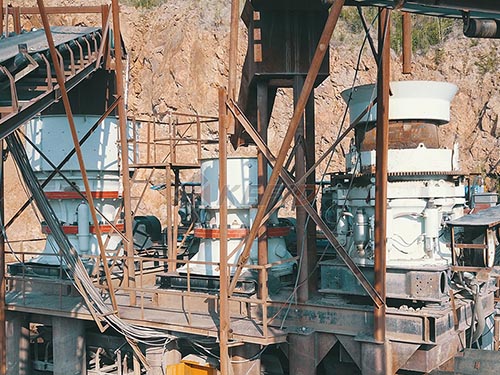
4.3. Total Cost of Ownership (TCO)
Initial purchase price is only one component. Manufacturers should be evaluated on:
4.4. Compliance and Safety
Manufacturers must adhere to international safety standards (e.g., CE, ISO 14001, OSHA). Features like emergency stops, dust suppression systems, noise reduction enclosures, and safe access platforms are non-negotiable.
4.5. Environmental Considerations
Increasingly, quarries face strict environmental regulations. Manufacturers that offer closed-loop water systems, dust collection units, and low-noise designs are preferred. Some manufacturers also provide plants that can be easily relocated to minimize land disturbance.
5. Challenges Faced by Manufacturers and Quarry Operators
5.1. Fluctuating Raw Material Quality
Stone quarries often encounter variations in rock hardness and composition. Manufacturers must design plants with sufficient flexibility—such as adjustable crusher settings and multiple crushing stages—to handle these changes without sacrificing product quality.
5.2. High Wear and Tear
Crushing is inherently abrasive. Manufacturers must use high-quality materials (e.g., manganese steel, ceramic composites) and innovative designs to extend wear life. Some manufacturers now offer wear monitoring systems that alert operators when liners need replacement.
5.3. Energy Costs
Crushing is energy-intensive. Manufacturers are investing in more efficient drive systems, such as direct-drive motors and variable frequency drives (VFDs), to reduce power consumption. Hybrid and electric-only plants are also emerging.
5.4. Skilled Labor Shortage
Many quarries struggle to find experienced operators and maintenance personnel. Manufacturers are addressing this by simplifying controls, providing remote diagnostics, and offering comprehensive training programs.
6. Future Trends in Crushing Plant Manufacturing
6.1. Digitalization and Smart Plants
The integration of artificial intelligence (AI) and machine learning is transforming plant operations. Manufacturers are developing systems that can predict crusher performance, optimize settings for different materials, and schedule maintenance automatically. Digital twins—virtual replicas of physical plants—are being used for simulation and training.
6.2. Mobile and Semi-Mobile Plants
While stationary plants remain dominant for large, permanent quarries, mobile and semi-mobile plants are gaining popularity for temporary sites or projects with limited space. Manufacturers are improving the mobility, setup speed, and capacity of these units.
6.3. Sustainability and Circular Economy
Manufacturers are focusing on reducing the carbon footprint of their equipment. This includes using recycled materials in manufacturing, designing for easier disassembly and recycling, and offering plants that can process construction and demolition waste (CDW) into reusable aggregates.
6.4. Customization and Modular Design
One-size-fits-all solutions are becoming less common. Manufacturers now offer modular plants that can be configured to meet specific site requirements. This approach reduces engineering lead times and allows for faster deployment.
7. Conclusion
Commercial stone quarry crushing plant manufacturers are indispensable partners in the global construction supply chain. Their expertise in mechanical engineering, material science, and process optimization directly impacts the profitability and sustainability of quarry operations. The market offers a wide spectrum of choices, from premium European brands with advanced automation to cost-effective Chinese and Indian manufacturers with strong regional support.
When selecting a manufacturer, quarry operators must conduct a thorough analysis of their specific needs—rock type, capacity, budget, and environmental constraints—and evaluate potential suppliers based on total cost of ownership, service network, and technological capabilities. As the industry moves toward digitalization, sustainability, and greater efficiency, manufacturers that invest in innovation and customer support will continue to lead the market. Ultimately, the right partnership between a quarry operator and a crushing plant manufacturer can unlock significant value, ensuring a reliable supply of high-quality aggregates for decades to come.
If you have any questions about our products, please feel free to contact us. We take all inquiries and suggestions very seriously.