A Comprehensive Analysis of the Jc5000 Jaw Crusher: Market Positioning, Dealer Networks, and Price Determinants
The global mining and aggregate processing industry relies heavily on robust, efficient, and durable primary crushing equipment. Among the myriad of machines available, the Jc5000 jaw crusher has carved out a specific niche, often associated with high-capacity operations requiring consistent throughput and reliable performance. However, for procurement managers, project engineers, and quarry owners, the path to acquiring such a machine is rarely straightforward. The critical search query—”Jc5000 Jaw Crusher Dealers Price”—encapsulates the three most pressing concerns: the specific model, the authorized supply chain, and the financial investment required.
This article provides a deep, objective dive into the world of the Jc5000 jaw crusher. We will dissect its technical specifications and intended applications, analyze the structure and reliability of its dealer network, and, most importantly, deconstruct the complex factors that determine its final price. The goal is to equip potential buyers with the knowledge necessary to navigate the procurement process effectively, ensuring they receive fair value for a capital-intensive asset.
Part I: Understanding the Jc5000 Jaw Crusher – Technical Profile and Application
Before discussing price, one must understand what the Jc5000 represents. The “Jc” prefix typically denotes a specific series from a major global manufacturer, most commonly associated with Sandvik (formerly Sandvik Mining and Rock Technology) or, in some legacy contexts, with other OEMs that have adopted similar nomenclature. The “5000” generally refers to the machine’s size class, indicating a large feed opening and high throughput capacity.
Key Technical Specifications (Typical for a Jc5000-class crusher):
- Feed Opening: Approximately 1,200mm x 1,000mm (47″ x 39″) or larger. This allows for the processing of very large run-of-mine (ROM) material.
- Motor Power: Typically in the range of 160-200 kW (215-270 HP), requiring a substantial electrical infrastructure.
- Capacity: Depending on the closed side setting (CSS) and material characteristics, the Jc5000 can process between 300 and 800 metric tons per hour (tph). This places it firmly in the “large” category for primary jaw crushers.
- Weight: The machine itself, excluding ancillary equipment, often weighs between 45,000 and 60,000 kg (99,000 – 132,000 lbs).
- Design Features: Modern Jc5000 units incorporate advanced features such as a deep, symmetrical crushing chamber for optimal nip angle, a hydraulic wedge adjustment system for CSS changes, and a robust, flywheel-driven eccentric shaft designed for high inertia.
Primary Applications:
The Jc5000 is not a machine for small-scale operations. Its primary applications include:
- Large-Scale Quarries: Processing hard rock (granite, basalt, quartzite) for the production of construction aggregates.
- Major Mining Operations: Serving as the primary crusher for ore feed in open-pit and underground mines, particularly for copper, gold, and iron ore.
- Large Infrastructure Projects: Used in the construction of dams, highways, and tunnels where massive quantities of crushed material are required on-site.
- Recycling of Large Demolition Waste: Capable of handling large reinforced concrete slabs and asphalt chunks.
The machine’s value proposition lies in its high reduction ratio, reliability under extreme conditions, and relatively low operating cost per ton compared to other primary crusher types (like gyratory crushers) for certain applications.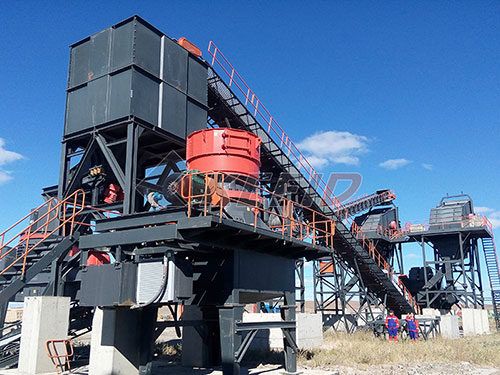
Part II: The Dealer Network – The Critical Link in the Supply Chain
The phrase “Jc5000 Jaw Crusher Dealers” is crucial because these machines are rarely sold directly from the manufacturer to the end-user, especially in diverse global markets. The dealer network serves as the primary interface for sales, service, and support. Understanding this network is paramount.
Structure of the Dealer Network:
- Authorized Regional Dealers: These are large, established companies with exclusive rights to sell and service Sandvik (or the relevant OEM) equipment in a specific geographic territory (e.g., a country or a group of states/provinces). They are the most reliable source for a new Jc5000.
- Independent Dealers and Brokers: These entities may sell used or refurbished Jc5000 units. They are not directly authorized by the OEM but can offer competitive pricing. However, they often lack direct access to factory training, genuine parts, and warranty support.
- Online Marketplaces: Platforms like MachineryTrader, Mascus, and Ritchie Bros. Auctioneers list both new and used Jc5000 units from various dealers. These are excellent for price comparison but require significant due diligence.
Why the Dealer Matters for Price:
The dealer is not just a middleman; they are a value-added partner. Their influence on the total cost of ownership (TCO) is immense:
- Warranty and Support: An authorized dealer provides a comprehensive factory warranty (typically 12-24 months) and a guaranteed supply of genuine OEM wear parts (jaw dies, toggle plates, bearings). A lower price from an unauthorized dealer may be negated by a single catastrophic failure due to a counterfeit part.
- Pre-Sales Engineering: Reputable dealers offer site surveys, material testing, and plant layout design. This ensures the Jc5000 is correctly sized and integrated into the existing crushing circuit. This service, while often bundled into the price, prevents costly mistakes.
- Financing and Leasing: Many large dealers have in-house financing arms or partnerships with financial institutions. They can offer competitive lease-to-own options, which significantly impacts the upfront “price” a buyer perceives.
- After-Sales Service: The dealer’s local service team is responsible for commissioning, training, and ongoing maintenance. A dealer with a strong local presence and a well-stocked parts warehouse commands a premium, but this premium is often justified by reduced downtime.
How to Vet a Dealer:
- Check OEM Authorization: Ask for a letter of authorization from the manufacturer (e.g., Sandvik).
- Request References: Ask for contact information for three recent customers who purchased a similar-sized crusher.
- Inspect Parts Inventory: Visit the dealer’s warehouse to verify the availability of critical wear parts for the Jc5000.
- Evaluate Service Capability: Inquire about the number of certified field service technicians and their response time.
Part III: Deconstructing the Price – A Multifaceted Equation
The “Jc5000 Jaw Crusher Price” is not a single, fixed number. It is a variable figure influenced by a complex interplay of factors. A simple online search might yield a range from $250,000 USD for a well-used, older model to over $750,000 USD for a brand-new, fully equipped unit from an authorized dealer. Here is a breakdown of the key price determinants:
1. Condition and Age (New vs. Used vs. Refurbished)
- New (Factory Fresh): The highest price point. Includes full OEM warranty, latest design improvements (e.g., upgraded hydraulics, improved chamber geometry), and zero operating hours. Price: $550,000 – $800,000+ USD.
- Used (As-Is): Variable condition. Price is heavily dependent on wear part life remaining, maintenance history, and overall structural integrity. A machine with 5,000 hours and good wear parts might be $300,000 – $450,000 USD. A machine with 15,000 hours and needing major repairs could be under $200,000 USD.
- Refurbished/Reconditioned: A middle ground. The dealer has replaced all wear parts, rebuilt the bearings, and repainted the machine. It often comes with a limited warranty (e.g., 6 months). Price: $400,000 – $550,000 USD.
2. Geographic Location and Logistics
- Regional Pricing: Prices vary significantly by region. A Jc5000 in North America or Western Europe will generally be more expensive than the same model in Southeast Asia or South America due to import duties, taxes, and higher labor costs for dealer support.
- Shipping and Freight: The cost to transport a 50-ton crusher from a port to an inland mine site can be tens of thousands of dollars. This is often quoted separately but is a critical component of the total delivered price.
- Local Taxes and Duties: Import tariffs can add 10-30% to the base price, depending on the country’s trade policies.
3. Included Equipment and Options (The “Spec Sheet” Effect)
The base price of a Jc5000 is just the starting point. The final price is heavily influenced by optional equipment:
- Electric Motor and Starter: The price of the motor (e.g., 200 kW, 4-pole, TEFC) and the soft-start or VFD (Variable Frequency Drive) can add $20,000 – $50,000.
- Hydraulic Power Pack: For the hydraulic CSS adjustment and tramp release system. This is standard on modern units but can be an upgrade on older models.
- Lubrication System: An automatic grease lubrication system adds cost but reduces maintenance labor.
- Chassis and Support Structure: A heavy-duty I-beam skid or a concrete foundation design package.
- Feed Hopper and Grizzly: A custom-designed hopper and vibrating grizzly feeder to control material flow.
- Dust Suppression System: Water spray or misting systems, often required for environmental compliance.
- Control System: A PLC-based automation system with remote monitoring capabilities.
A “bare” crusher might be $500,000, but a fully integrated “plug-and-play” unit with all the above options could easily exceed $700,000.
4. Market Dynamics and Negotiation
- Supply and Demand: During a global mining boom, prices are firm and lead times are long. During a downturn, dealers are more willing to negotiate on price and offer attractive financing.
- Currency Fluctuations: The Jc5000 is often priced in USD or EUR. A buyer in a country with a weakening local currency will face a higher effective price.
- Trade-In Value: If a buyer is trading in an older crusher, the dealer’s offer for the trade-in directly reduces the net price of the new Jc5000.
- Package Deals: Buying multiple machines (e.g., a Jc5000 jaw crusher plus a cone crusher and screens) from the same dealer often results in a significant discount on the total package price.
Part IV: Practical Steps for a Buyer – From Inquiry to Purchase
Given the complexity, a systematic approach is essential for any buyer searching for “Jc5000 Jaw Crusher Dealers Price.”
- Define Your Requirements Precisely: Do not just ask for a “Jc5000.” Specify your required capacity (tph), feed material (type, size, abrasiveness), desired product size (CSS), and power supply (voltage, frequency).
- Identify 3-5 Authorized Dealers: Contact the OEM’s regional headquarters to get a list of authorized dealers in your territory. Avoid relying solely on online marketplaces for the initial inquiry.
- Request a Formal Quotation (RFQ): Send a detailed Request for Quotation to each dealer. Insist on a line-item breakdown of the price, including the base crusher, motor, options, freight, taxes, and commissioning.
- Evaluate Total Cost of Ownership (TCO): Do not focus solely on the purchase price. Ask for estimated wear part life (e.g., jaw dies lasting 8,000 hours) and their replacement cost. A cheaper crusher with expensive, short-lived wear parts is a bad investment.
- Negotiate the Terms, Not Just the Price: Focus on warranty duration, payment terms (e.g., 30% down, 70% on delivery), delivery lead time, and the inclusion of a commissioning engineer for one week.
- Conduct a Physical Inspection (for used units): If considering a used Jc5000, hire an independent third-party inspector to assess the main frame for cracks, the condition of the eccentric shaft and bearings, and the remaining life of the jaw dies.
Conclusion
The search for “Jc5000 Jaw Crusher Dealers Price” is the starting point of a significant capital investment. The Jc5000 is a powerful, high-capacity machine designed for the most demanding primary crushing applications. However, its price is not a simple commodity figure. It is a complex function of the machine’s condition, the dealer’s authorized status and service capabilities, the included options, and the prevailing market conditions.
A successful procurement strategy moves beyond a simple price comparison. It involves a rigorous evaluation of the dealer’s long-term support, a clear understanding of the total cost of ownership, and a willingness to negotiate on terms that protect the buyer’s operational uptime. By approaching the purchase with this level of diligence, a buyer can secure a Jc5000 jaw crusher that delivers reliable, profitable performance for years to come, ensuring that the initial price paid is a true reflection of the value received.
