
Sustainable Ball Mill Makers: Engineering the Future of Mineral Processing
Introduction
The global transition toward a low-carbon economy has placed unprecedented scrutiny on energy-intensive industrial processes. Among these, comminution—the crushing and grinding of ore—stands out as the single largest energy consumer in mining operations, accounting for up to 50% of a mine site’s total electricity usage. At the heart of this process lies the ball mill, a rotating cylindrical device that uses steel balls to grind material into fine particles. As the mining industry faces mounting pressure to reduce its carbon footprint, a new generation of manufacturers has emerged: sustainable ball mill makers. These companies are redefining the design, construction, and operation of grinding equipment to minimize energy consumption, water use, and waste generation while maximizing productivity and longevity. This article examines the key strategies, technologies, and market drivers shaping this critical niche within the global mining equipment sector.
The Environmental Imperative for Ball Mill Innovation
Ball mills are inherently energy-inefficient. Only a small fraction of the input energy—often less than 5%—is actually used to fracture ore particles; the remainder is lost as heat, noise, and mechanical vibration. Traditional mills also consume vast quantities of steel grinding media and liners, which wear down and must be replaced regularly, generating significant solid waste. Furthermore, many older mills rely on water-intensive slurry transport and lubrication systems, contributing to water scarcity in arid mining regions.
Regulatory and market forces are accelerating change. Carbon pricing mechanisms in the European Union, Canada, and parts of Asia now penalize high-emission operations. Institutional investors increasingly screen mining companies based on environmental, social, and governance (ESG) criteria. Simultaneously, ore grades are declining worldwide, meaning more material must be ground to extract the same amount of metal—placing even greater strain on milling circuits. Sustainable ball mill makers respond to these challenges not as a compliance burden but as a competitive advantage, delivering equipment that lowers total cost of ownership while reducing environmental impact.
Core Design Strategies for Sustainable Ball Mills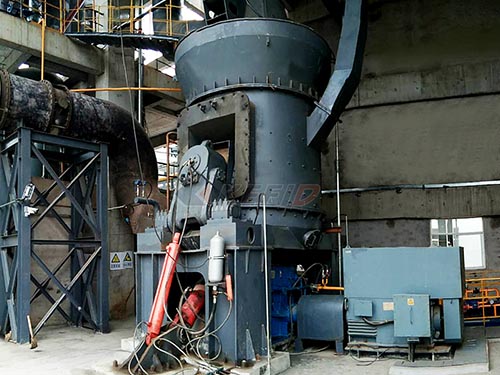
Sustainable manufacturers employ a multi-pronged approach to improve efficiency. The most impactful innovations fall into several categories.
First, advanced drive systems replace traditional fixed-speed induction motors with variable frequency drives (VFDs) and high-efficiency synchronous motors. VFDs allow mill speed to be adjusted in real time based on ore hardness and feed rate, avoiding energy waste during periods of low load. Some manufacturers integrate regenerative braking, capturing energy during mill deceleration and feeding it back into the plant grid. Permanent magnet motors, which eliminate rotor copper losses, can improve drive efficiency by 5–10% compared to conventional alternatives.
Second, optimized liner and media design reduces wear and energy consumption. Sustainable makers use computational fluid dynamics (CFD) and discrete element modeling (DEM) to simulate ball motion and slurry flow. This allows them to design liner profiles—such as trapezoidal, wave, or spiral lifters—that impart the optimal trajectory for grinding while minimizing unnecessary collisions. Composite liners made from rubber, polyurethane, or hybrid steel-rubber materials last two to four times longer than traditional manganese steel, cutting both replacement frequency and embedded carbon. Lightweight ceramic or high-chrome grinding media further reduce mill load and power draw.
Third, intelligent control systems leverage the Industrial Internet of Things (IIoT) and machine learning. Sensors monitor vibration, temperature, power draw, and acoustic emissions. Algorithms then adjust feed rate, water addition, and mill speed to maintain optimal grinding conditions. Predictive maintenance models forecast liner wear and media degradation, preventing unplanned downtime and extending equipment life. Some systems integrate with digital twins—virtual replicas of the mill—to test operational changes without risking real-world production.
Fourth, energy recovery and heat integration capture waste heat from mill bearings and gearboxes. This heat can be used to preheat process water or supplement plant heating, reducing fossil fuel consumption. In cold climates, waste heat recovery can cut auxiliary heating costs by 30% or more.
Material and Manufacturing Innovations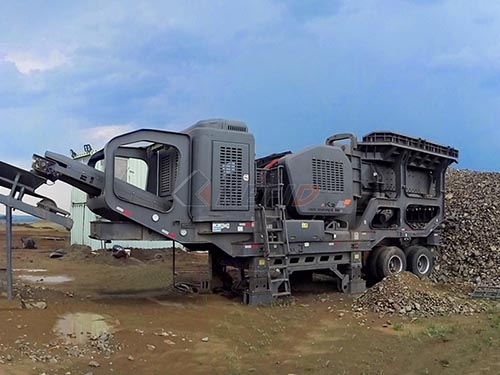
Sustainability extends beyond operation to the mill’s fabrication. Leading makers increasingly source recycled steel for mill shells and heads, reducing embodied carbon by up to 40% compared to virgin steel. Additive manufacturing (3D printing) is used for complex internal components like trunnion liners, minimizing material waste and enabling lightweight geometries. Modular designs allow mills to be shipped in standard containers, reducing transport emissions and enabling on-site assembly in remote locations.
Water conservation is another priority. Dry grinding circuits, though historically limited to certain ore types, are being revisited with improved air-swept mill designs that eliminate slurry water entirely. For wet grinding, closed-loop water recycling systems with high-efficiency thickeners and filter presses reduce fresh water intake by 70–90%. Some manufacturers now offer mills that can operate with saline or brackish water, preserving freshwater resources for communities.
Economic and Operational Benefits
Sustainable ball mills are not merely environmental gestures; they deliver measurable financial returns. Energy savings alone can reach 15–25% compared to conventional mills, translating into millions of dollars annually for large concentrators. Longer liner life reduces labor and parts costs. Predictive maintenance cuts unplanned downtime by up to 50%, increasing throughput. Lower water consumption reduces pumping and treatment costs. And improved ESG performance can lower a mine’s cost of capital, as green bonds and sustainability-linked loans offer preferential rates to responsible operators.
Challenges and Trade-offs
Despite these advantages, adoption faces barriers. High upfront capital costs for VFDs, advanced liners, and sensor networks can deter risk-averse mining companies, especially in junior or artisanal operations. Retrofitting existing mills is often more complex and costly than purchasing new equipment. The lack of standardized sustainability metrics for grinding equipment makes comparison difficult. Moreover, some advanced materials—such as rare-earth magnets for high-efficiency motors—raise supply chain and geopolitical concerns.
Sustainable makers address these issues through flexible financing models, including performance-based contracts where savings are shared between manufacturer and operator. They also participate in industry consortia to develop common standards, such as the Global Mining Guidelines Group’s protocols for comminution energy efficiency.
Leading Sustainable Ball Mill Makers
Several companies exemplify best practices. Metso Outotec offers the Vertimill and Stirred Media Detritor (SMD) for fine grinding, which use up to 50% less energy than traditional ball mills. Their Eco-efficient Grinding solution integrates VFDs, composite liners, and advanced process control. FLSmidth provides the OK™ mill and the Hydraulic Roller Press, along with digital services like ECS/ProcessExpert that optimize entire grinding circuits. Weir Minerals’ Enduron® high-pressure grinding rolls (HPGR) and ball mills feature rubber liners and condition monitoring. Chinese manufacturers such as CITIC Heavy Industries and NHI (Northern Heavy Industries) are rapidly adopting sustainable designs, often at lower cost points, for domestic and export markets. Emerging players like Magotteaux (grinding media and liners) and Swiss Tower Mills (vertical stirred mills) focus on specialized niches.
Future Directions
The next decade will see further convergence of digital and physical technologies. Autonomous mills that self-optimize without human intervention are already in pilot testing. Artificial intelligence will predict ore variability from drill core data and adjust grinding parameters before feed even reaches the mill. Electrification of mining fleets will increase demand for sustainably produced grinding equipment, as battery minerals like lithium, cobalt, and nickel require intensive comminution. Circular economy principles will drive makers to design mills for full recyclability at end-of-life.
Conclusion
Sustainable ball mill makers are transforming one of the most energy-intensive and environmentally impactful unit operations in mining. Through advanced drives, intelligent control, wear-resistant materials, water recycling, and lifecycle thinking, they enable mines to produce more metal with less energy, water, and waste. While challenges remain in cost, standardization, and retrofit complexity, the direction is clear. As ore grades decline and climate regulations tighten, the ball mill—once a symbol of industrial brute force—is becoming a precision instrument for sustainable resource extraction. The manufacturers who lead this shift will not only reduce environmental harm but also define the competitive landscape of 21st-century mining.
If you have any questions about our products, please feel free to contact us. We take all inquiries and suggestions very seriously.