
High Quality Stone Crusher Machine Customization: Engineering Optimal Solutions for Aggregate and Mining Operations
Introduction
In the modern aggregates, mining, construction, and recycling industries, the demand for processed stone, gravel, sand, and mineral ores has never been higher. As infrastructure projects become more complex and specifications more stringent, the need for reliable, efficient, and precisely tailored crushing equipment has become a critical factor in operational success. While off-the-shelf crushers can handle many standard applications, a growing number of producers are turning to high quality stone crusher machine customization to meet specific throughput requirements, product gradation targets, site constraints, and material characteristics. Customization is no longer a luxury; it is a strategic investment that can significantly enhance productivity, reduce operating costs, and extend equipment lifespan.
This article provides a comprehensive examination of high quality stone crusher machine customization. It explores the rationale behind custom engineering, the key parameters that can be tailored, the types of crushers most amenable to customization, the design and manufacturing process, and the tangible benefits that customized solutions deliver. By understanding these elements, operators and project managers can make informed decisions that align their crushing circuits with their unique production goals.
1. The Rationale for Customization
Every crushing operation is unique. Factors such as feed material hardness, abrasiveness, moisture content, feed size, desired product size distribution, capacity requirements, site altitude, ambient temperature, and available power supply can vary dramatically from one site to another. A standard crusher designed for average conditions may underperform or fail prematurely when subjected to atypical demands.
Customization addresses these variables directly. For example, a quarry producing high-quality concrete aggregate may require a cubical product shape with minimal fines, while a mining operation processing abrasive iron ore may prioritize wear life and throughput over particle shape. Similarly, a recycling facility dealing with mixed demolition waste needs a crusher that can tolerate rebar and other contaminants without frequent downtime. In each case, a customized machine ensures that the equipment is not merely adequate but optimally matched to the application.
Moreover, customization can future-proof an investment. As market demands shift or a deposit’s characteristics change over time, a crusher that has been designed with adjustable parameters and modular components can be reconfigured more easily than a standard unit. This flexibility can delay or eliminate the need for premature equipment replacement.
2. Key Parameters for Customization
High quality customization begins with a thorough analysis of the application. The following parameters are commonly tailored:
Capacity and Throughput: Customization can adjust the crusher’s chamber volume, stroke, speed, and motor power to achieve a specific tonnage per hour. This is often determined by the overall circuit balance, including upstream excavation and downstream screening.
Feed Size and Reduction Ratio: The maximum feed size and the desired reduction ratio dictate the crusher type and the geometry of the crushing chamber. Custom liners and mantle/concave profiles can be designed to accommodate unusually large feed or to produce a finer product in a single pass.
Product Gradation and Shape: For aggregate producers, the particle size distribution and shape (cubicity) are often critical. Customization can involve adjusting the closed side setting (CSS), eccentric throw, and chamber design to meet strict specifications such as those for asphalt or concrete mixes.
Material Characteristics: Hardness, abrasiveness, and moisture content influence the choice of wear materials, the need for anti-bridging features, and the selection of drive systems. For highly abrasive materials, custom alloy liners or ceramic inserts may be specified.
Site and Environmental Constraints: Limited space, restricted transport access, extreme temperatures, high altitude, or dust and noise regulations can all necessitate custom designs. This may include compact frames, modular construction, specialized seals, or enhanced dust suppression systems.
Automation and Control: Modern crushers increasingly incorporate sensors, variable frequency drives (VFDs), and programmable logic controllers (PLCs). Customization can integrate these technologies to optimize performance, monitor wear, and enable remote diagnostics.
Mobility and Mounting: Whether the crusher will be stationary, skid-mounted, or track-mounted affects the structural design, weight distribution, and power source. Customization ensures that the crusher integrates seamlessly with the rest of the plant.
3. Crusher Types and Customization Potential
Different crusher types offer varying degrees of customization potential. Understanding these differences helps in selecting the right platform for a tailored solution.
Jaw Crushers: Ideal for primary crushing, jaw crushers can be customized with different tooth profiles, chamber geometries, and drive configurations. Customization is often focused on handling large feed sizes, improving nip angle, and reducing wear on the fixed and moving jaws.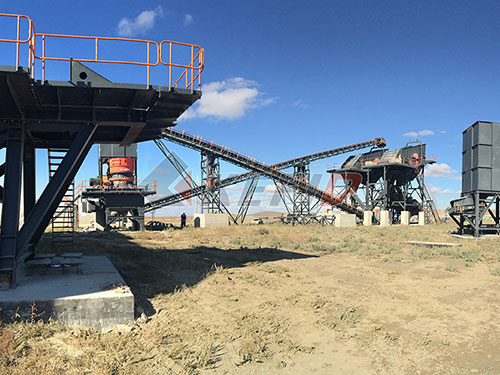
Cone Crushers: Widely used in secondary and tertiary crushing, cone crushers are highly amenable to customization. The eccentric throw, chamber profile, and automation settings can be fine-tuned to balance throughput, product shape, and wear life. Custom liners are available in various alloys and profiles to suit specific materials.
Impact Crushers (HSI and VSI): Horizontal shaft impactors and vertical shaft impactors are often chosen for their ability to produce cubical aggregates. Customization can involve rotor design, blow bar metallurgy, and curtain settings. VSI crushers, in particular, can be tailored with different anvil configurations and rotor speeds to achieve specific sand gradations.
Hammer Mills and Roll Crushers: These are used for softer materials or specialized applications. Customization may include screen openings, hammer arrangements, and roll surface patterns.
Gyratory Crushers: For very high-capacity primary crushing, gyratory crushers can be customized with different mantle profiles, eccentric speeds, and discharge settings. Due to their size and cost, customization is typically project-specific.
In all cases, high quality customization requires close collaboration between the equipment manufacturer and the end user to ensure that the final design meets operational realities.
4. The Customization Process: From Concept to Commissioning
A structured approach is essential to deliver a high quality customized crusher. The process typically involves the following stages:
4.1 Application Analysis and Data Collection
The manufacturer gathers detailed data on the material to be crushed, including bulk density, compressive strength, abrasiveness index, moisture content, and feed size distribution. Site conditions, production targets, and downstream requirements are also documented. This information forms the basis for engineering calculations and simulations.
4.2 Engineering and Design
Using advanced computer-aided design (CAD) and discrete element modeling (DEM) software, engineers simulate material flow through the crusher. This allows them to optimize chamber geometry, stroke, speed, and power. Finite element analysis (FEA) is used to ensure structural integrity under expected loads. The design phase also considers wear part accessibility, maintenance requirements, and safety features.
4.3 Material Selection and Manufacturing
High quality customization extends to the materials used. Wear parts may be cast in manganese steel, chrome alloy, or composite materials depending on the abrasiveness of the feed. Structural components are fabricated from high-strength steel and machined to precise tolerances. Quality control procedures, including non-destructive testing and dimensional inspection, are applied throughout manufacturing.
4.4 Testing and Validation
Before shipment, customized crushers may undergo factory acceptance testing (FAT) using representative material samples. This validates capacity, product gradation, power draw, and mechanical reliability. In some cases, a pilot-scale test is conducted to confirm performance predictions.
4.5 Installation and Commissioning
On-site installation and commissioning are critical to realizing the benefits of customization. The manufacturer’s engineers work with the operator to align the crusher with the feed system, discharge conveyor, and control system. Performance is monitored and fine-tuned during the initial production phase.
4.6 After-Sales Support and Optimization
Customization does not end at commissioning. Ongoing support, including wear part management, performance audits, and software updates, ensures that the crusher continues to operate at peak efficiency. Many manufacturers offer remote monitoring services that can predict maintenance needs and suggest further optimizations.
5. Benefits of High Quality Customization
Investing in a customized stone crusher machine yields multiple benefits:
6. Challenges and Considerations
Customization is not without challenges. It requires a higher upfront investment, longer lead times, and a close working relationship between the buyer and the manufacturer. There is also a risk of over-customization, where unique components become difficult to replace or upgrade. To mitigate these risks, it is advisable to:
7. Case Examples
To illustrate the value of customization, consider the following scenarios:
Case 1: Hard Rock Quarry: A quarry producing railway ballast needed a cubical product with minimal fines. A standard cone crusher produced excessive flaky particles. A customized cone crusher with a specially designed chamber and increased eccentric throw delivered the required shape and reduced recirculation by 20%.
Case 2: Gold Mine: A gold mine processing highly abrasive ore experienced frequent liner failures. By customizing the crusher with high-chrome alloy liners and adjusting the CSS, the mine extended liner life from 6 weeks to 6 months, significantly reducing downtime and maintenance costs.
Case 3: Construction Recycling: A recycling company needed to process mixed demolition waste containing rebar. A customized impact crusher with a heavy-duty rotor, reinforced blow bars, and an automatic tramp release system was able to handle the contaminated feed without frequent stoppages.
These examples demonstrate that customization can address specific pain points and deliver measurable improvements.
8. Future Trends in Crusher Customization
The future of stone crusher customization is being shaped by several trends:
9. Conclusion
High quality stone crusher machine customization is a strategic approach that aligns equipment design with the specific needs of an operation. By tailoring capacity, product gradation, wear materials, and automation, producers can achieve higher throughput, better product quality, and lower operating costs. While customization requires careful planning and collaboration, the benefits often outweigh the initial investment. As technology advances, customization will become more sophisticated, enabling even greater precision and efficiency.
For operators seeking a competitive edge, investing in a customized crusher is not merely about buying a machine; it is about engineering a solution that delivers long-term value. By partnering with experienced manufacturers and following a disciplined customization process, businesses can ensure that their crushing operations are optimized for success in an ever-demanding market.
If you have any questions about our products, please feel free to contact us. We take all inquiries and suggestions very seriously.