Stone Quarry Crushing Plant Contract Manufacturer Specification: A Comprehensive Framework for Procurement and Quality Assurance
1. Introduction
The procurement of a stone quarry crushing plant is a capital-intensive undertaking that demands rigorous technical, commercial, and contractual precision. A Stone Quarry Crushing Plant Contract Manufacturer Specification serves as the definitive document governing the relationship between the quarry operator (the buyer) and the contract manufacturer (the supplier). Unlike off-the-shelf equipment purchases, contract manufacturing involves customized design, fabrication, assembly, and testing tailored to specific geological, logistical, and production requirements. This specification establishes the minimum acceptable standards for design, materials, workmanship, performance, documentation, and compliance, thereby mitigating risks associated with equipment failure, production shortfalls, and legal disputes. This article provides a detailed, objective framework for drafting such a specification, covering scope definition, technical requirements, manufacturing standards, quality control, testing, delivery, and warranty provisions.
2. Scope of Supply and Contract Manufacturing Definition
The specification must first delineate the precise scope of supply. A contract manufacturer is not merely a vendor of standard components; it is responsible for the integrated design, engineering, fabrication, and commissioning of the crushing plant as a unified system. The scope typically includes:
- Primary Crushing Unit: Jaw crusher, gyratory crusher, or impact crusher, selected based on feed size, hardness, and throughput.
- Secondary and Tertiary Crushing Units: Cone crushers, impact crushers, or VSI (vertical shaft impact) crushers for shape correction and finer reduction.
- Screening Equipment: Vibrating screens, trommels, or high-frequency screens for size classification.
- Material Handling Systems: Feeders, conveyors, stackers, and chutes.
- Structural Steel and Support Framework: Including platforms, stairs, handrails, and access ways.
- Control and Automation System: PLC-based control panels, motor control centers, and instrumentation.
- Dust Suppression and Environmental Control: Water spray systems, baghouse filters, and enclosures.
- Spare Parts and Wear Components: A defined initial stock of liners, belts, screens, and bearings.
The specification must explicitly state that the manufacturer is responsible for the compatibility and integration of all supplied components, regardless of whether they are manufactured in-house or procured from sub-suppliers. Any exclusion must be listed in a separate “Exclusions” section to avoid ambiguity.
3. Technical Design and Performance Requirements
The technical heart of the specification lies in performance guarantees and design parameters. The buyer must provide accurate raw material characteristics: rock type (e.g., granite, limestone, basalt), bulk density, compressive strength, moisture content, abrasiveness index, and feed size distribution. Based on these, the manufacturer must guarantee:
- Rated Capacity: Tons per hour (TPH) at a specified closed-side setting (CSS) and feed condition. Capacity must be guaranteed with a tolerance of ±5% under continuous operation.
- Product Gradation: Percentage passing each sieve size, with a clear statement of allowable variance.
- Reduction Ratio: The ratio of feed size to product size, ensuring the selected crusher type can achieve the required reduction in a single or multiple stages.
- Power Consumption: Kilowatt-hours per ton of product, with a maximum allowable specific energy consumption.
- Availability and Utilization: The plant must achieve a minimum mechanical availability of 95% and utilization of 85% over a 12-month period, excluding scheduled maintenance.
Design requirements must address:
- Structural Integrity: All structural steel shall conform to ASTM A36 or equivalent, with bolted or welded connections designed per AISC specifications. Dynamic loads from crushers and screens must be isolated using spring or rubber mounts.
- Wear Protection: Crusher liners shall be made of manganese steel (e.g., Mn18Cr2) or high-chrome alloy, with a guaranteed wear life expressed in tons of processed material. Chute and hopper liners shall be replaceable without major dismantling.
- Dust and Noise Control: The plant shall comply with local environmental regulations, typically limiting dust emissions to <50 mg/m³ at the stack and noise to <85 dB(A) at 1 meter from any accessible point.
- Electrical Standards: Motors shall be IE3 or IE4 efficiency class, with enclosures rated IP55 or higher. Control panels shall comply with IEC 60204-1 or NFPA 79.
4. Manufacturing Standards and Quality Assurance
The contract manufacturer must operate under a certified quality management system, preferably ISO 9001:2015. The specification should mandate:
- Material Traceability: Mill certificates for all steel plates, shafts, and castings, traceable to the heat number.
- Welding Qualifications: Welders certified to AWS D1.1 or ISO 9606, with welding procedures qualified per ASME Section IX.
- Machining Tolerances: Shafts and bearing bores machined to ISO 2768-mK or better. Crusher eccentric assemblies balanced to G6.3 per ISO 1940-1.
- Non-Destructive Testing (NDT): 100% visual inspection, plus dye penetrant or magnetic particle testing on critical welds (e.g., crusher frame, main shaft). Ultrasonic testing for thick-section welds >25 mm.
- Assembly and Alignment: Crusher drive trains aligned to <0.05 mm parallel and angular misalignment. Conveyor pulleys aligned within 0.5 mm per meter of belt width.
The manufacturer must submit a detailed Inspection and Test Plan (ITP) for buyer approval before fabrication begins. The ITP shall identify hold points (where buyer inspection is mandatory) and witness points (where buyer may attend). Typical hold points include:
- Dimensional inspection of crusher frames and cones.
- Runout check of main shafts.
- Hydrostatic testing of hydraulic cylinders (1.5× working pressure).
- No-load run test of each crusher for 4 hours.
- Full plant trial run with material for 8 hours.
5. Testing, Commissioning, and Acceptance
Acceptance testing is the final arbiter of compliance. The specification must define:
- Factory Acceptance Test (FAT): Conducted at the manufacturer’s works. Each crusher shall be run unloaded for 4 hours, with vibration, temperature, and noise recorded. Screens shall be run for 2 hours. Conveyors shall be run for 1 hour. The buyer reserves the right to witness FAT.
- Site Acceptance Test (SAT): After erection, the plant shall be run with actual quarry material for a continuous 72-hour period. Performance guarantees (capacity, gradation, power) shall be measured and verified. If the plant fails to meet guarantees, the manufacturer shall have 30 days to rectify and retest, at its own cost.
- Punch List: A list of minor deficiencies that do not affect safe operation. The manufacturer shall complete all punch list items within 14 days of SAT completion.
- Final Acceptance Certificate: Issued only after successful SAT, completion of punch list, and delivery of all documentation (O&M manuals, spare parts lists, electrical schematics, foundation drawings).
6. Documentation and Training Requirements
The contract manufacturer shall provide:
- Design Documentation: General arrangement drawings, foundation load drawings, electrical single-line diagrams, and piping and instrumentation diagrams (P&IDs).
- Operation and Maintenance Manuals: In English (or specified language), covering safe start-up, shutdown, emergency procedures, lubrication schedules, and troubleshooting.
- Spare Parts Catalog: With part numbers, descriptions, and recommended stock levels for one year of operation.
- Training: A minimum of 40 hours of on-site training for operators and maintenance personnel, covering operation, basic maintenance, and safety.
7. Commercial and Warranty Provisions
The specification must integrate commercial terms:
- Warranty Period: 24 months from commissioning or 30 months from delivery, whichever comes first. Warranty covers design defects, materials, and workmanship.
- Performance Guarantee Bond: 10% of contract value, retained until SAT completion.
- Spare Parts Availability: The manufacturer guarantees availability of critical spares for 10 years.
- Delivery Schedule: With liquidated damages for delay, typically 0.5% of contract value per week, capped at 10%.
- Incoterms: FOB, CIF, or DDP as agreed, with clear definition of risk transfer.
8. Compliance and Regulatory Requirements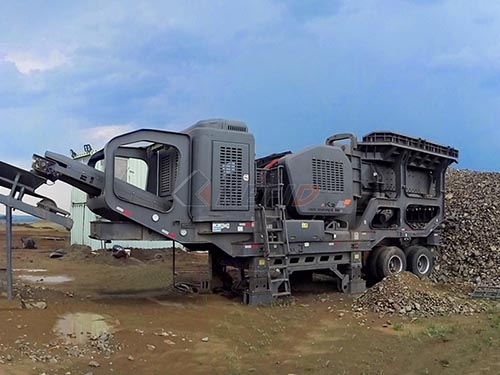
The plant must comply with all applicable local and international standards:
- CE Marking for European Union destinations, including Machinery Directive 2006/42/EC.
- OSHA or MSHA regulations for U.S. quarry operations.
- ISO 12100 for risk assessment and safety of machinery.
- Local Environmental Permits for dust, noise, and water discharge.
9. Conclusion
A Stone Quarry Crushing Plant Contract Manufacturer Specification is not a mere technical annex; it is a risk allocation instrument. By precisely defining scope, performance, manufacturing standards, testing protocols, and commercial remedies, the specification protects the buyer from underperforming equipment and the manufacturer from undefined expectations. A well-drafted specification, reviewed by legal, engineering, and operations teams, ensures that the crushing plant delivers the required tonnage, gradation, and reliability over its design life. Given the capital intensity and operational criticality of crushing plants, investing in a rigorous specification is not an overhead cost—it is a prerequisite for project success.
