
Sustainable Gold Ore Crushing Equipment: Achieving Competitive Pricing Without Compromising Environmental Responsibility
Introduction
The global gold mining industry stands at a crossroads. As demand for gold continues to rise—driven by investment, jewelry, and technological applications—the pressure to extract and process ore efficiently has never been greater. However, this demand is increasingly tempered by a parallel imperative: sustainability. Mining companies, investors, and regulators are demanding equipment that minimizes environmental impact, reduces energy consumption, and maintains worker safety, all while keeping capital and operational costs competitive. In this context, the selection of gold ore crushing equipment has become a strategic decision that balances productivity, price, and long-term ecological responsibility. This article provides a detailed examination of sustainable gold ore crushing equipment, the factors that influence competitive pricing, and how modern solutions deliver both economic and environmental value.
The Role of Crushing in Gold Ore Processing
Crushing is the first mechanical stage in the comminution process, where run-of-mine ore is reduced from large boulders to smaller particles suitable for grinding and subsequent gold extraction. The efficiency of crushing directly impacts downstream operations: finer, more uniform feed to the grinding circuit reduces energy consumption in mills, enhances liberation of gold particles, and improves overall recovery rates. Conversely, inefficient crushing leads to higher energy costs, increased wear on equipment, and poorer recovery—all of which undermine both profitability and sustainability.
Traditional crushing circuits often consist of primary jaw or gyratory crushers, secondary cone crushers, and tertiary impact or cone crushers, followed by screening. While effective, these conventional setups can be energy-intensive, generate significant dust and noise, and require frequent maintenance. Sustainable equipment addresses these drawbacks through advanced design, materials, and control systems.
Key Criteria for Sustainable Gold Ore Crushing Equipment
To be considered truly sustainable, crushing equipment must excel across several dimensions:
Energy Efficiency: Crushing accounts for a substantial portion of a mine’s total energy consumption. Sustainable equipment employs optimized chamber geometry, high-efficiency motors, and variable frequency drives (VFDs) to reduce specific energy consumption (kWh per tonne of ore crushed).
Durability and Material Optimization: Longer wear life for liners, jaws, and cones reduces the frequency of replacement, thereby lowering the consumption of raw materials (steel, manganese, chromium) and reducing waste. Advanced alloys and composite materials extend service intervals without sacrificing performance.
Dust and Noise Control: Dust emissions from crushing contain silica and other particulates harmful to workers and nearby communities. Sustainable equipment integrates dust suppression systems (water sprays, enclosures, bag filters) and noise-reducing features (vibration isolation, acoustic panels).
Water Conservation: In arid regions, water scarcity is a critical concern. Dry crushing technologies and closed-circuit designs that minimize water use are preferred. Some advanced systems use air classification instead of water-based screening.
Modularity and Retrofitability: Equipment that can be easily upgraded or retrofitted with newer, more efficient components extends the asset’s life and reduces the need for complete replacement—a key tenet of circular economy principles.
Automation and Smart Control: IoT sensors, AI-driven optimization, and real-time monitoring allow crushers to adapt to feed variations, prevent overloads, and schedule maintenance predictively. This reduces unplanned downtime, energy spikes, and premature wear.
How Competitive Pricing Is Achieved Without Sacrificing Sustainability
There is a common misconception that sustainable equipment must carry a premium price. While initial capital expenditure (CAPEX) for high-efficiency crushers can be higher than for basic models, the total cost of ownership (TCO) often favors sustainable solutions. Competitive pricing in this context is achieved through several mechanisms:
Economies of Scale in Manufacturing: As demand for sustainable crushing equipment grows, manufacturers benefit from larger production volumes, driving down unit costs. Modular designs and standardized components further reduce fabrication expenses.
Lower Operational Expenditure (OPEX): Energy-efficient motors and optimized crushing chambers reduce electricity consumption by 15–30% compared to legacy equipment. Reduced wear part consumption lowers replacement costs. Predictive maintenance minimizes labor and downtime expenses.
Government Incentives and Carbon Credits: Many jurisdictions offer tax rebates, grants, or accelerated depreciation for energy-efficient mining equipment. In carbon-pricing regimes, lower emissions translate into direct financial savings or tradable credits.
Competitive Market Dynamics: The entry of new manufacturers, particularly from Asia and Europe, has intensified competition. Buyers can now source high-quality, sustainable crushers at prices that rival conventional alternatives. Online marketplaces and direct-from-factory sales further compress margins.
Lifecycle Costing Transparency: Suppliers increasingly provide TCO models that demonstrate long-term savings. This transparency allows mining companies to justify slightly higher upfront costs, knowing that payback periods are often under two years.
Examples of Sustainable Crushing Technologies and Their Pricing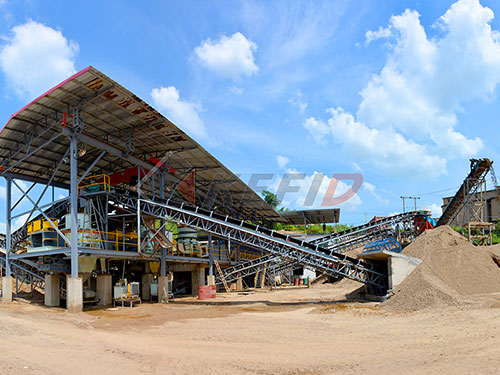
Several equipment categories exemplify the intersection of sustainability and competitive pricing:
High-Pressure Grinding Rolls (HPGR): Although technically a grinding technology, HPGRs are increasingly used in crushing circuits. They consume 20–50% less energy than conventional cone crushers for fine crushing. While CAPEX is higher, OPEX savings and reduced grinding media consumption yield a competitive TCO. Major manufacturers offer HPGRs with performance guarantees, and pricing has become more accessible as competition grows.
Vertical Shaft Impactors (VSI) with Rock-on-Rock Configuration: These crushers use inter-particle collision rather than steel-on-rock impact, reducing wear part consumption dramatically. They produce a more cubical product, which improves downstream liberation. Prices for mid-range VSIs have fallen by 10–20% over the past five years due to manufacturing efficiencies.
Jaw Crushers with Hydraulic Adjustment and Overload Protection: Modern jaw crushers feature hydraulic CSS (closed side setting) adjustment, which reduces downtime and energy waste. They also include automatic tramp iron release, preventing damage from uncrushable material. Competitive models from established brands are priced within 5–10% of conventional jaw crushers.
Cone Crushers with Anti-Spin and Liner Retention Systems: These features reduce power draw during idle periods and speed up liner changes, cutting labor costs. Several Chinese and European manufacturers now offer such cones at prices 15–25% below legacy Western brands, without compromising durability.
Mobile and Semi-Mobile Crushing Stations: For remote gold deposits, mobile crushing reduces ore haulage distances—a major source of diesel emissions and costs. Semi-mobile stations with track or wheel mounts can be relocated as the pit advances. While mobile units carry a price premium, fuel savings and reduced truck fleet requirements often offset the difference within one to two years.
Case Study: Sustainable Crushing at a Mid-Sized Gold Mine
Consider a hypothetical mid-sized gold mine processing 5,000 tonnes per day. The mine replaces its aging primary jaw crusher and secondary cone crusher with a new energy-efficient jaw crusher (equipped with VFD and dust suppression) and an HPGR for fine crushing. The CAPEX for the new equipment is approximately $2.5 million, compared to $1.8 million for a conventional replacement.
However, over five years:
Total annual savings: approximately $930,000. Payback period on the incremental $700,000 CAPEX: under 10 months. Over five years, net savings exceed $3.9 million. This illustrates how competitive pricing—when viewed through TCO—favors sustainable equipment.
Challenges and Solutions
Despite the advantages, several barriers persist:
High Upfront Costs for Small Miners: Artisanal and small-scale gold miners often lack access to capital. Solutions include leasing, rent-to-own, and shared equipment cooperatives. Manufacturers can also offer modular upgrades rather than full replacements.
Lack of Technical Expertise: Operating advanced crushers requires training. Suppliers increasingly bundle training, remote diagnostics, and maintenance contracts with equipment purchases, often at no extra cost to remain competitive.
Regulatory Fragmentation: Sustainability standards vary by country. International guidelines (e.g., ISO 14001, ICMM principles) provide a framework, but enforcement is uneven. Buyers should prioritize equipment certified to recognized standards.
Perception of Higher Cost: The myth that sustainable equals expensive persists. Transparent TCO calculators, third-party audits, and case studies help dispel this myth.
The Future of Sustainable Gold Ore Crushing
Looking ahead, several trends will shape the market:
Electrification and Renewable Integration: Crushers powered by on-site solar or wind, with battery storage, will become more common. This reduces diesel dependence and hedging against fuel price volatility.
Circular Design: Equipment designed for easy disassembly and recycling will reduce end-of-life waste. Manufacturers will offer take-back programs.
Digital Twins: Virtual replicas of crushing circuits will optimize performance in real time, further reducing energy and wear.
Competitive Pricing Pressure: As more manufacturers enter the sustainable equipment space, prices will continue to fall. Buyers will benefit from increased choice and bargaining power.
Conclusion
Sustainable gold ore crushing equipment is no longer a niche choice for environmentally conscious miners. It is a strategic asset that delivers competitive pricing through lower energy consumption, reduced wear, minimized downtime, and access to incentives. The initial price premium—where it exists—is rapidly offset by operational savings and long-term value. For gold mining companies seeking to remain profitable in an era of rising energy costs, stricter environmental regulations, and growing stakeholder expectations, investing in sustainable crushing technology is not just responsible—it is economically rational. As manufacturing scales up and competition intensifies, the price gap between conventional and sustainable equipment will continue to narrow, making sustainable crushing the default choice for forward-thinking operations worldwide.
If you have any questions about our products, please feel free to contact us. We take all inquiries and suggestions very seriously.