
Optimizing Efficiency and Scale: A Comprehensive Guide to Bulk Orders in Industrial Stone Quarry Crushing Plants
In the global construction and mining sectors, the demand for aggregates, road base materials, and industrial minerals remains insatiable. As infrastructure projects scale up and urbanization accelerates, particularly in developing economies, the need for high-capacity processing facilities has never been greater. Consequently, the acquisition of an Industrial Stone Quarry Crushing Plant through a Bulk Order has become a strategic imperative for large-scale operations seeking to maximize output, minimize downtime, and secure long-term profitability.
This article provides a detailed, professional analysis of the considerations, technical requirements, and strategic advantages associated with placing a bulk order for industrial stone crushing equipment. It examines the engineering, logistical, and economic factors that define a successful large-scale procurement project.
A bulk order in the context of a quarry crushing plant typically refers to the simultaneous acquisition of multiple processing units—such as primary jaw crushers, secondary cone crushers, tertiary impactors, and the associated screening and conveying equipment—or the procurement of equipment with an exceptionally high throughput capacity (e.g., 500 to 2,000+ tons per hour).
The decision to engage in a bulk order is driven by several strategic factors:
An industrial stone quarry crushing plant is not a “one-size-fits-all” solution. A bulk order must be meticulously engineered to match the specific geological characteristics of the quarry and the desired end-product specifications.
A. Material Hardness and Abrasiveness
The selection of crushers is primarily dictated by the rock type. For hard, abrasive materials like granite, basalt, or quartzite, the bulk order must prioritize robust primary jaw crushers or gyratory crushers, followed by secondary and tertiary cone crushers (often utilizing high-chromium liners). Conversely, for softer materials like limestone or dolomite, impact crushers (HSI or VSI) may be preferred for their higher reduction ratios and superior particle shape.
B. Capacity and Scalability
When placing a bulk order, it is critical to design the plant with a “future-proof” mindset. The primary crusher should be sized to handle the maximum anticipated feed size, while the secondary and tertiary circuits should be configured to allow for capacity upgrades. This often involves ordering oversized screens and conveyors that can handle a 20-30% increase in throughput without requiring replacement.
C. Automation and Control Systems
Modern bulk orders increasingly include advanced automation packages. Programmable Logic Controller (PLC) systems, variable frequency drives (VFDs), and centralized control rooms allow operators to monitor crusher performance in real-time, adjust settings for optimal yield, and predict maintenance needs. In a bulk order, integrating these systems across all units ensures a cohesive, “smart” plant.
Executing a bulk order for a crushing plant is a complex logistical undertaking that requires careful planning.
Logistics:
Crushing plants are heavy and bulky. A bulk order may involve dozens of shipping containers or heavy-lift breakbulk vessels. The logistics strategy must account for port capacity, inland transportation (often requiring specialized low-bed trailers), and on-site storage space. Furthermore, the delivery schedule must be phased to match the construction timeline; delivering all components at once can lead to storage bottlenecks and potential damage.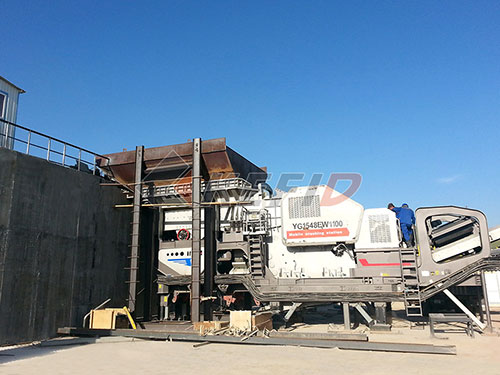
Financial Structuring:
Bulk orders often involve significant capital expenditure (CAPEX). Buyers typically negotiate structured payment terms, such as a percentage down payment, progress payments upon factory inspection, and a final payment upon commissioning. For large orders, export credit agencies (ECAs) or specialized mining finance institutions may be involved to mitigate risk and provide favorable financing terms.
Given the high stakes of a bulk order, vendor selection is paramount. A reputable manufacturer will provide:
The final phase of a bulk order project is the on-site execution. This involves:
Modern industrial crushing plants must adhere to stringent environmental regulations. A bulk order should specify equipment that minimizes dust and noise pollution. This includes:
Safety features, such as emergency stop pull cords, guard rails, and lockout/tagout (LOTO) provisions, must be integrated into every unit.
Placing a Bulk Order for an Industrial Stone Quarry Crushing Plant is a major capital investment that requires a blend of technical expertise, logistical foresight, and financial acumen. It is not merely a transaction but a partnership between the quarry operator and the equipment manufacturer.
By focusing on standardization, scalability, and comprehensive after-sales support, operators can transform a bulk order from a simple procurement exercise into a strategic asset that drives productivity for decades. As the global demand for aggregates continues to rise, the ability to efficiently specify, order, and commission high-capacity crushing plants will remain a defining characteristic of successful quarrying enterprises. For those willing to invest in quality and scale, the returns—measured in tons per hour and reduced cost per ton—are substantial.
If you have any questions about our products, please feel free to contact us. We take all inquiries and suggestions very seriously.