
Industrial Quarry Ballast Crushing Equipment Companies: A Comprehensive Overview of Technology, Market Dynamics, and Key Players
Introduction
The global railway network, spanning over 1.3 million kilometers of track, relies on a seemingly mundane yet critically engineered material: ballast. This layer of crushed angular stones, typically 25–50 mm in size, provides track stability, drainage, and load distribution. The production of this high-specification aggregate is the domain of industrial quarry ballast crushing equipment companies—specialized manufacturers that design, build, and service machinery capable of transforming raw rock into precision-graded railway ballast. This article provides a professional, objective analysis of this niche but vital sector, covering core technologies, leading global suppliers, market drivers, and emerging trends.
1. The Technical Imperative: Why Ballast Crushing is Unique
Unlike general construction aggregates (e.g., road base or concrete sand), railway ballast demands exceptional physical properties. The crushing process must produce particles that are:
These requirements dictate the equipment configuration. A typical ballast crushing circuit is a multi-stage process:
The equipment must also handle high throughputs—a modern quarry producing ballast for a major rail project may process 500–1,000 tonnes per hour. This requires robust design, high wear resistance (using manganese steel or chrome alloy liners), and sophisticated automation for consistent product quality.
2. Global Landscape of Ballast Crushing Equipment Companies
The market is dominated by a mix of multinational heavy-equipment giants and specialized regional players. The following companies are recognized as leaders in supplying crushing systems specifically configured for railway ballast production.
2.1 Metso Outotec (Finland)
Metso Outotec is arguably the global market leader in aggregate and mining crushing. For ballast applications, their Nordberg® HP Series™ cone crushers are industry benchmarks. The HP series, particularly the HP300 and HP500 models, are renowned for their high reduction ratio, excellent particle shape, and automation via the Metso IC™ crusher automation system. This system monitors wear, power draw, and setting, ensuring consistent product gradation. Metso also offers the Lokotrack® LT series mobile crushing plants, which are increasingly used in temporary rail construction sites where fixed infrastructure is not viable. Their Barmac® B Series™ vertical shaft impactors are widely used for the final shaping stage to achieve the strict flakiness index required by high-speed rail standards.
2.2 Sandvik AB (Sweden)
Sandvik is another dominant force, with a strong portfolio of CH and CS series cone crushers. The Sandvik CH890 and CH895 are specifically designed for high-capacity secondary and tertiary crushing, respectively. Sandvik’s ASRi™ (Automatic Setting Regulation) system allows real-time adjustment of the crusher setting based on feed conditions, which is crucial for maintaining ballast size consistency. Sandvik also manufactures the UJ series jaw crushers for primary reduction and offers comprehensive wear parts and service programs. Their mobile solutions, such as the UH440E and UH450E cone units, are popular in European quarry operations.
2.3 Terex Corporation (USA/UK)
Terex operates through several brands, with Terex MPS (Materials Processing Systems) being the key division for crushing. Their Cedarapids MVP series cone crushers and Terex® TC and TGS cones are robust, high-performance machines. Terex also owns Powerscreen, which manufactures mobile crushers and screens. For ballast, the Powerscreen 1500 Maxtrak cone crusher is a heavy-duty option capable of producing high tonnages of well-shaped aggregates. Terex’s strength lies in its flexible modular systems that can be configured for specific quarry layouts.
2.4 thyssenkrupp (Germany)
thyssenkrupp’s Mining Technologies division offers heavy-duty crushing solutions, including the Kubria® cone crusher and the Gyratory crusher for primary stages. The Kubria® series is particularly noted for its ability to handle hard, abrasive rock (e.g., granite, basalt) common in ballast production. thyssenkrupp also provides impact crushers (e.g., the Hazemag brand, which they acquired) that are used in softer rock quarries. Their engineering expertise is often leveraged in large-scale, turnkey quarry projects where the entire crushing and screening plant is designed by thyssenkrupp.
2.5 Astec Industries (USA)
Astec is a major American manufacturer with brands like KPI-JCI and Pioneer. Their Kodiak® Plus cone crushers are known for their high efficiency and patented hybrid bearings. Astec also produces the Andreas Series horizontal shaft impactors (HSI), which are effective for secondary crushing in limestone quarries. For ballast, Astec’s GT440CC track-mounted crushing and screening plant is a self-contained unit that can produce ballast directly on-site, reducing haulage costs.
2.6 Weir Group (UK) – Trio®
Weir’s Trio® brand is a specialist in the aggregate sector. Their TP series cone crushers are designed for high crushing force and are often used in the secondary and tertiary stages of ballast production. Weir also offers TC series horizontal screens and TTH series washing equipment to remove fines and clay contamination, which is critical for meeting ballast cleanliness standards. Weir’s advantage is their integrated approach, providing the entire process flow from crushing to screening and washing.
2.7 Specialized Regional Players
Beyond the global giants, several regional companies excel in specific markets:
3. Market Drivers and Demand Dynamics
The demand for ballast crushing equipment is directly tied to global infrastructure investment. Key drivers include:
4. Technological Trends Shaping the Industry
The ballast crushing equipment sector is undergoing significant technological transformation:
5. Challenges and Considerations for Buyers
When selecting ballast crushing equipment, quarry operators and contractors must consider several factors:
6. Case Study: High-Speed Rail Ballast Production in India
To illustrate the practical application, consider the production of ballast for India’s Dedicated Freight Corridor (DFC). The project requires approximately 10 million cubic meters of ballast. Indian quarry operators have increasingly turned to Metso Outotec and Sandvik cone crushers in the tertiary stage to achieve the required cubicity from hard granite and basalt. The use of VSI crushers has been particularly effective in reducing the flakiness index from 25% (achieved with cone crushers alone) to below 10%. This has significantly improved track stability and reduced maintenance costs on the DFC.
7. Future Outlook
The market for industrial quarry ballast crushing equipment is projected to grow at a CAGR of 4–5% over the next decade. This growth will be driven by:
Conclusion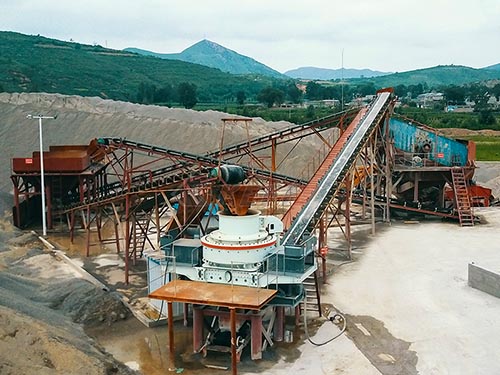
Industrial quarry ballast crushing equipment companies are the unsung heroes of modern rail infrastructure. Their machines must deliver extreme precision, durability, and efficiency under harsh conditions. The market is led by established players like Metso Outotec, Sandvik, Terex, and thyssenkrupp, each offering unique technological advantages. As global rail networks expand and upgrade, the demand for high-quality ballast—and the sophisticated equipment to produce it—will only intensify. For quarry operators, investing in the right crushing technology is not merely a capital expenditure; it is a strategic decision that determines their ability to meet the rigorous demands of the world’s railways. The future of this sector lies in smart, energy-efficient, and highly automated systems that can adapt to changing rock conditions and ever-stricter quality standards.
If you have any questions about our products, please feel free to contact us. We take all inquiries and suggestions very seriously.