
Stone Crusher Plant Factories Prices: A Comprehensive Analysis of Cost Factors, Market Trends, and Procurement Strategies
The global demand for crushed stone, sand, and gravel—collectively known as aggregates—has been on a steady upward trajectory, driven by urbanization, infrastructure development, and industrialization. At the heart of aggregate production lies the stone crusher plant, a complex assembly of machinery designed to reduce large rocks into smaller, usable sizes. For buyers, understanding the pricing of stone crusher plants from factories is a multifaceted challenge. Prices are not arbitrary; they are the product of engineering specifications, raw material costs, manufacturing complexity, market dynamics, and regional economic factors. This article provides a detailed, objective examination of stone crusher plant factory prices, covering the key determinants, price ranges for different plant types, regional variations, and strategic considerations for procurement.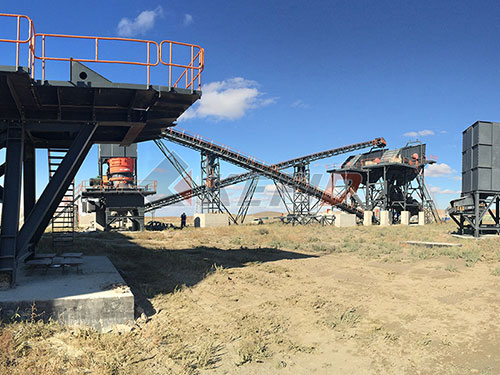
1. The Fundamental Determinants of Stone Crusher Plant Prices
Before delving into specific price figures, it is essential to understand the core variables that influence the cost of a stone crusher plant directly from the factory. These factors can be broadly categorized into technical, economic, and logistical dimensions.
1.1 Plant Capacity and Throughput
The single most significant price driver is the plant’s production capacity, typically measured in tons per hour (TPH). A small-scale plant designed for 20–50 TPH will have a fundamentally different price point than a large-scale installation capable of 300–500 TPH or more. Higher capacity requires larger crushers (jaw, cone, impact), more powerful motors, heavier-duty conveyors, and more extensive screening systems. For example, a small mobile jaw crusher plant (50 TPH) from a reputable Chinese factory might be priced between $80,000 and $150,000, while a stationary 300 TPH plant with multiple crushing stages can range from $500,000 to over $2 million.
1.2 Type of Crusher and Crushing Stages
The configuration of the crushing circuit directly impacts cost. Plants are typically designed with primary, secondary, and sometimes tertiary crushing stages. The choice of crusher type—jaw, cone, impact, gyratory, or vertical shaft impact (VSI)—affects both performance and price. Jaw crushers are generally the most cost-effective for primary crushing, while cone crushers are more expensive but essential for hard, abrasive materials. Impact crushers, often used for softer materials or for producing cubical aggregates, fall in a mid-range price bracket. A plant with only a primary jaw crusher and a screen will be significantly cheaper than a multi-stage plant with a jaw, cone, and VSI crusher.
1.3 Stationary vs. Mobile vs. Portable Configurations
The mobility of the plant is a major price differentiator. Stationary plants are fixed installations, often built on concrete foundations, and are typically the most cost-effective per ton of capacity because they lack the undercarriage, hydraulic systems, and chassis required for mobility. Mobile plants (track-mounted) and portable plants (wheel-mounted) command a premium due to their engineering complexity, self-contained power systems, and flexibility. A mobile jaw crusher plant can be 20–40% more expensive than a comparable stationary unit. For instance, a 150 TPH mobile cone crusher plant from a European manufacturer may cost $400,000–$700,000, whereas a stationary equivalent might be $250,000–$450,000.
1.4 Automation and Control Systems
Modern stone crusher plants increasingly incorporate advanced automation, including PLC (Programmable Logic Controller) systems, remote monitoring, and automatic load management. These features improve efficiency, reduce downtime, and enhance safety but add to the upfront cost. A basic plant with manual controls will be cheaper than one with full automation. The price difference can range from 5% to 15% of the total plant cost, depending on the complexity.
1.5 Material Quality and Component Sourcing
The quality of steel used in crusher frames, the durability of wear parts (liners, hammers, jaws), and the reliability of motors and bearings all influence the factory price. Factories that use high-grade manganese steel for crusher jaws or imported bearings (e.g., SKF, NSK) will charge more than those using lower-grade alternatives. Similarly, plants with heavy-duty frames and thicker liners are more expensive but offer longer service life. The origin of components—whether domestic or imported—also affects cost.
1.6 Brand Reputation and After-Sales Support
Established global brands (e.g., Metso Outotec, Sandvik, Terex) command higher prices due to their engineering expertise, reliability, and extensive after-sales networks. In contrast, smaller or regional factories, particularly in countries like China, India, or Turkey, offer lower prices but may have variable quality and limited support. A Metso Lokotrack mobile plant can cost 2–3 times more than a comparable Chinese-made unit. However, the total cost of ownership (TCO) must be considered, including spare parts availability, maintenance costs, and resale value.
2. Price Ranges by Plant Type and Region
To provide a practical reference, the following sections outline typical factory prices for common stone crusher plant configurations. These figures are based on market data from 2023–2024 and are expressed in USD, excluding shipping, customs, and installation.
2.1 Small-Scale Plants (20–100 TPH)
2.2 Medium-Scale Plants (100–300 TPH)
2.3 Large-Scale Plants (300–800 TPH)
2.4 Regional Price Variations
3. Additional Costs Beyond the Factory Price
The factory price is only one component of the total investment. Buyers must account for several additional expenses:
4. Market Trends Affecting Prices
Several current trends are shaping stone crusher plant factory prices:
5. Procurement Strategies for Buyers
To secure the best value from stone crusher plant factories, buyers should adopt a systematic approach:
6. Conclusion
Stone crusher plant factory prices are not a one-size-fits-all figure. They range from under $100,000 for a small mobile unit to several million dollars for a large, fully automated stationary plant. The key to a successful purchase lies in understanding the technical requirements, comparing offers from multiple regions, and evaluating the total cost of ownership rather than just the initial price. As the global aggregates market continues to grow, factories are innovating to offer more efficient, durable, and environmentally friendly solutions. Buyers who invest time in research and due diligence will be best positioned to secure a plant that delivers reliable performance and a strong return on investment over its operational lifetime.
If you have any questions about our products, please feel free to contact us. We take all inquiries and suggestions very seriously.