
Title: Sourcing Economy: A Professional Analysis of Cheap Iron Ore Crushing Plant Fabricators
Abstract
In the global mining and aggregates industry, capital expenditure (CAPEX) efficiency is a critical driver of project viability. For junior miners, small-scale quarry operators, or projects in developing regions, the procurement of a “cheap” iron ore crushing plant fabricator is often a primary objective. However, the term “cheap” in this context is frequently misunderstood. It does not merely denote a low purchase price; rather, it implies a favorable total cost of ownership achieved through strategic sourcing, simplified design, and regional manufacturing capabilities. This article provides an objective analysis of the market for cost-effective iron ore crushing plant fabricators, examining the trade-offs between initial cost, operational efficiency, and long-term reliability.
Iron ore is the raw material necessary for steel production, and its processing involves reducing large rocks into smaller particles suitable for grinding and beneficiation. The crushing stage is the first and arguably the most energy-intensive step in this chain. Because iron ore is highly abrasive—typically containing silica and other hard minerals—the machinery must be robust.
Historically, the market for crushing plants has been dominated by high-cost European and American manufacturers (e.g., Metso, Sandvik, Terex). However, the rise of manufacturing hubs in Asia, particularly China and India, has introduced a category of “cheap” fabricators. These entities offer turnkey solutions at a fraction of the cost of Western counterparts. The challenge for the buyer is distinguishing between a fabricator that offers value (cheap but functional) and one that offers false economy (cheap but unreliable).
In the context of heavy industrial machinery, a cheap fabricator is not necessarily a low-quality one. The cost reduction typically stems from several structural factors:
It is crucial to note that a “cheap” fabricator is typically a specialist in fabrication, not necessarily in process metallurgy. They build the steel structure and assemble the components, but the process design (flow sheet) may require third-party validation.
To understand the value proposition of a cheap fabricator, one must examine the specific machinery involved. A typical iron ore crushing circuit consists of:
A cheap fabricator often focuses on the structural steel and the assembly of these components. For iron ore, which is highly abrasive, the critical factor is the wear parts (mantles, bowl liners, jaw plates). A cheap fabricator might use standard high-manganese steel, whereas a premium fabricator might use advanced alloys like chrome carbide overlays. The buyer must calculate the cost per ton of wear parts to determine true value.
While the initial CAPEX savings can be 30% to 50%, there are inherent risks. Objective analysis requires acknowledging these pitfalls:
A. Engineering and Design Flaws
Cheap fabricators often lack the in-house engineering expertise to model material flow and stress analysis. This can lead to bottlenecks, where the crusher is capable of high throughput, but the conveyor or screen cannot handle the load. For iron ore, which can be sticky when wet, improper chute design leads to frequent blockages.
B. Material Quality and Welding
Iron ore dust is highly abrasive. A cheap fabricator might use thinner steel plates or substandard welding techniques to save costs. This results in structural fatigue and catastrophic failure under the constant vibration of crushing. A professional buyer must insist on ultrasonic testing of welds and verification of steel grades (e.g., Q235 vs. Q345 steel).
C. Component Quality
A cheap plant might feature a high-quality crusher frame but cheap bearings, motors, or electrical components. The failure of a $500 bearing can halt a $5 million operation. Therefore, the buyer must specify reputable brands for critical components (e.g., Siemens motors, SKF bearings, Schneider electrics) even if the fabrication is cheap.
D. Lack of After-Sales Support
This is the most significant risk. A fabricator located thousands of miles away with no local service network can leave a plant stranded for weeks waiting for a spare part. Professional sourcing requires verifying the fabricator’s ability to provide remote support and air-freight critical spares.
To mitigate risks, a procurement strategy must be rigorous. The following steps are recommended:
Step 1: Process Design First
Do not ask a fabricator to design the plant. Hire an independent process engineer to develop a flow sheet based on the specific ore characteristics (Bond Work Index, abrasiveness index, moisture content). Provide this flow sheet to the fabricator for a “build-to-print” quote. This removes the risk of poor process design.
Step 2: Audit the Fabricator
Conduct a physical or virtual audit of the fabrication facility. Look for:
Step 3: Specify Critical Components
In the contract, explicitly state the brands and specifications for:
Step 4: Modularization
A cheap fabricator often excels at building modular plants. By shipping the plant in standard containers, you reduce shipping costs and on-site assembly time. This is a key advantage of Asian fabricators.
Step 5: Third-Party Inspection
Hire a third-party inspection agency (e.g., SGS, Bureau Veritas) to inspect the plant during fabrication and before shipment. This ensures that the cheap price does not result in a cheap product.
It is impossible to discuss cheap iron ore crushing plant fabricators without mentioning China and India. These two nations are the primary sources for cost-effective mining equipment.
To determine if a cheap fabricator is the right choice, a Total Cost of Ownership (TCO) analysis is required.
| Factor | Premium Fabricator | Cheap Fabricator |
|---|---|---|
| Initial CAPEX | High (100%) | Low (50-60%) |
| Lead Time | 6-12 Months | 2-4 Months |
| Spare Parts Cost | High | Low |
| Energy Efficiency | High (Optimized) | Variable (Depends on motor) |
| Downtime Risk | Low | Medium-High |
| ROI Period | 5-7 Years | 2-4 Years |
For a project with a short mine life (e.g., 3-5 years), a cheap fabricator is the logical choice. The plant will pay for itself before major overhauls are needed. For a long-life mine (10+ years), a premium fabricator is often more economical due to lower downtime and higher efficiency.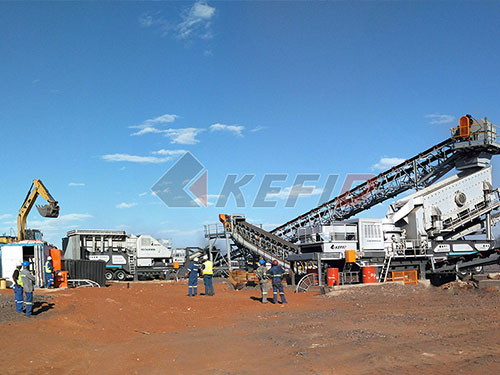
The search for a “cheap iron ore crushing plant fabricator” is a legitimate and strategic procurement objective. It democratizes mining by allowing smaller operators to enter the market. However, “cheap” must not be synonymous with “negligent.”
The professional approach is to separate the fabrication from the process design. By controlling the engineering, specifying high-quality wear parts and bearings, and enforcing strict quality control, a buyer can achieve a 40% reduction in CAPEX without sacrificing operational integrity. The ideal cheap fabricator is not a vendor of a finished product, but a partner in a build-to-print manufacturing strategy. As the global supply chain continues to mature, the gap between “cheap” and “reliable” is narrowing, provided the buyer conducts proper due diligence.
If you have any questions about our products, please feel free to contact us. We take all inquiries and suggestions very seriously.