
Title: Achieving Cost-Efficiency in Stone Crusher Plant Factories: A Comprehensive Analysis of Affordable Solutions
Introduction
In the aggregate production, mining, and construction industries, the stone crusher plant serves as the foundational equipment for processing raw materials into usable sizes. For many investors, contractors, and small-to-medium enterprises (SMEs), the primary barrier to entry is not the lack of demand for crushed stone, sand, or gravel, but the perception that establishing a functional plant requires an exorbitant capital investment. The query “stone crusher plant factory affordable” reflects a critical market need: the desire for cost-effective solutions without compromising operational integrity, output quality, or safety standards.
This article provides a professional and objective analysis of how affordability is achieved in stone crusher plant factories. It examines the factors that influence pricing, the trade-offs between initial cost and long-term value, and the strategies available to procure an affordable plant that remains productive and reliable over its service life.
1. Defining “Affordable” in the Context of Industrial Machinery
In the heavy machinery sector, “affordable” is a relative term. It does not necessarily mean the cheapest option available, which often correlates with inferior materials, poor engineering, and high maintenance costs. Instead, an affordable stone crusher plant is one that offers the optimal balance between initial capital expenditure (CAPEX), operational expenditure (OPEX), and return on investment (ROI).
A truly affordable plant is characterized by:
When evaluating a factory’s offering, buyers must look beyond the sticker price. A plant that costs 20% less upfront but requires 50% more in maintenance over five years is not affordable; it is a liability.
2. Key Factors Influencing the Cost of a Stone Crusher Plant
To understand how factories can offer affordable solutions, one must first understand the cost drivers. The price of a stone crusher plant is determined by several interdependent factors: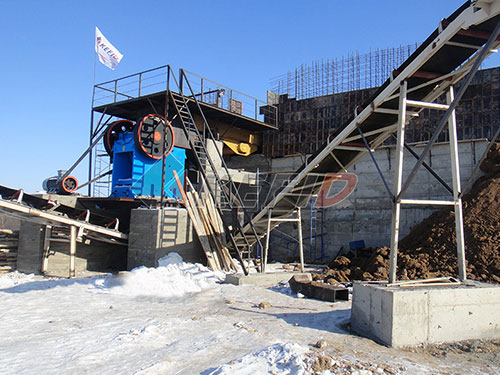
A. Production Capacity
The throughput capacity, measured in tons per hour (TPH), is the primary cost determinant. A plant capable of processing 50 TPH will naturally be less expensive than one designed for 500 TPH. Affordable factories often specialize in modular designs that allow for incremental capacity increases, enabling buyers to start small and scale up.
B. Type and Hardness of Raw Material
The type of stone (limestone, granite, basalt, river gravel, etc.) dictates the required crushing technology. Limestone, being relatively soft, can be processed with impact crushers, which are generally less expensive than cone crushers. Granite and basalt, however, require high-compression cone crushers or jaw crushers with wear-resistant liners, increasing the cost. An affordable factory will recommend the most cost-effective crusher type based on the specific material to avoid over-engineering.
C. Plant Configuration (Stationary vs. Mobile)
D. Automation and Control Systems
Fully automated plants with PLC (Programmable Logic Controller) systems, remote monitoring, and automated lubrication increase the initial price. However, they can reduce labor costs and human error, improving long-term affordability. Factories targeting budget-conscious buyers often offer semi-automated or manual options that still meet safety and efficiency standards.
E. Manufacturing Location and Supply Chain
Factories in regions with lower labor costs and raw material availability (e.g., parts of Asia) can offer lower prices. However, buyers must account for shipping, import duties, and after-sales support. An affordable plant is not just about the factory gate price but the total landed cost.
3. Strategies Factories Use to Offer Affordable Plants
Reputable stone crusher plant factories employ several strategies to make their products accessible to a broader market without sacrificing quality.
A. Modular Design and Standardization
By using standardized components (e.g., standard jaw crusher models, conveyor belts, and vibrating screens), factories can achieve economies of scale. Modular plants allow buyers to purchase a basic configuration and add modules (such as a secondary cone crusher or a sand washing unit) later. This reduces the initial financial burden.
B. Value Engineering
This involves analyzing the plant’s design to eliminate unnecessary features that do not contribute to core functionality. For example, instead of using expensive stainless steel in non-critical areas, factories may use high-grade carbon steel with protective coatings. This maintains structural integrity while reducing cost.
C. Local Sourcing of Components
Affordable factories often source motors, bearings, and electrical components from reputable regional suppliers rather than premium international brands. While this may slightly reduce the component’s lifespan, it significantly lowers the price. The key is transparency: the factory should disclose the brands used so the buyer can make an informed decision.
D. Refurbished and Used Equipment
Some factories specialize in refurbishing used crushers and screens. A professionally refurbished plant can cost 40-60% less than a new one, with a warranty. This is a viable option for SMEs with limited capital, provided the refurbishment is done to original equipment manufacturer (OEM) standards.
E. Direct-to-Consumer Sales Models
By selling directly to end-users and eliminating middlemen or distributors, factories can reduce the final price by 10-20%. This requires the factory to have a robust online presence and efficient logistics.
4. The Trade-Offs: What to Expect at Lower Price Points
Objectivity demands acknowledging the limitations of affordable plants. Buyers should be aware of potential trade-offs:
The savvy buyer mitigates these risks by negotiating a service level agreement (SLA) that includes critical spare parts and technical support, even if it means paying a slight premium.
5. Calculating True Affordability: A Total Cost of Ownership (TCO) Approach
To determine if a stone crusher plant is truly affordable, one must calculate the Total Cost of Ownership over a 5- to 10-year period. TCO includes:
A plant with a low purchase price but high energy consumption and frequent breakdowns will have a higher TCO than a slightly more expensive plant with efficient motors and robust construction. Affordable factories focus on optimizing TCO, not just CAPEX.
6. Case Study: A Cost-Effective 100 TPH Limestone Crushing Plant
Consider a hypothetical factory offering a 100 TPH stationary plant for processing limestone. The configuration includes:
The factory achieves affordability by:
The estimated price range for such a plant from an affordable factory is $80,000 to $150,000, depending on the specific components and shipping terms. This is significantly lower than a European or American equivalent, which might cost $300,000 to $500,000. The trade-off is a slightly shorter warranty period and a need for more frequent inspection of wear parts. However, for a start-up quarry in a developing market, this plant offers an accessible entry point with a clear path to profitability.
7. How to Identify a Reputable Affordable Factory
Not all low-cost factories are equal. To avoid purchasing a substandard plant, buyers should:
8. The Future of Affordable Crushing Solutions
Technological advancements are continually driving down costs. Electric-powered plants are becoming more affordable as battery and motor technology improves. Modular and portable designs are reducing installation costs. Additionally, the rise of digital marketplaces and direct factory sales is increasing price transparency, forcing factories to compete on value rather than just price.
Furthermore, the growing emphasis on sustainability is leading to affordable plants that incorporate dust suppression systems and noise reduction, which, while adding initial cost, reduce regulatory fines and community complaints—a hidden affordability factor.
Conclusion
The pursuit of an affordable stone crusher plant factory is a legitimate and achievable goal. Affordability is not synonymous with cheapness; it is the result of smart engineering, strategic sourcing, and a focus on total cost of ownership. By understanding the factors that drive cost, recognizing the trade-offs, and conducting thorough due diligence, buyers can procure a plant that delivers reliable performance without crippling their financial resources.
For investors and contractors, the key is to partner with a factory that prioritizes transparency, offers modular and scalable designs, and provides robust after-sales support. In doing so, they secure not just a machine, but a sustainable and profitable production asset. As the global demand for aggregates continues to rise, affordable crushing solutions will remain a cornerstone of infrastructure development, enabling smaller players to compete and contribute to economic growth.
In summary, an affordable stone crusher plant is a strategic investment—one that balances immediate cost with long-term productivity, ensuring that the factory floor becomes a site of efficiency, safety, and profitability.
If you have any questions about our products, please feel free to contact us. We take all inquiries and suggestions very seriously.