
Stone Crusher Machine Maker R&D: Engineering the Backbone of Modern Infrastructure
Introduction
The global construction, mining, and aggregate industries are fundamentally dependent on one unglamorous yet indispensable piece of equipment: the stone crusher. From the granite aggregates that form the sub-base of highways to the limestone powder used in cement production, the reduction of large rock masses into usable, graded fragments is the first and most critical step in virtually every civil engineering project. Behind this seemingly simple mechanical process lies a highly sophisticated, capital-intensive, and continuously evolving field of research and development (R&D). The stone crusher machine maker is no longer merely a fabricator of steel frames and rotating shafts; it is a materials scientist, a computational fluid dynamics specialist, a tribologist, and a systems integrator. This article provides a detailed, professional examination of the R&D landscape within the stone crusher manufacturing industry, covering core engineering challenges, technological innovations, material science breakthroughs, digitalization, and future trajectories.
1. The Core Engineering Mandate: Energy Efficiency and Particle Morphology
The primary objective of any stone crusher is to convert run-of-mine (ROM) rock into a product with a specific size distribution (gradation) and particle shape. However, the R&D focus is not simply on “breaking rocks.” Two overarching performance metrics dominate the engineering agenda: specific energy consumption (kWh per ton) and product cubicity.
Crushing is an inherently inefficient process. According to fundamental physics, only a small fraction of the total energy input is actually used to create new surface area; the vast majority is dissipated as heat, noise, and mechanical wear. A modern R&D department spends significant resources on optimizing the kinematics of the crushing chamber to maximize inter-particle breakage (rock-on-rock) while minimizing liner wear. For instance, in cone crushers, the eccentric throw, stroke length, and chamber profile (e.g., short-head vs. standard) are modeled using discrete element method (DEM) simulations. These simulations allow engineers to predict how rock particles flow through the chamber, where they compress, and how they fracture, without building expensive physical prototypes. The goal is to achieve a “choke-fed” condition where particles are continuously compressed against each other, producing more cubical shapes—a critical requirement for high-strength concrete and asphalt.
2. Material Science and Wear Resistance: The Battle Against Abrasion
The most significant operational cost in crushing is not electricity but wear parts—the manganese steel liners, jaw plates, blow bars, and impact aprons. R&D in this area is a relentless pursuit of alloys and composite materials that can withstand extreme abrasive and impact loads. Traditional Hadfield manganese steel (12-14% Mn) remains the workhorse due to its work-hardening properties, but modern makers are pushing boundaries.
Current R&D focuses on:
Furthermore, tribological research—the study of friction, wear, and lubrication—is critical for the crusher’s main bearings and bushings. The transition from standard bronze bushings to engineered polymer composites or self-lubricating materials is a growing trend, reducing maintenance intervals and improving reliability in dusty, high-temperature environments.
3. Mechanical Design and Structural Integrity: Finite Element Analysis (FEA)
The crusher frame, main shaft, and eccentric assembly are subjected to cyclic, high-magnitude loads that can exceed 500 tons in large gyratory crushers. R&D engineers rely heavily on finite element analysis (FEA) to optimize the structural design. The goal is to minimize weight (for transportability and lower foundation costs) while maximizing stiffness and fatigue life.
Modern FEA goes beyond static load analysis. It incorporates:
4. Hydraulic Systems and Automation: From Manual to Autonomous
The modern crusher is not a standalone machine; it is a node in a fully automated processing plant. R&D in hydraulic systems has shifted from simple relief valves to closed-loop, proportional control systems. Key innovations include:
5. Crushing Chamber Design: The Physics of Breakage
The geometry of the crushing chamber is the soul of the crusher. R&D in this area is a blend of empirical knowledge and advanced simulation. For jaw crushers, the angle of nip (the angle between the fixed and moving jaw) must be carefully calculated to ensure particles are gripped and crushed, not ejected. For cone crushers, the chamber is a complex three-dimensional spiral.
Recent R&D breakthroughs include: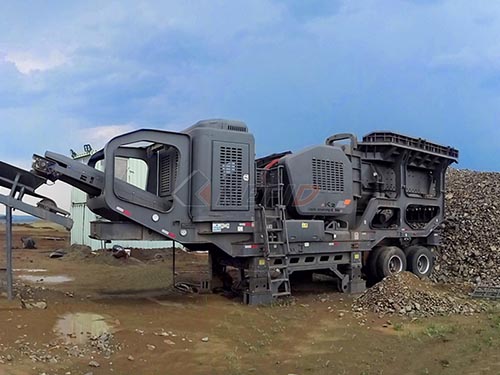
6. Sustainability and Environmental R&D
The stone crushing industry faces increasing pressure to reduce its environmental footprint. R&D is addressing this on multiple fronts:
7. Digital Twin and Virtual Prototyping
The most transformative trend in stone crusher R&D is the adoption of the “Digital Twin” concept. This involves creating a complete virtual replica of the crusher, including its mechanical structure, hydraulic system, wear parts, and the material being processed. This digital twin is fed with real-time operational data from sensors on the physical machine.
R&D engineers use the digital twin to:
8. Future Horizons: High-Pressure Grinding and Hybrid Drives
Looking ahead, the stone crusher machine maker’s R&D is exploring radical departures from traditional compression and impact methods. High-Pressure Grinding Rolls (HPGR) are already gaining traction in the mining sector, offering 20-30% lower energy consumption than conventional cone crushers. R&D is now focused on making HPGRs more robust for hard-rock aggregate applications.
Another frontier is the hybridization of power systems. Fully electric crushers are becoming standard, but R&D is now exploring:
Conclusion
The R&D efforts of stone crusher machine makers are a testament to the hidden complexity of a seemingly basic industrial process. It is a field driven by the relentless pursuit of three goals: lower energy consumption, longer wear life, and higher product quality. Through the sophisticated application of computational simulation, advanced metallurgy, and intelligent automation, modern crushers are becoming more efficient, more reliable, and more sustainable. As global infrastructure demands grow and natural aggregates become scarcer, the role of R&D in this industry will only become more critical. The future crusher will not just be a machine; it will be a self-optimizing, data-driven asset that operates autonomously within a fully digitalized quarry ecosystem. The makers who invest deeply in this R&D are not just building machines—they are engineering the very foundation of the modern world.
If you have any questions about our products, please feel free to contact us. We take all inquiries and suggestions very seriously.