
Title: The Comprehensive Guide to Stone Crusher Machine Makers: Factory Pricing, Technology, and Procurement Strategies
Introduction
In the global construction, mining, and aggregate industries, the stone crusher machine is the undisputed workhorse. From producing road base to manufacturing concrete aggregates, these machines reduce massive boulders into usable, specification-grade fragments. For project managers, quarry owners, and procurement officers, the phrase “stone crusher machine maker factory price” is not merely a search term; it is a strategic imperative. The difference between purchasing from a middleman and dealing directly with a factory can represent a 15% to 40% cost variance, depending on the machine class and market conditions. This article provides a detailed, professional, and objective examination of stone crusher machine makers, the structure of factory-direct pricing, technological advancements, and the critical factors that influence a sound purchasing decision.
Section 1: The Landscape of Stone Crusher Machine Makers
The global market for stone crushing equipment is vast and fragmented. It ranges from small, specialized workshops in emerging economies to massive multinational conglomerates with decades of engineering heritage. Understanding this landscape is the first step toward leveraging “factory price” advantages.
1.1 Tier 1: Global Heavyweights
Companies such as Metso Outotec (Finland), Sandvik (Sweden), Terex Corporation (USA), and ThyssenKrupp (Germany) represent the pinnacle of engineering. Their machines are characterized by:
1.2 Tier 2: Regional Powerhouses (e.g., China, India, Turkey)
Countries like China (specifically provinces such as Henan, Shanghai, and Zhejiang) and India (Gujarat and Maharashtra) host hundreds of stone crusher machine makers. These factories offer the most accessible “factory price” structure. Key players include:
1.3 Tier 3: Specialized Niche Fabricators
These are smaller factories that focus on a single type of machine, such as vertical shaft impactors (VSI) or cone crushers. They often provide the lowest absolute factory price but may lack comprehensive after-sales support or full system integration capabilities.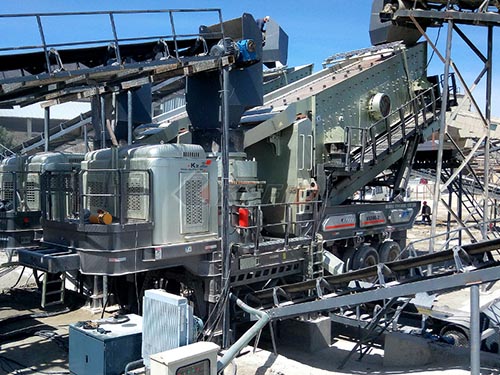
Section 2: Deconstructing “Factory Price” – What Does It Really Mean?
The term “factory price” (often denoted as EXW – Ex Works) is a legal Incoterm. It means the seller makes the goods available at their premises. The buyer pays all transportation, insurance, and export duties. However, the “factory price” quoted by a stone crusher machine maker is not a single, static number. It is a composite of several cost drivers:
2.1 Raw Material Costs
Steel constitutes 60-70% of a crusher’s weight. The price of high-grade steel (e.g., Q345B for frames, Hadfield manganese steel for jaw plates) fluctuates with global commodity markets. A reputable maker will have a dynamic pricing formula based on the London Metal Exchange (LME) or regional steel indices. When comparing factory quotes, ensure they are based on the same steel price index date.
2.2 Core Component Sourcing
A “factory” does not necessarily manufacture every component. The quality of the crusher depends heavily on:
2.3 Manufacturing Overhead & Labor
Chinese and Indian factories have significantly lower hourly labor costs than Western factories. However, they also often have lower automation rates. A factory with robotic welding and CNC machining will have higher upfront capital costs, but it produces more consistent quality, reducing the risk of weld failure. This is reflected in a slightly higher “factory price” but lower total cost of ownership (TCO).
2.4 The “Hidden” Factory Price: Tooling and Customization
If you require a custom feed opening, a special motor voltage (e.g., 660V vs. 440V), or a specific paint specification for corrosive environments, the factory will charge for engineering time and tooling changes. These are often quoted as “one-time charges” or “NRE” (Non-Recurring Engineering) fees. A true factory-direct deal should transparently itemize these costs.
Section 3: Types of Stone Crushers and Their Factory Cost Structures
To negotiate effectively, one must understand the specific machine type. The factory price varies dramatically based on the crushing mechanism.
3.1 Jaw Crushers (Primary Crushing)
3.2 Cone Crushers (Secondary/Tertiary Crushing)
3.3 Impact Crushers (Horizontal Shaft Impactors – HSI)
3.4 Vertical Shaft Impactors (VSI) – Sand Making
Section 4: The Factory Audit – Verifying the Maker
Before accepting any “factory price,” a professional buyer must conduct a due diligence audit. This is not just about visiting the website. It involves:
4.1 Physical Inspection
4.2 Financial and Legal Verification
4.3 Component Traceability
Ask for the certificates of conformity for the main bearings, motors, and steel plates. If the factory cannot provide mill certificates for the steel, the price is likely too low because they are using secondary (recycled) steel with unknown properties.
Section 5: Factory Price vs. Total Cost of Ownership (TCO)
The lowest factory price is rarely the cheapest machine. A professional analysis must include TCO over a 5-year period:
5.1 Wear Parts Consumption
5.2 Energy Efficiency
A 250 kW motor running at 80% load for 20 hours a day consumes significant power. A factory that uses a high-efficiency motor (IE3 or IE4 standard) may cost 5% more upfront but will save 2-3% in electricity costs annually. Over 5 years, this savings often exceeds the initial price difference.
5.3 Downtime Costs
For a quarry producing 500 tons per hour, one hour of downtime costs approximately $5,000-$10,000 in lost revenue. A factory that offers a robust design with redundant hydraulic systems and easy access to wear parts (e.g., swing jaw removal without dismantling the entire frame) justifies a higher factory price.
Section 6: Negotiation Strategies for Factory-Direct Purchases
To secure the best factory price without sacrificing quality, consider these professional tactics:
6.1 Bundle Orders
Factories have high fixed costs. If you need one jaw crusher and one cone crusher, negotiate a package deal. The factory can share the cost of a single container shipment and reduce setup time. This often yields a 5-7% discount on the total.
6.2 Off-Season Purchasing
The crushing equipment market is cyclical. In the Northern Hemisphere, orders peak from January to April (pre-construction season). Factories are often idle in November and December. Negotiating during this period can secure a 3-5% discount as the factory seeks to maintain cash flow and keep workers employed.
6.3 Standardization of Spare Parts
Offer to sign a 2-year spare parts contract simultaneously with the machine purchase. This provides the factory with predictable revenue. In exchange, they may reduce the machine price by 2-3% and lock in spare parts prices, protecting you from inflation.
6.4 Freight and Incoterms
The “factory price” is EXW. If you are a skilled logistics operator, you can save money by handling export packing yourself. However, most factories offer better export packing (e.g., shrink-wrapped, steel-framed crates) than a third-party forwarder. Compare the cost of FOB (Free on Board) vs. EXW. Sometimes, the factory’s freight quote is lower than your own due to their volume contracts with shipping lines.
Section 7: The Future of Stone Crusher Manufacturing and Pricing
The industry is undergoing a significant transformation, which will affect future factory prices:
7.1 Electrification and Hybrid Drives
Diesel-powered mobile crushers are being phased out in favor of electric-hybrid systems. Factories investing in this technology will have higher initial prices, but the operational cost savings (fuel vs. electricity) are substantial. Expect a 10-15% premium for hybrid models.
7.2 Digital Twins and Remote Diagnostics
Modern factories are embedding sensors that transmit operational data to the maker’s cloud. This allows the factory to predict failures before they occur. While this adds a small cost to the machine (approx. 1-2%), it significantly reduces the risk of catastrophic failure, which is a major hidden cost.
7.3 Recycling and Circular Economy
New regulations in the EU and China are mandating that crushers be designed for easier disassembly and recycling of components. This “design for environment” adds engineering costs but is becoming a market entry barrier. Factory prices will rise slightly to accommodate these compliance costs.
Conclusion
Navigating the world of stone crusher machine makers to secure a genuine factory price requires more than a simple internet search. It demands a deep understanding of metallurgy, mechanical engineering, international trade terms, and market economics. The lowest quoted price is often a red flag, indicating substandard components or a lack of after-sales support. Conversely, the highest price is not always justified.
The professional approach is to:
By treating the “factory price” as the starting point of a value engineering exercise rather than the final goal, buyers can secure equipment that delivers optimal performance, reliability, and profitability for decades. The stone crusher is a long-term asset; the wisdom of its purchase should be equally enduring.
If you have any questions about our products, please feel free to contact us. We take all inquiries and suggestions very seriously.