
Premium Slag Crusher Plant Private Label Manufacturer: Engineering Excellence in Industrial Waste Processing
In the modern industrial landscape, the efficient management and recycling of by-products have become critical to both environmental sustainability and economic viability. Among these by-products, slag—a non-metallic residue generated during metal smelting and refining processes—presents both a challenge and an opportunity. The transformation of slag into valuable construction aggregates, road base materials, and cement additives requires specialized machinery capable of handling abrasive, heavy, and heterogeneous materials. This is where the role of a Premium Slag Crusher Plant Private Label Manufacturer becomes indispensable. Such manufacturers do not merely produce equipment; they engineer comprehensive solutions that combine robust design, advanced metallurgy, and process optimization, all while offering the flexibility of private labeling for distributors, engineering firms, and end-users seeking brand differentiation.
Understanding the Slag Crushing Process
Before delving into the specifics of manufacturing, it is essential to understand the nature of slag and the crushing process. Slag from steelmaking (Basic Oxygen Furnace or Electric Arc Furnace) or ferroalloy production is typically a dense, hard, and abrasive material with a Mohs hardness often exceeding 7. It contains metallic iron, silicates, and oxides. The primary objective of a slag crusher plant is to reduce large slag boulders (often 24 inches or larger) into smaller, marketable fractions—typically ranging from 0-5 mm (sand), 5-20 mm (aggregate), and 20-40 mm (base course). The process involves primary crushing (jaw crushers), secondary crushing (cone crushers or impact crushers), magnetic separation to recover metallic iron, and screening to achieve precise particle size distribution.
A premium manufacturer understands that the success of this process hinges on three pillars: material handling efficiency, wear resistance, and product purity. A private label manufacturer must deliver these attributes consistently while allowing the client to brand the equipment as their own.
The Core Competencies of a Premium Private Label Manufacturer
Superior Engineering and Design Customization
A premium manufacturer does not offer a one-size-fits-all solution. They invest heavily in R&D to design plants that can handle specific slag types—whether it is air-cooled blast furnace slag, granulated slag, or stainless steel slag. The design must account for feed size, moisture content, and the presence of tramp metal. For private label clients, the manufacturer offers the ability to modify the plant layout, conveyor lengths, and control systems to meet the client’s unique site constraints. This includes designing mobile, semi-mobile, or stationary configurations. The engineering team uses advanced simulation software (e.g., DEM – Discrete Element Method) to predict wear patterns and optimize crushing chamber geometry, ensuring that the plant operates at maximum throughput with minimal downtime.
Metallurgical Expertise in Wear Parts
The most critical differentiator in slag crushing is the longevity of wear parts. Slag is extremely abrasive, and standard manganese steel (12-14% Mn) often fails prematurely. A premium manufacturer develops proprietary alloys—such as high-chrome iron, ceramic-reinforced composites, or modified austenitic manganese steel with chromium and molybdenum additions. These materials are heat-treated to achieve a balance between hardness (up to 550 BHN) and toughness. For private label clients, this translates into a lower cost per ton of crushed material. The manufacturer also offers interchangeable wear parts that are designed for quick replacement, reducing maintenance downtime. This metallurgical expertise is a key selling point that the private label client can leverage in their marketing.
Integrated Magnetic Separation and Metal Recovery
A hallmark of a premium slag crusher plant is its ability to recover valuable metallic iron. The manufacturer integrates overband magnetic separators, drum magnets, and eddy current separators at strategic points in the crushing circuit. The recovered metal can be sold back to steel mills, creating an additional revenue stream for the plant operator. The private label manufacturer ensures that these magnetic systems are robust, self-cleaning, and capable of handling high temperatures (since slag can be hot when fed). The design also minimizes the loss of non-metallic fines during separation, ensuring that the final aggregate product meets strict quality standards for construction use.
Advanced Control and Automation
Modern slag crusher plants are increasingly automated. A premium manufacturer provides PLC-based control panels with remote monitoring capabilities. The system monitors motor loads, bearing temperatures, belt alignment, and vibration levels. For private label clients, the manufacturer can customize the HMI (Human-Machine Interface) with the client’s logo, color scheme, and specific alarm parameters. This level of automation not only improves safety (by reducing manual intervention) but also optimizes energy consumption. The manufacturer also offers IoT (Internet of Things) integration, allowing the client to track plant performance in real-time from a central office.
Rigorous Quality Assurance and Testing
Before a plant is shipped, a premium manufacturer conducts extensive testing. This includes running the plant with actual slag samples to verify throughput, product gradation, and metal recovery rates. The manufacturer maintains a test facility where private label clients can witness the performance of their future plant. Quality assurance extends to every component—from the crusher bearings to the conveyor idlers. The manufacturer holds certifications such as ISO 9001:2015 for quality management and ISO 14001 for environmental management. For private label clients, these certifications provide credibility and facilitate easier sales to end-users who require compliance with international standards.
The Private Label Advantage: Why Clients Choose This Model
Private labeling in the heavy equipment industry is not merely about putting a different name on a machine. It is a strategic partnership that offers several advantages:
Brand Extension without R&D Costs: Companies that already have a strong brand in construction or mining equipment can expand their product line into slag processing without investing millions in engineering and manufacturing infrastructure. The private label manufacturer acts as an OEM (Original Equipment Manufacturer), providing the technical backbone.
Localized Support and Service: The private label client often has an established service network in their region. By partnering with a premium manufacturer, they can offer locally supported, high-quality slag crusher plants. The manufacturer provides comprehensive training, spare parts support, and technical documentation that the client can customize.
Competitive Pricing through Volume: Premium manufacturers often produce multiple plants for different clients, allowing them to achieve economies of scale in procurement of steel, motors, and electrical components. This cost advantage is passed on to the private label client, enabling them to offer competitive pricing without sacrificing margins.
Exclusive Territories and Product Differentiation: Many private label agreements include exclusive distribution rights for specific geographic regions. The client can differentiate their product by adding unique features—such as a specific type of dust suppression system, a customized feed hopper, or a special paint scheme—that are not available from other suppliers.
Case Study: A Typical Premium Slag Crusher Plant Configuration
To illustrate the technical depth, consider a typical 200 TPH (tons per hour) slag crusher plant designed by a premium private label manufacturer:
The entire plant is designed to be modular, allowing for easy transportation and erection. The private label client can brand the plant as their own, with their logo on the control panel, the main crusher body, and the product literature.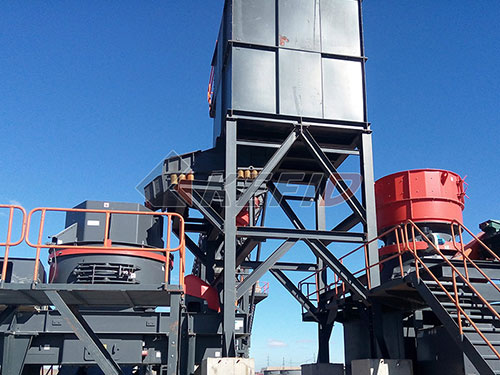
Challenges and Solutions in Slag Crushing
A premium manufacturer must also address common operational challenges:
Conclusion: The Strategic Value of Partnering with a Premium Manufacturer
For companies looking to enter the slag processing market or expand their existing operations, partnering with a Premium Slag Crusher Plant Private Label Manufacturer offers a clear path to success. These manufacturers bring decades of metallurgical and mechanical engineering experience, a commitment to quality, and the flexibility to adapt to client needs. The private label model allows the client to focus on sales, marketing, and after-sales service, while the manufacturer handles the complex task of designing and building a plant that can withstand the harsh realities of slag crushing.
In an era where industrial waste is increasingly seen as a resource, the ability to efficiently process slag into high-value construction materials is a competitive advantage. A premium private label manufacturer does not just sell a machine; they deliver a complete solution—one that is reliable, efficient, and built to last. For the discerning client, the choice is clear: invest in a partnership that prioritizes engineering excellence, wear life, and operational efficiency. The result is a slag crusher plant that not only meets but exceeds expectations, all under the client’s own trusted brand.
If you have any questions about our products, please feel free to contact us. We take all inquiries and suggestions very seriously.