
Title: Quarry Ballast Crushing Equipment Suppliers Certificate: Standards, Importance, and Global Compliance
Introduction
In the global construction and railway infrastructure industries, ballast—typically crushed stone—plays a critical role in providing stability, drainage, and load distribution for railway tracks and road foundations. The production of high-quality ballast requires specialized crushing equipment capable of delivering consistent particle size, shape, and durability. However, the reliability and performance of such equipment are not merely a matter of brand reputation; they are increasingly governed by formal certification systems. A “Quarry Ballast Crushing Equipment Suppliers Certificate” is a document or accreditation that verifies a supplier’s compliance with industry standards, safety regulations, quality management systems, and environmental protocols. This article provides a comprehensive, objective analysis of what these certificates entail, why they matter, the types of certifications commonly required, and how to evaluate suppliers based on their certification credentials.
1. Understanding the Role of Ballast Crushing Equipment
Before delving into certification specifics, it is essential to understand the equipment involved. Quarry ballast crushing equipment typically includes:
The quality of ballast depends on the equipment’s ability to produce particles that are angular, hard, and free from deleterious materials. Equipment that fails to meet these specifications can lead to poor track stability, increased maintenance costs, and safety hazards. Therefore, certification of both the equipment and the supplier becomes a critical risk management tool.
2. What Is a “Quarry Ballast Crushing Equipment Suppliers Certificate”?
A supplier certificate is not a single document but a collection of certifications, declarations, and compliance statements that demonstrate a supplier’s capability to manufacture, deliver, and support crushing equipment that meets specific standards. These certificates can be categorized into several types:
3. Why Certification Matters: Objective Benefits
Certification is not merely a bureaucratic hurdle; it provides tangible benefits to buyers, operators, and end-users.
3.1 Quality Assurance
Certified suppliers are subject to regular audits and inspections. ISO 9001 certification, for instance, requires documented procedures for design, manufacturing, and testing. This reduces the likelihood of equipment defects, such as premature wear of crusher liners or inconsistent product gradation.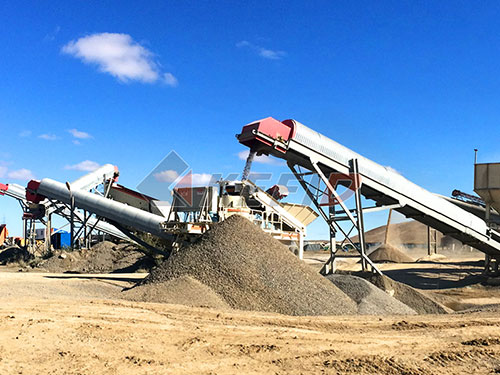
3.2 Regulatory Compliance
Many countries require imported or locally manufactured crushing equipment to meet specific safety and environmental standards. For example, the European Union’s CE marking indicates that the equipment complies with health, safety, and environmental protection requirements. Without such certification, equipment may be barred from entry or operation.
3.3 Risk Mitigation
Uncertified equipment may pose operational risks, including mechanical failure, electrical hazards, or non-compliance with local labor laws. Certificates from recognized bodies (e.g., TÜV, SGS, Bureau Veritas) provide third-party verification that the equipment has been tested and meets minimum safety thresholds.
3.4 Market Access and Credibility
Suppliers with comprehensive certification portfolios are more likely to win contracts from large infrastructure projects, government tenders, and multinational corporations. Certification serves as a shorthand for reliability and professionalism.
4. Key Certification Standards for Ballast Crushing Equipment
4.1 ISO 9001:2015 – Quality Management Systems
This is the most widely recognized quality standard. It requires suppliers to establish a process-based approach to quality, including continuous improvement, customer focus, and evidence-based decision-making. For ballast crusher suppliers, ISO 9001 certification typically covers design, manufacturing, assembly, and after-sales service.
4.2 CE Marking (EU Machinery Directive 2006/42/EC)
For suppliers exporting to Europe, CE marking is mandatory. It signifies that the equipment meets essential health and safety requirements. The certification process involves a risk assessment, technical documentation, and often a Notified Body assessment for complex machinery.
4.3 GOST-R and EAC (Eurasian Economic Union)
For markets in Russia, Kazakhstan, Belarus, and other CIS countries, GOST-R or EAC certification is required. These certifications verify that the equipment complies with local technical regulations, including electrical safety, noise levels, and mechanical integrity.
4.4 ISO 14001:2015 – Environmental Management
Quarry operations are under increasing scrutiny for their environmental impact. ISO 14001 certification demonstrates that the supplier has implemented an environmental management system to minimize waste, emissions, and resource consumption. This is particularly relevant for crushers that generate dust, noise, and vibration.
4.5 ISO 45001:2018 – Occupational Health and Safety
This standard focuses on worker safety. Certified suppliers must have procedures for hazard identification, risk assessment, and incident prevention. For crushing equipment, this includes guarding, lockout/tagout systems, and emergency stop mechanisms.
4.6 Industry-Specific Standards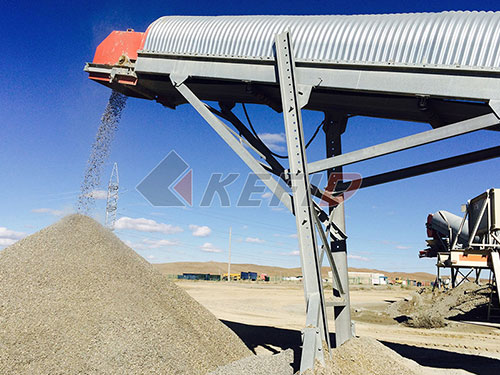
5. How to Verify a Supplier’s Certificate
Not all certificates are created equal. Buyers should adopt a systematic approach to verification:
5.1 Check the Issuing Body
Certificates from internationally recognized bodies (e.g., TÜV Rheinland, SGS, Lloyd’s Register, BSI) carry more weight than those from obscure or non-accredited organizations. Verify that the certifying body is accredited by a national accreditation authority (e.g., UKAS, DAKKS, ANSI).
5.2 Review the Scope of Certification
A certificate may list specific product categories or locations. Ensure that the certificate covers the exact equipment model and manufacturing site you are purchasing from. For example, a supplier may have ISO 9001 for its headquarters but not for its overseas factory.
5.3 Request Supporting Documentation
Certificates alone are insufficient. Ask for audit reports, test results, and technical files. For CE marking, request the Declaration of Conformity and the technical documentation that supports it.
5.4 Check Expiry Dates and Validity
Most certifications are valid for three years, with annual surveillance audits. Ensure that the certificate is current and that no non-conformities have been reported.
5.5 Cross-Reference with Industry Databases
Some industries maintain databases of certified suppliers. For example, the European Commission’s NANDO database lists Notified Bodies for CE marking. Similarly, the International Accreditation Forum (IAF) provides a searchable database of accredited certification bodies.
6. Common Pitfalls and Red Flags
6.1 Self-Declared Certificates
Some suppliers issue their own “certificates” without third-party verification. These are not valid for regulatory compliance or risk mitigation.
6.2 Expired or Suspended Certificates
A certificate that has expired or been suspended indicates that the supplier failed to maintain compliance. Always verify current status directly with the certifying body.
6.3 Vague or Generic Language
Certificates that do not specify product types, models, or manufacturing sites may be misleading. For example, a certificate stating “crushing equipment” without further detail may not cover the specific ballast crusher you intend to purchase.
6.4 Lack of Local Compliance
A supplier may hold international certifications but fail to meet local requirements in your country. For instance, CE marking does not automatically satisfy Chinese CCC (China Compulsory Certification) or Indian BIS standards.
7. The Future of Certification in the Crushing Industry
As technology evolves, certification requirements are becoming more stringent and data-driven. Emerging trends include:
8. Conclusion
A Quarry Ballast Crushing Equipment Suppliers Certificate is far more than a piece of paper. It is a comprehensive assurance of quality, safety, environmental responsibility, and regulatory compliance. For buyers and project managers, understanding the types of certifications, their validity, and how to verify them is essential for making informed procurement decisions. In an industry where equipment failure can lead to costly delays and safety incidents, certification serves as a critical tool for risk management and quality assurance.
When evaluating suppliers, do not rely solely on marketing claims. Request documented evidence of certification, verify its authenticity with the issuing body, and ensure that it covers the specific equipment and market requirements. By doing so, you not only protect your investment but also contribute to the long-term reliability and safety of the infrastructure that depends on high-quality ballast.
In summary, certification is the bridge between a supplier’s promise and a buyer’s confidence. It is the objective standard by which the competence and reliability of quarry ballast crushing equipment suppliers should be measured.
If you have any questions about our products, please feel free to contact us. We take all inquiries and suggestions very seriously.