The Impact Crusher: A Comprehensive Guide from the Factory Floor
Impact crushers represent a cornerstone technology in the modern aggregate, recycling, and mining industries. As a fundamental piece of comminution equipment, they are engineered to reduce large, hard, and brittle materials into smaller, more uniform cubical products through the principle of dynamic impact. This detailed article, crafted from an engineering and operational perspective typical of factory brochures, delves into the design principles, types, applications, technological advancements, and selection criteria that define today’s impact crushers.
1. Fundamental Operating Principle
At its core, an impact crusher utilizes high-speed rotational energy to throw feed material against stationary or mobile impact surfaces (breakers or aprons). The reduction occurs through three primary mechanisms:
- Dynamic Impact: The primary force where the feed material is struck by blow bars or hammers mounted on a rapidly rotating rotor.
- Kinetic Energy Transfer: Material is accelerated by the rotor and projected into the crushing chamber’s walls or onto impact aprons.
- Inter-Particle Collision: A significant degree of size reduction in modern designs occurs as particles collide with each other in the densely populated crushing chamber.
This combination of forces makes impact crushers exceptionally efficient for materials with low to medium silica content and where a cubical product shape is desired.
2. Primary Configurations: Horizontal Shaft vs. Vertical Shaft
Factories typically produce two main architectural designs, each with distinct advantages.
A. Horizontal Shaft Impact Crushers (HSI)
HSI crushers are the workhorses for primary and secondary crushing stages in aggregate production and recycling.
- Design: Features a horizontal shaft rotor assembly fitted with blow bars (hammers). The crushing chamber consists of two or more adjustable impact aprons (curtains).
- Operation: Material is fed into the top, struck by blow bars, and hurled against the aprons repeatedly until it passes through the adjustable gap at the bottom.
- Advantages:
- Excellent reduction ratios (often up to 20:1).
- Superior product shape control via apron adjustment.
- High capacity for soft to medium-hard materials (limestone, asphalt, recycled concrete).
- Relatively lower capital cost compared to cone crushers for similar duties.
- Factory Variations: Primary Andreas-style HSIs have a single apron for massive slabby material reduction. Secondary HSIs feature multiple aprons for precise shaping.
B. Vertical Shaft Impact Crushers (VSI)
VSI crushers are precision instruments designed primarily for tertiary and quaternary crushing stages to produce premium-shaped aggregates and manufactured sand.
- Design: Employs a vertical shaft rotor that accelerates material from the center outwards against a surrounding anvil ring (rock-on-rock) or stationary impact surfaces (rock-on-steel).
- Operation: Material is fed centrally onto the rotor, accelerated to high speeds (up to 90 m/s tip speed), and ejected. In rock-on-rock configurations, most comminution occurs from particle-on-particle attrition.
- Advantages:
- Unmatched ability to produce highly cubical particles.
- Precise control over product gradation and fineness modulus (critical for sand production).
- Ability to handle highly abrasive materials more effectively in rock-on-rock mode.
- Often includes cascade feed systems to optimize rotor loading.
3. Key Components & Factory Engineering Focus
Modern factories invest heavily in robust design and advanced materials for critical components:
- Rotor Assembly: The heart of the crusher. Heavy-duty rotors are fabricated from high-strength steel as monolithic or segmented designs. Dynamic balancing at the factory is critical to minimize vibration at operational speeds.
- Wear Parts:
- Blow Bars/Impeller Shoes: Manufactured from high-chrome martensitic steel alloys (e.g., Cr27), ceramic composites, or tungsten carbide inserts for maximum wear life under specific abrasion/impact conditions.
- Impact Aprons/Liners: Made from similar wear-resistant alloys. Hydraulic or mechanical adjustment systems allow quick setting changes without stopping feed.
- Anvils & Table Liners (VSI): Subjected to extreme wear; often use proprietary metal matrix composites.
- Drive System: Typically consists of electric motors connected via V-belts or direct drives. Modern designs incorporate variable frequency drives (VFDs) for soft-start capabilities and optimized power consumption based on load.
- Crushing Chamber: Engineered for optimal kinematics—the path of material flow is designed to maximize inter-particle collision and efficient energy transfer.
- Hydraulic Systems: Used for safe opening of the housing for maintenance and automated adjustment of aprons/gaps during operation.
4. Advanced Technological Integration
Contemporary factories equip impact crushers with smart technology that transforms them from simple machines into connected process nodes:
- Automation & Control Systems: PLC-based systems monitor amp draw, bearing temperature, vibration levels, and hydraulic pressure. They can automatically reverse the rotor in case of stall conditions (“auto-reverse”).
- Condition Monitoring Sensors: Vibration sensors on bearings predict failure; laser-based wear part monitoring tracks blow bar thickness in real-time.
- Rotor Speed Optimization: Automated control adjusts rotor speed based on feed rate and desired product size, optimizing performance and minimizing unnecessary wear.
5. Application Spectrum
The versatility of impact crushers is demonstrated across sectors:
- Aggregate Production: Primary crushing of limestone/dolomite (HSI), secondary/tertiary shaping (HSI/VSI), manufactured sand production (VSI).
- Construction & Demolition Recycling: Highly effective for crushing reinforced concrete, asphalt millings, bricks. Magnetic separators are often integrated post-crushing.
- Industrial Minerals & Mining: Processing softer industrial minerals like coal, gypsum, phosphate rock.
6. Selection Criteria & Factory Consultation
Choosing the correct impact crusher requires detailed analysis:
- Feed Material Characteristics: Hardness (Bond Work Index), abrasiveness (SiO2 content), moisture content, initial top size.
- Production Goals Required Capacity tons per hour; desired product size distribution (% passing specific sieves); required product shape index (% cubicity).
- Stage in Circuit Primary, secondary tertiary? This dictates HSI vs VSI selection
4 Operational Considerations Plant mobility track-mounted vs stationary); ease access maintenance; availability spare parts network
5 Total Cost Ownership Not just initial purchase price but also expected wear part cost per ton power consumption per ton downtime availability
Factories provide extensive support including test crushing services pilot plant trials computerised simulation flowsheet design ensure optimal machine selection application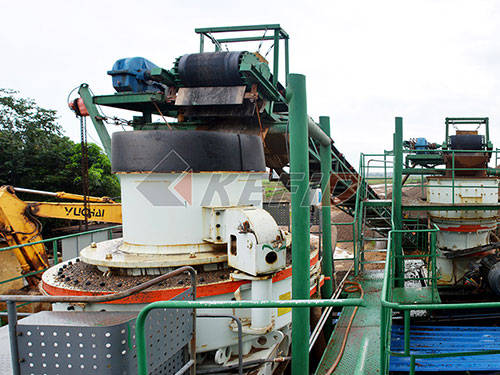
Conclusion Evolution Continuous Improvement
From early hammer mill designs today’s sophisticated computer modelled kinetic machines impact crusher has undergone revolutionary transformation Modern factories no longer simply fabricate steel boxes powerful rotors They engineer integrated size reduction systems marrying advanced metallurgy precision mechanics digital intelligence core mission remains same efficient application kinetic energy transform raw materials valuable specification products As demands sustainable construction high quality aggregates grow role technologically advanced versatile efficient impact crusher will undoubtedly continue expand solidifying its position essential tool global industrial landscape
