
Wholesale Iron Ore Crushing Plant Prices: A Comprehensive Market Analysis
Introduction
The global iron ore industry remains a cornerstone of modern infrastructure and steel production. As the primary raw material for steelmaking, iron ore must undergo a series of processing stages before it can be fed into blast furnaces or direct reduction plants. Among these stages, crushing is the first and arguably the most critical mechanical step. For wholesalers, distributors, and large-scale mining operators, understanding the pricing dynamics of iron ore crushing plants is essential for capital budgeting, project feasibility, and competitive positioning. This article provides a detailed, objective analysis of wholesale iron ore crushing plant prices, examining the key factors that influence costs, typical price ranges for different configurations, and strategic considerations for bulk procurement.
1. The Role of Crushing in Iron Ore Processing
Iron ore crushing plants are designed to reduce run-of-mine (ROM) ore from sizes that can exceed one meter in diameter to particles typically smaller than 300 mm, preparing them for grinding and beneficiation. The crushing circuit usually consists of primary, secondary, and sometimes tertiary crushers, along with screens, feeders, conveyors, and dust suppression systems. The choice of equipment depends on ore hardness, abrasiveness, moisture content, and the desired product size. For wholesale buyers—those purchasing multiple units or complete plants for resale or large mining operations—the price structure differs significantly from retail transactions, often involving volume discounts, customized engineering, and long-term service agreements.
2. Key Factors Influencing Wholesale Prices
Several variables determine the wholesale price of an iron ore crushing plant. Understanding these factors allows buyers to negotiate effectively and avoid hidden costs.
Capacity (TPH): The throughput capacity, measured in tonnes per hour (TPH), is the single most important price driver. A 50 TPH plant may cost less than $100,000, while a 1,000 TPH plant can exceed $2 million. Wholesale pricing typically scales non-linearly: doubling capacity does not double the price, but increases it by 60–80% due to economies of scale in fabrication and assembly.
Crusher Type and Configuration: Jaw crushers are common for primary crushing, cone crushers for secondary and tertiary stages, and impact crushers for softer ores. A standard three-stage crushing and screening plant costs more than a two-stage circuit. For wholesale orders, manufacturers may offer modular designs that reduce on-site assembly costs.
Material and Wear Parts: Iron ore is highly abrasive. Crushers must be lined with manganese steel or chrome alloy, and conveyors need heavy-duty belts. The quality of wear parts directly affects the initial price and total cost of ownership. Wholesale buyers often negotiate spare parts packages, which can add 10–15% to the base plant price but reduce downtime.
Automation and Control Systems: Modern plants include PLC-based control systems, remote monitoring, and automated lubrication. These features increase the price by 15–30% but improve efficiency and safety. For wholesale procurement, standardized automation packages are more cost-effective than custom designs.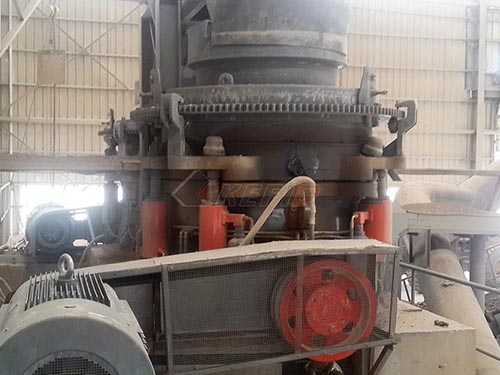
Mobility: Mobile and semi-mobile crushing plants cost 20–40% more than stationary equivalents due to structural and transport requirements. However, they offer flexibility for multiple pits or contract crushing. Wholesale buyers often purchase a mix of stationary and mobile units.
Logistics and Installation: Shipping costs from manufacturing hubs (e.g., China, India, Turkey, Brazil) to the mine site can represent 5–20% of the total price. Wholesale contracts may include installation, commissioning, and training. These services are typically quoted separately but can be bundled at a discount.
Market Conditions: Steel demand, iron ore prices, and global supply chain disruptions influence manufacturing costs. For example, during periods of high steel prices, fabrication costs rise, pushing up crushing plant prices. Conversely, oversupply in the equipment market can lead to aggressive wholesale discounts.
3. Typical Wholesale Price Ranges
Based on current market data from major suppliers in Asia, Europe, and South America, the following price ranges are indicative for wholesale transactions (orders of two or more plants or a single plant above 500 TPH). Prices are in US dollars and exclude taxes, shipping, and site-specific engineering.
Small-scale plants (10–50 TPH): $30,000–$120,000 per unit. These are often skid-mounted or trailer-mounted, used for small mines or pilot projects. Wholesale discounts of 10–15% apply for orders of three or more.
Medium-scale plants (50–200 TPH): $150,000–$600,000 per unit. These typically include a jaw crusher, cone crusher, vibrating screen, and belt conveyors. Wholesale prices for five units can be 20–25% lower than single-unit retail.
Large-scale plants (200–800 TPH): $700,000–$2,500,000 per unit. These are custom-engineered, with primary gyratory or large jaw crushers, secondary cone crushers, and tertiary impactors. Wholesale buyers negotiating multi-year contracts may secure 15–30% discounts.
Very large plants (800–2,000+ TPH): $2,500,000–$8,000,000 per unit. These are turnkey projects with advanced automation, dust collection, and stockpile management. Wholesale pricing is highly project-specific, often involving engineering, procurement, and construction (EPC) contracts.
It is important to note that these ranges are indicative. Actual quotes depend on ore characteristics, site conditions, and the manufacturer’s order book. For example, a plant designed for high-moisture, sticky ore requires special feeders and screens, adding 10–20% to the price.
4. Regional Variations in Wholesale Pricing
China remains the largest manufacturer of crushing equipment, offering competitive prices due to scale and supply chain maturity. Chinese wholesale prices are typically 20–30% lower than European or North American equivalents, though quality varies. Buyers should insist on ISO 9001 certification and third-party inspections.
India and Turkey have emerged as cost-competitive alternatives, with prices 10–20% below Chinese levels for some configurations, but with longer lead times. Brazil and South Africa serve regional markets, with prices 15–25% higher than Chinese imports due to local content requirements and logistics.
European manufacturers (e.g., Metso, Sandvik, ThyssenKrupp) command premium prices—often 50–100% higher than Chinese equivalents—but offer superior reliability, automation, and after-sales support. For wholesale buyers prioritizing lifecycle cost over initial price, European equipment may be more economical in the long run.
5. Hidden Costs and Total Cost of Ownership
Wholesale price is only the tip of the iceberg. Buyers must consider:
Therefore, a wholesale buyer should evaluate suppliers based on total cost of ownership (TCO), not just sticker price. Negotiating a service-level agreement (SLA) with guaranteed uptime and spare parts availability is often more valuable than a 5% price reduction.
6. Strategies for Wholesale Procurement
To secure the best wholesale prices, buyers should:
7. Future Trends in Wholesale Pricing
Several trends will shape iron ore crushing plant prices in the coming years:
Conclusion
Wholesale iron ore crushing plant prices are not a single number but a complex function of capacity, configuration, materials, automation, logistics, and market conditions. For large-scale buyers, the key is to move beyond unit price and focus on total cost of ownership, supplier reliability, and after-sales support. By understanding the factors that drive costs and employing strategic procurement practices, wholesalers and mining operators can secure crushing plants that deliver long-term value. As the iron ore industry continues to evolve toward higher efficiency and sustainability, wholesale pricing will increasingly reflect not just steel and labor, but also digitalization and environmental compliance. Ultimately, the most successful buyers will be those who treat crushing plant procurement as a strategic partnership rather than a transactional purchase.
If you have any questions about our products, please feel free to contact us. We take all inquiries and suggestions very seriously.