
Custom Stone Crusher Plant Producer: Engineering Tailored Crushing Solutions for Modern Aggregate Operations
In the modern construction, mining, and infrastructure sectors, the demand for processed stone, sand, and aggregate is both relentless and highly specific. No two quarries, gravel pits, or recycling sites are identical. Variations in rock hardness, feed size, moisture content, product specifications, site topography, and environmental regulations mean that off-the-shelf crushing equipment rarely delivers optimal results. This is where the custom stone crusher plant producer plays a critical role. Unlike mass-market equipment manufacturers, a custom producer designs, engineers, and fabricates complete crushing and screening circuits tailored to a client’s unique material and business objectives. This article examines the functions, processes, technical considerations, and strategic value of custom stone crusher plant producers in today’s heavy industry landscape.
A custom stone crusher plant producer is a specialized engineering and manufacturing firm that creates complete stationary, semi-mobile, or mobile crushing plants based on site-specific parameters. Rather than selling standardized jaw or cone crushers as standalone units, these producers integrate multiple stages—primary crushing, secondary crushing, tertiary crushing, screening, conveying, and dust suppression—into a cohesive system. The “custom” aspect extends beyond simple component selection. It encompasses plant layout, structural steel design, automation logic, wear-part metallurgy, and even logistical planning for transport and installation.
Such producers typically serve quarry operators, construction contractors, mining companies, and recycling facilities. Their clients often require specific output gradations (e.g., 0–5 mm, 5–10 mm, 10–20 mm, or railroad ballast), controlled fines generation, or the ability to process abrasive materials like granite, basalt, or quartzite. A custom producer addresses these needs through iterative design, simulation, and field-proven engineering.
The workflow of a custom stone crusher plant producer follows a structured, multi-disciplinary path. It begins with a detailed site survey and material characterization. Producers analyze rock samples for compressive strength, abrasiveness (e.g., Los Angeles abrasion value), moisture content, and clay contamination. These data points determine the selection of crusher types: jaw crushers for hard, abrasive primary feed; gyratory crushers for high-capacity primary crushing; impact crushers for softer, less abrasive materials; and cone crushers for secondary and tertiary reduction with precise shape control.
Next, the producer develops a process flow diagram (PFD) and plant layout. This stage considers:
Computer-aided design (CAD) and discrete element modeling (DEM) are often employed to simulate material flow, predict wear patterns, and optimize chute angles and screen decks. The producer then fabricates the plant using heavy-duty steel structures, modular frames, and high-quality wear liners (e.g., manganese steel, chrome carbide overlays, or ceramic inserts). Electrical and control systems are engineered for either manual, semi-automatic, or fully automatic operation, with PLC-based monitoring for crusher load, belt tension, and bearing temperature.
A custom stone crusher plant producer offers a wide array of customization options. These include:
Primary Crushing Unit: Choice between single-toggle jaw crushers, double-toggle jaw crushers, gyratory crushers, or horizontal shaft impactors (HSI). Customization includes feed opening dimensions, toggle plate angle, and hydraulic gap adjustment.
Secondary and Tertiary Crushers: Cone crushers (e.g., symons, hydrocone, or multi-cylinder) with custom chamber profiles for fine or coarse reduction. For abrasive materials, producers may specify high-chrome liners or tungsten carbide inserts.
Screening Equipment: Inclined or horizontal vibrating screens with single, double, or triple decks. Custom screen media—woven wire, polyurethane, rubber, or punch plate—are selected based on aperture size and wear resistance.
Conveying Systems: Belt conveyors with customized widths, trough angles, and discharge heights. Producers integrate magnetic separators, metal detectors, and weightometers for quality control.
Dust Suppression and Collection: Water spray systems, dry fog cannons, or baghouse filters tailored to local emission standards.
Automation and Remote Monitoring: SCADA systems, variable frequency drives (VFDs), and IoT sensors for predictive maintenance.
Structural Design: Modular bolted frames for easy transport and reassembly, or heavy welded structures for permanent installations. Galvanized or painted finishes for corrosion resistance.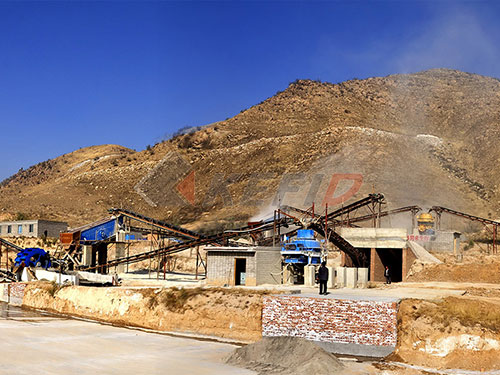
Mobility Options: Skid-mounted, wheel-mounted, or track-mounted plants for contractors who need to relocate frequently.
Custom stone crusher plant producers routinely solve complex technical challenges. One common issue is material stickiness due to high clay content. Standard crushers may plug or choke. A custom producer might recommend a wobbler feeder, a non-clogging jaw profile, or a pre-screening scalper to remove fines before crushing. Another challenge is producing cubical aggregates for concrete or asphalt. This requires a combination of compression crushing (cone) and impact crushing (VSI) with controlled reduction ratios. Producers use simulation software to balance circuit loading and recirculation.
Abrasive wear is another critical factor. In granite or basalt processing, wear costs can exceed energy costs. Custom producers select wear parts with optimized metallurgy—for example, martensitic steel for impact hammers or manganese steel with chromium additions for cone liners. They also design for easy maintenance, with hydraulic opening mechanisms, access platforms, and quick-change liners to minimize downtime.
Energy efficiency is increasingly important. Custom plants can incorporate high-efficiency motors, regenerative drives on downhill conveyors, and optimized crusher speeds. Some producers offer hybrid or fully electric plants to reduce diesel consumption and carbon footprint.
Why choose a custom stone crusher plant producer instead of a standard plant? The answer lies in total cost of ownership and operational flexibility. A custom plant typically achieves:
For example, a quarry in a mountainous region with steep terrain may require a semi-mobile plant that can be relocated as the quarry face advances. A custom producer would design a plant with a low-profile primary crusher, a steep-angle conveyor, and a compact screening station—all mounted on a common chassis. Conversely, a high-capacity aggregate producer supplying a metropolis might need a stationary plant with 1,000 TPH capacity, multiple product silos, and automated truck loading. Only a custom approach can deliver both scenarios efficiently.
When evaluating potential producers, clients should consider several factors:
A reputable custom producer will also conduct a feasibility study, including capital expenditure (CAPEX) and operating expenditure (OPEX) projections. They should be transparent about lead times, which can range from 12 to 36 weeks depending on complexity.
The custom stone crusher plant producer industry is evolving. Several trends are shaping future designs:
A custom stone crusher plant producer is more than a vendor; it is an engineering partner. By tailoring every component—from the primary crusher’s jaw profile to the final screening deck’s aperture—to the specific material, site, and business case, these producers deliver crushing circuits that outperform generic alternatives in productivity, product quality, and lifetime cost. As aggregate specifications tighten and environmental regulations grow stricter, the role of custom design will only expand. For quarry operators, contractors, and miners seeking a competitive edge, engaging a qualified custom stone crusher plant producer is not a luxury—it is a strategic imperative. The result is a plant that not only crushes stone but also crushes operational inefficiencies, delivering measurable value from day one.
If you have any questions about our products, please feel free to contact us. We take all inquiries and suggestions very seriously.