
The Architecture of Aggregate: A Comprehensive Analysis of a Premium Sand and Gravel Mining Processing Plant
Introduction
In the lexicon of modern infrastructure, sand and gravel are often overlooked, dismissed as mere “aggregates.” Yet, these unassuming materials are the literal foundation of civilization. From the concrete skeletons of skyscrapers to the asphalt arteries of highway systems, and from the glass in our windows to the silicon chips in our devices, the demand for high-grade sand and gravel is insatiable. However, the transition from a natural geological deposit to a specification-compliant industrial product is a complex, capital-intensive, and technologically sophisticated endeavor. A Premium Sand and Gravel Mining Processing Plant represents the apex of this industry—a facility engineered not merely to extract, but to refine, classify, and deliver materials that meet the exacting standards of modern construction and manufacturing. This article provides a detailed, objective examination of the design, operational processes, technological integration, and economic significance of such a facility.
1. Geological Assessment and Resource Characterization
The foundation of any premium processing plant is not the machinery, but the deposit itself. Unlike generic operations that may accept marginal quality raw feed, a premium plant begins with a rigorous geological survey. The objective is to characterize the provenance of the sand and gravel—whether it is a glacial outwash, a riverbed alluvial deposit, or a crushed bedrock source.
Key parameters assessed include:
A premium plant is typically sited adjacent to a deposit that exhibits a high degree of uniformity and low overburden. The mine plan is then developed using block models to ensure consistent feed quality for decades of operation.
2. Extraction: The Primary Stage
Extraction methods vary based on the deposit type. For dry pits, hydraulic excavators or front-end loaders extract the raw material, which is then hauled by rigid-frame haul trucks to the plant’s feed hopper. For wet deposits (dredging), a cutter suction dredge or clamshell dredge removes material from below the water table, slurrying it to the plant via a pipeline.
In a premium operation, the extraction process is carefully controlled to avoid contamination. Segregation of overburden (topsoil and clay) is strictly enforced. The feed material is typically pre-screened at the pit face using a grizzly or a heavy-duty trommel to remove oversized boulders and organic debris before transport.
3. Processing: The Heart of the Premium Plant
The processing plant is a linear sequence of unit operations designed to liberate, classify, and refine the raw feed. The following stages are characteristic of a premium facility.
3.1. Scalping and Primary Crushing
Upon arrival at the plant, the raw feed is dumped into a receiving hopper. A vibrating grizzly feeder scalps off the minus-100 mm fraction, sending it to a surge pile, while the oversize is directed to a primary crusher—typically a jaw crusher or a gyratory crusher. The primary crusher reduces the material to a nominal 100–150 mm size. In premium plants, the crusher is equipped with hydraulic setting adjustment and automated tramp metal release to prevent downtime.
3.2. Washing and Scrubbing
This is the defining step for premium sand and gravel. Raw pit material contains clay, silt, and organic matter that must be removed to meet concrete or asphalt specifications. The material enters a rotary scrubber or a log washer, where high-pressure water and mechanical agitation break down clay balls and liberate the sand and gravel fractions. The effluent (water, clay, and fines) is sent to a water treatment circuit, while the cleaned aggregate proceeds.
3.3. Sizing and Classification
The washed material is then classified by size. This is achieved through a series of vibrating screens, typically multi-deck horizontal or inclined screens. A premium plant will have multiple decks (e.g., 3 or 4 decks) to produce precise cuts: 25 mm, 19 mm, 12.5 mm, 9.5 mm, and 4.75 mm. The efficiency of screening is critical; premium plants use high-frequency screens with polyurethane or rubber media to minimize blinding and maximize throughput.
3.4. Sand Processing: The Attrition and Classification Circuit
Sand is the most challenging product to produce to premium specifications. The minus-4.75 mm fraction from the screens is sent to a hydrocyclone or a spiral classifier to remove excess water and slimes. However, to achieve a premium, spec-compliant sand, further processing is required: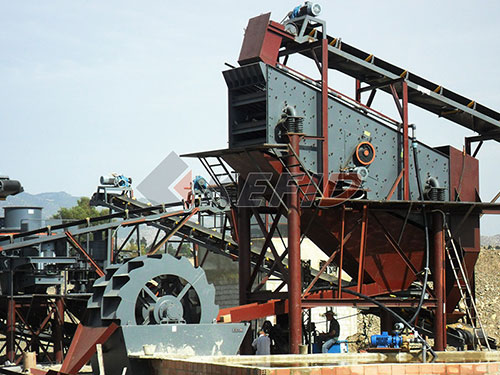
3.5. Gravel Processing: Shaping and Grading
For premium gravel, especially for asphalt and high-performance concrete, particle shape is paramount. If the natural gravel is rounded, it may be passed through a vertical shaft impactor (VSI) or a cone crusher to induce fracturing, creating angular faces. This improves interlocking and bond strength. The gravel is then screened again to remove any oversize or undersize, and blended to meet a specific gradation (e.g., ASTM C33 or AASHTO M43).
4. Water Management and Environmental Stewardship
A premium plant is defined not only by its product quality but also by its environmental performance. Water is a critical resource and a potential pollutant if not managed correctly.
5. Quality Control and Automation
The “premium” designation is validated by a rigorous quality control (QC) laboratory. The plant laboratory tests every production shift for:
In a modern premium plant, this data is integrated into a Supervisory Control and Data Acquisition (SCADA) system. Programmable Logic Controllers (PLCs) monitor crusher settings, screen amplitude, water flow rates, and belt scales. If the gradation of the sand drifts outside the specification window, the automation system automatically adjusts the blending gates or the classifier speed. This real-time feedback loop ensures that off-spec material is never shipped.
6. Logistics and Dispatch
The final stage is the efficient dispatch of products. A premium plant features a multi-compartment load-out system. Radial stackers or telescopic conveyors build stockpiles of different products. For truck loading, a weighbridge and an automated load-out station ensure that each truck receives the correct tonnage and blend. For rail or barge shipments, the plant is equipped with high-capacity loading chutes.
7. Economic and Strategic Significance
The economic rationale for a premium sand and gravel processing plant is compelling. While the capital expenditure (CAPEX) is significantly higher than a basic crushing and screening operation—often exceeding $20–50 million for a 500-ton-per-hour facility—the operational expenditure (OPEX) per ton is optimized through automation and water recycling.
More importantly, premium plants command premium prices. In metropolitan areas, where high-rise construction demands strict compliance with ASTM C33 or EN 12620 standards, the ability to produce a consistent, clean, and well-graded product is a competitive advantage. Furthermore, as natural sand reserves dwindle and regulations on extraction tighten, the ability to process lower-quality deposits into high-quality products becomes a strategic asset.
Conclusion
A Premium Sand and Gravel Mining Processing Plant is a symphony of geology, mechanical engineering, and environmental science. It transforms a heterogeneous natural resource into a homogeneous, specification-grade commodity. The key differentiators—attrition scrubbing, hydraulic classification, closed-loop water treatment, and automated quality control—are not merely optional upgrades; they are the defining features of a facility that can reliably serve the most demanding construction and industrial markets. As global infrastructure demands continue to rise and environmental regulations become more stringent, the premium processing plant will not just be a nice-to-have; it will be the industry standard. The future of aggregate production lies not in digging more holes, but in engineering smarter, cleaner, and more precise processing systems.
If you have any questions about our products, please feel free to contact us. We take all inquiries and suggestions very seriously.