Gold Ore Crushing Equipment Fabricators Sourcing: A Comprehensive Guide for Mining Operators and Procurement Specialists

Introduction

The extraction of gold from its ore is a multi-stage process that begins with drilling and blasting, followed by size reduction—a critical phase where the ore is progressively crushed and ground to liberate the gold particles from the surrounding gangue. The efficiency, reliability, and cost-effectiveness of this crushing stage directly influence downstream recovery rates (e.g., in cyanidation, gravity concentration, or flotation) and overall project economics. Consequently, sourcing the right crushing equipment from competent fabricators is not merely a procurement exercise; it is a strategic decision that impacts throughput, maintenance downtime, safety, and capital expenditure (CAPEX) versus operational expenditure (OPEX) balance.

This article provides a detailed, professional, and objective analysis of gold ore crushing equipment fabricators sourcing. It covers the types of equipment used, the key criteria for evaluating fabricators, the global landscape of suppliers, the challenges in the supply chain, and best practices for procurement in the context of both large-scale and artisanal/small-scale mining (ASM).

1. The Core Equipment Portfolio in Gold Ore Crushing

Before engaging with fabricators, it is essential to understand the specific machinery required. Gold ore hardness (typically 3–5 on the Mohs scale for free-milling ores, but often higher for refractory ores), moisture content, and feed size dictate the crushing circuit design. The primary equipment categories include:

  • Jaw Crushers: Used for primary crushing. They handle large, run-of-mine (ROM) rocks (up to 1.5 meters) and reduce them to 100–200 mm. Fabricators must ensure robust frame construction (cast or welded steel), high manganese steel jaw plates, and eccentric shaft durability.
  • Cone Crushers (Secondary/Tertiary): For medium and fine crushing. They produce a more cubical product shape, which is beneficial for downstream grinding. Key specifications include the crushing chamber profile (standard, short head), hydraulic adjustment systems, and tramp iron relief.
  • Impact Crushers (Horizontal Shaft – HSI, and Vertical Shaft – VSI): Used for softer, less abrasive ores or for shaping. VSI crushers are also used in the pebble crushing circuit of SAG mills. Wear parts (blow bars, rotor tips) are the primary cost driver.
  • High-Pressure Grinding Rolls (HPGR): Increasingly used in hard-rock gold operations for tertiary crushing, offering energy efficiency and micro-cracking benefits that enhance leach kinetics.
  • Sizers and Feeder-Breakers: For softer, clay-rich ores, these provide low-shear crushing with high throughput.

Fabricators do not always manufacture all these types. Some specialize in jaw crushers, others in cone crushers, and a few offer complete modular crushing plants. Therefore, sourcing requires matching the fabricator’s core competency to the project’s specific circuit design.

2. Key Criteria for Evaluating Fabricators

Sourcing is not about finding the cheapest quote. It is about total cost of ownership (TCO), which includes initial price, spare parts availability, wear life, energy consumption, and after-sales support. The following criteria are critical:

2.1 Engineering and Design Capability
A competent fabricator must have in-house engineering teams capable of:

  • Performing Finite Element Analysis (FEA) on frames and shafts to predict fatigue life.
  • Designing customized feed chutes, hoppers, and discharge arrangements to integrate with existing conveyors.
  • Offering process simulation (e.g., using JKSimMet or Bruno) to verify throughput and product size distribution.
    Fabricators that merely copy legacy designs without engineering validation pose a high risk of premature structural failure.

2.2 Metallurgical and Fabrication Quality
The quality of steel used (e.g., ASTM A36 for frames, AR400/AR500 for wear liners, high-chrome white iron for impact zones) and the welding standards (AWS D1.1) are non-negotiable. A reputable fabricator will provide:

  • Material test certificates (MTCs) for all structural and wear parts.
  • Non-destructive testing (NDT) reports (ultrasonic, magnetic particle, or dye penetrant) on critical welds.
  • Heat treatment documentation for shafts and gears.
    Poor fabrication quality leads to stress risers, cracks, and catastrophic downtime.

2.3 Wear Parts and Aftermarket Support
The crushing industry is wear-intensive. The fabricator’s ability to supply OEM-grade manganese liners, jaw plates, and concave/bowl liners with consistent metallurgy is vital. Evaluate:

  • Lead time for spare parts: Is it 2 weeks or 12 weeks? For remote sites, this can be the difference between a planned shutdown and an unplanned 3-week stoppage.
  • Wear life guarantees: Some fabricators offer performance-based warranties (e.g., a minimum of 8,000 hours for cone liners under specified feed conditions).
  • Local stockholding: Does the fabricator have a regional warehouse near your operation?

2.4 Modularity and Scalability
For greenfield projects, modular crushing plants (skid-mounted or containerized) reduce site civil works and installation time. Fabricators that offer pre-wired, pre-piped modules with integrated dust suppression and safety guards are highly preferred. Scalability is also important—can the fabricator supply a second identical unit quickly if throughput needs to be expanded?

2.5 Compliance and Safety Standards
Gold mines operate under stringent safety regulations (MSHA in the US, ATEX in Europe, or local mining acts). Fabricators must comply with:

  • CE marking (for EU-bound equipment) or equivalent local certifications.
  • ISO 9001 for quality management and ISO 14001 for environmental management.
  • Provision of detailed operation and maintenance manuals, lockout/tagout (LOTO) points, and emergency stop systems.

3. Global Landscape of Fabricators

The market for gold ore crushing equipment is dominated by a mix of multinational OEMs and specialized regional fabricators.

3.1 Tier-1 Global OEMs

  • Metso Outotec (Finland): Offers the Nordberg® C Series jaw crushers and GP/HP series cone crushers. Their strength lies in integrated process solutions and digital monitoring (e.g., Metso Metrics).
  • Sandvik (Sweden): Known for the CH and CS cone crusher series and UJ/UH mobile jaw and cone units. Sandvik excels in automation and remote diagnostics.
  • FLSmidth (Denmark): Provides heavy-duty jaw crushers, sizers, and HPGRs (e.g., the Raptor® cone crusher line). Their focus is on large-capacity, high-availability machines for major gold producers.
  • ThyssenKrupp (Germany): Offers gyratory crushers and HPGRs, particularly for ultra-hard, high-tonnage operations.

Advantages: Global service network, extensive R&D, proven track record, and high resale value.
Disadvantages: Premium pricing, longer lead times for custom configurations, and high cost of OEM spare parts.Gold Ore Crushing Equipment Fabricators Sourcing
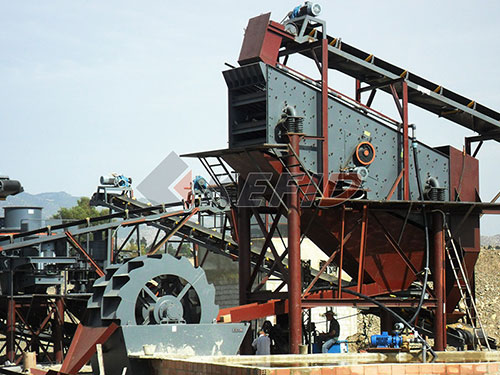
3.2 Tier-2 Regional and Specialist Fabricators

  • Terex MPS (USA): Provides Cedarapids and Jaques jaw and cone crushers, popular in the Americas and Australia.
  • McCloskey International (Canada/Ireland): Strong in mobile jaw and impact crushers, suitable for smaller gold operations or re-crushing of waste rock.
  • Nanchang Mineral Systems (NMS, China): Offers the GC series gyratory and CC series cone crushers. They have gained market share due to competitive pricing and improved quality control.
  • Zhengzhou Yifan Machinery (China): Specializes in complete crushing and screening plants, often used in ASM and mid-tier operations.
  • Astec Industries (USA): Known for KPI-JCI and Osborn crushers, offering robust but simpler designs.

Advantages: Lower CAPEX (often 30–50% less than Tier-1), faster delivery for standard models, and flexible customization.
Disadvantages: Variable quality control, thinner service networks, and potential issues with spare parts availability after the warranty period.Gold Ore Crushing Equipment Fabricators Sourcing

3.3 Local Fabricators and In-House Manufacturing
In gold-rich jurisdictions (e.g., South Africa, Australia, Canada, Chile), there are numerous local steel fabrication shops that can build jaw crushers or cone crusher frames under license or based on reverse engineering. These are suitable for:

  • Rebuilding or refurbishing existing crushers.
  • Manufacturing non-critical components (e.g., base frames, chutes, guards).
  • Providing emergency repairs.
    However, sourcing complete crushers from local fabricators without a proven design pedigree is risky and generally not recommended for primary or secondary crushing stages.

4. Sourcing Strategies: Direct Purchase vs. EPC vs. Leasing

4.1 Direct Purchase (CAPEX Model)
This is the most common approach. The mining company issues a Request for Quotation (RFQ) with detailed technical specifications, then evaluates bids based on TCO. Key steps:

  • Pre-qualification: Audit the fabricator’s factory, check references from similar gold projects, and verify financial stability.
  • Technical Bid Evaluation: Compare drawings, material specifications, and compliance with the process design criteria.
  • Commercial Bid Evaluation: Include freight, insurance, installation supervision, and commissioning costs.
  • Contract Negotiation: Define performance guarantees (e.g., throughput, product P80), liquidated damages for non-performance, and warranty terms (typically 12–24 months).

4.2 EPC (Engineering, Procurement, and Construction) Model
For large greenfield projects, the crushing circuit is often part of a larger EPC contract. In this case, the EPC contractor (e.g., Bechtel, Fluor, or a Chinese EPC like CITIC) handles the sourcing. The mining company must still approve the fabricator list (approved vendor list – AVL) to ensure quality. The advantage is single-point responsibility, but the risk is that the EPC may select lower-cost fabricators to protect their margin.

4.3 Leasing / Rental / Pay-Per-Use
For short-term projects, pilot plants, or temporary expansions, renting mobile crushers (e.g., from Kleemann, Sandvik, or Powerscreen) is viable. Some fabricators also offer “crushing as a service” where they operate and maintain the equipment on-site, charging per tonne crushed. This transfers operational risk to the fabricator but is usually more expensive per tonne for long-term operations.

5. Challenges in Sourcing

5.1 Supply Chain Volatility
The global mining equipment market has experienced significant volatility due to:

  • Post-COVID supply chain disruptions for bearings, electric motors, and hydraulic components.
  • Tariffs and trade restrictions (e.g., US tariffs on Chinese steel, EU anti-dumping measures).
  • Freight cost spikes, especially for oversized, heavy crusher components that require special permits and heavy-lift vessels.

5.2 Counterfeit and Substandard Parts
In the aftermarket, there is a proliferation of non-OEM spare parts that may have inferior metallurgy. Sourcing directly from fabricators or their authorized distributors is the only way to guarantee genuine parts. However, some fabricators themselves may outsource casting to low-cost foundries without proper quality control, leading to inconsistent wear life.

5.3 Technical Mismatch
A common mistake is sourcing a crusher based on nameplate power rather than the actual ore characteristics. For example, a 500 kW cone crusher may be rated for 500 tph on limestone but only 250 tph on hard quartzite gold ore. Fabricators must provide test data from similar ores (e.g., Bond Abrasion Index, Uniaxial Compressive Strength) to validate their proposals.

5.4 Lead Time Management
Large gyratory crushers or HPGRs can have lead times of 12–18 months. Poor planning can delay the entire project. Sourcing must start at the feasibility stage, not after the mine is built.

6. Best Practices for Successful Sourcing

  1. Develop a Detailed Technical Specification Document: Include ore characteristics, feed size distribution, required product size (P80), throughput (tph), moisture, clay content, and environmental conditions (altitude, temperature, dust).
  2. Conduct Factory Acceptance Tests (FAT): Before shipment, witness the crusher running under no-load and, if possible, with a test batch of ore. Check vibration levels, bearing temperatures, and oil pressure.
  3. Negotiate Performance-Based Penalties: If the crusher fails to meet the guaranteed throughput, the fabricator should pay liquidated damages or provide free wear parts.
  4. Plan for Spare Parts Bundling: Negotiate a first-year spare parts package (e.g., one set of jaw plates, one set of liners, hydraulic hoses, seals) at the time of the initial purchase to avoid premium pricing later.
  5. Leverage Digital Twins and Remote Monitoring: Modern fabricators offer IoT-enabled crushers with sensors for wear monitoring and predictive maintenance. Ensure your site has the connectivity to use these features.
  6. Build Long-Term Relationships: Rather than switching fabricators for every project, maintain a preferred supplier list. This allows for better pricing, priority in production slots, and accumulated knowledge of your ore type.

7. The Role of Artisanal and Small-Scale Mining (ASM)

ASM operations (often in Africa, South America, and Asia) have different sourcing needs. They require:

  • Small, low-cost jaw crushers (e.g., 5–20 tph) that are manually operable.
  • Simple maintenance that can be performed by local technicians.
  • Fabricators that can supply via local distributors with cash-on-delivery terms.
    In this segment, Chinese and Indian fabricators (e.g., Retsch, Sepor, or local Indian manufacturers like K.V. Metal Works) dominate. However, safety and durability are often compromised. NGOs and government programs are increasingly pushing for “mercury-free” processing, which requires better crushing and grinding equipment—a niche opportunity for fabricators offering robust, affordable, and safe small-scale crushers.

8. Future Trends in Fabrication and Sourcing

  • Electrification and Hybrid Drives: Diesel-electric and fully electric crushers are becoming standard to reduce carbon footprints. Fabricators must integrate with renewable power sources (solar, wind) and energy storage.
  • Automation and AI: Crushers with automatic setting adjustment (ASRi) and AI-based feed optimization are reducing human intervention and improving liner life.
  • Circular Economy: Fabricators are offering refurbished or remanufactured crushers with new wear parts and updated safety systems, at 60–70% of the cost of new units.
  • Local Content Requirements: Many gold-producing countries (e.g., Ghana, Tanzania, Indonesia) mandate a percentage of local fabrication. Sourcing strategies must include partnerships with local steel workshops for non-critical components to comply with these regulations.

Conclusion

Sourcing gold ore crushing equipment fabricators is a complex, high-stakes process that requires a blend of metallurgical knowledge, supply chain management, and commercial acumen. The ideal fabricator is not necessarily the largest or the cheapest, but the one that offers the best balance of engineering reliability, wear life, after-sales support, and total cost of ownership. Mining operators must invest time in pre-qualification, technical audits, and performance-based contracting. By doing so, they ensure that the crushing circuit—the gateway to gold recovery—operates at peak efficiency, minimizing downtime and maximizing the return on one of the most capital-intensive investments in the mining value chain. Whether dealing with a Tier-1 global OEM or a specialized regional fabricator, the principles of rigorous specification, transparent evaluation, and collaborative partnership remain the cornerstones of successful sourcing.

Leave Message

*

If you have any questions about our products, please feel free to contact us. We take all inquiries and suggestions very seriously.