Title: Comprehensive Guide to OEM JC5000 Jaw Crusher Shipping: Logistics, Preparation, and Best Practices
Introduction
The OEM JC5000 Jaw Crusher is a high-capacity, heavy-duty crushing machine designed for primary reduction of hard rock, ore, and demolition materials in mining, quarrying, and construction industries. As a substantial piece of industrial equipment, its shipping process is a complex logistical operation that demands meticulous planning, specialized handling, and strict adherence to international safety and regulatory standards. This article provides a detailed, professional, and objective examination of the entire shipping lifecycle for the OEM JC5000 Jaw Crusher, covering pre-shipment preparation, packaging, documentation, transportation modes, customs clearance, and on-site delivery considerations. The goal is to equip procurement managers, logistics coordinators, and project engineers with the technical knowledge required to ensure the crusher arrives at its destination in optimal condition, on schedule, and within budget.
1. Understanding the OEM JC5000 Jaw Crusher: Dimensions and Weight Characteristics
Before any shipping plan can be formulated, a precise understanding of the crusher’s physical parameters is essential. The OEM JC5000 is typically a large-scale unit. While exact specifications may vary slightly depending on the manufacturer’s final design and optional attachments (e.g., hydraulic toggle, motor base, feed chute), the following representative data is used for shipping planning:
- Overall Dimensions (L x W x H): Approximately 4.5 m x 2.8 m x 3.2 m (14.8 ft x 9.2 ft x 10.5 ft) for the main crusher body.
- Weight: The bare crusher (without motor, V-belts, guards, and electrical panel) typically weighs between 18,000 kg and 22,000 kg (39,700 lbs to 48,500 lbs). With all ancillary components, the total shipping weight can exceed 25,000 kg (55,000 lbs).
- Center of Gravity: The crusher’s center of gravity is low and slightly forward due to the eccentric shaft and heavy flywheels. This must be clearly marked on the packaging and considered during lifting and lashing.
These dimensions classify the JC5000 as an Out-of-Gauge (OOG) and Heavy Lift cargo. Standard 20-foot or 40-foot containers are generally unsuitable for the main crusher body due to height and width restrictions. Instead, specialized shipping methods are required.
2. Pre-Shipping Preparation: Disassembly and Preservation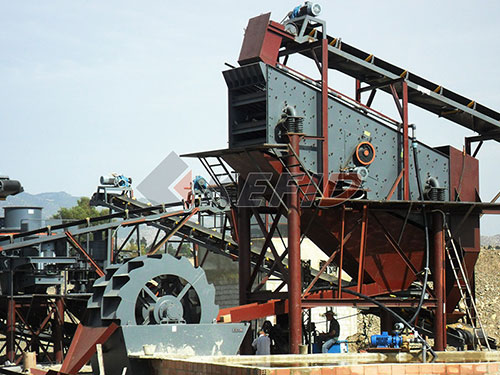
To facilitate safe and cost-effective transport, the OEM JC5000 is rarely shipped fully assembled. The manufacturer typically disassembles the crusher into several major sub-assemblies:
- Main Frame (Base): The heaviest single piece, requiring a flat-rack or open-top container.
- Pitman Assembly: The moving jaw, eccentric shaft, and bearings. This is a critical, precision-assembled component.
- Fixed Jaw (Stationary Jaw): A large, heavy casting.
- Flywheels: Two large cast iron or steel wheels, often shipped separately to reduce individual piece weight.
- Toggle Plate and Toggle Seat: Smaller but heavy components.
- Motor and Drive System: Typically a large electric motor (200-300 kW) shipped on a separate skid.
- Lubrication and Hydraulic Systems: Pumps, tanks, and hoses, packed in crates.
Preservation Protocol:
All machined surfaces (jaw dies, bearing housings, toggle seats) must be coated with a heavy-duty, corrosion-inhibiting grease or VCI (Volatile Corrosion Inhibitor) film. All openings (bearing housings, hydraulic ports) must be sealed with waterproof caps or tape. The entire assembly should be wrapped in a multi-layer barrier film with desiccant bags to prevent moisture ingress during ocean transit.
3. Packaging and Crating Standards
Given the weight and value of the OEM JC5000, packaging must comply with international standards such as ISPM 15 (for wood packaging) and manufacturer-specific guidelines.
- Main Frame and Pitman: These are typically secured to a heavy-duty steel skid or a custom-built flat-rack. The skid must have a load capacity exceeding the component weight by at least 25%. Lifting points (padeyes) must be clearly marked and load-tested. The base must be designed to allow forklift pockets and crane sling access.
- Flywheels and Jaw Dies: These are often packed in robust wooden crates with internal bracing to prevent movement. Each crate must be clearly labeled with weight, center of gravity, and handling instructions.
- Motor and Electrical Panel: These sensitive components require additional protection. The motor should be sealed in a waterproof bag with desiccant, then placed in a ventilated crate. The electrical panel must be packed with shock-absorbing foam and clearly marked “Fragile – Electronic Equipment.”
Marking and Labeling:
Every package must display:
- Gross weight and net weight (in kg and lbs).
- Dimensions (in cm and inches).
- Handling pictograms (e.g., “This Side Up,” “Keep Dry,” “Center of Gravity,” “Sling Here”).
- Unique package number (e.g., “JC5000-001 of 008”).
- Consignee and destination address.
- Country of origin (for customs purposes).
4. Modes of Transport and Logistics Planning
The choice of transport mode depends on the distance, port infrastructure, and project timeline. The most common combination is multimodal transport: truck + ocean freight + truck.
A. Ocean Freight (Primary Mode)
- Vessel Type: The JC5000 main frame is best shipped on a Breakbulk vessel or a Heavy-Lift vessel. Alternatively, it can be shipped on a Flat Rack Container (FR) or Open Top Container (OT) on a standard container vessel, provided the dimensions fit within the vessel’s cell guides. For very large units, a Roll-on/Roll-off (Ro-Ro) vessel may be used if the crusher can be driven or towed onto the ship.
- Stowage: The crusher must be stowed on deck (due to height) or in a dedicated heavy-lift hold. It must be lashed using certified chains, turnbuckles, and wire ropes to the vessel’s structure. A lashing plan must be approved by the vessel’s chief officer and the cargo surveyor.
- Insurance: Full marine cargo insurance (Institute Cargo Clauses A) is mandatory, covering all risks including breakage, rust, theft, and total loss.
B. Inland Trucking (Pre-carriage and On-carriage)
- Trailer Type: A Low-Bed Trailer (lowboy) with a hydraulic ramp is required. The trailer must have a load capacity of at least 30 tons and a deck height low enough to clear highway overpasses.
- Permits: Oversize/overweight permits must be obtained from all relevant state or provincial authorities. This often requires a police escort (pilot car) for width and height exceedances.
- Route Survey: A pre-shipment route survey must be conducted to identify low bridges, weight-restricted roads, sharp turns, and road construction. The route must be optimized to avoid these obstacles.
C. Air Freight (Rare but Possible for Urgent Spare Parts)
- Only small, critical components (e.g., bearings, hydraulic cylinders, electronic modules) are shipped by air. The main crusher body is far too heavy and large for economical air transport.
5. Customs Clearance and Documentation
Proper documentation is critical to avoid delays, fines, or seizure. The following documents are required for the OEM JC5000 shipment:
- Commercial Invoice: Must include a detailed description of each component (e.g., “OEM JC5000 Jaw Crusher Main Frame, Cast Steel, Serial No. XXXX”), HS Code (typically 8474.20 for crushing machinery), unit price, and total value.
- Packing List: A detailed, itemized list of every package, including weight, dimensions, and contents. This must match the invoice exactly.
- Bill of Lading (B/L): For ocean freight. Must be a “Clean on Board” B/L, indicating no damage to packaging at the time of loading. For OOG cargo, a “Flat Rack Bill of Lading” or “Breakbulk Bill of Lading” is used.
- Certificate of Origin: Required for preferential tariff treatment under free trade agreements (e.g., USMCA, EU FTA).
- Import/Export Licenses: Depending on the destination country, an import license for heavy machinery may be required. Some countries also require a pre-shipment inspection (PSI) by a third-party agency.
- Insurance Certificate: Proof of marine cargo insurance.
- Lashing and Stowage Certificate: Issued by a cargo surveyor, confirming that the crusher was properly secured on the vessel.
- Dangerous Goods Declaration: If the crusher contains hydraulic oil, grease, or batteries, these may be classified as dangerous goods (Class 9 – Miscellaneous). A Material Safety Data Sheet (MSDS) must be provided.
6. Risk Management and Cargo Surveying
Given the high value and fragility of the JC5000, a professional cargo surveyor should be engaged at three critical points:
- Pre-shipment Survey: At the manufacturer’s facility, the surveyor inspects the crusher’s condition, packaging, and lifting points. They issue a “Certificate of Condition” which serves as a baseline for any damage claims.
- Loading Survey: At the port of loading, the surveyor witnesses the lifting, stowage, and lashing of the crusher onto the vessel. They ensure that the lashing plan is followed and that no overloading of the vessel’s deck occurs.
- Discharge Survey: At the destination port, the surveyor inspects the crusher upon discharge, noting any signs of damage, corrosion, or shifting. This is essential for filing a claim with the shipping line or insurance company.
Common Risks:
- Corrosion: Due to saltwater spray during ocean transit. Mitigation: Use VCI film and desiccant.
- Shifting: If lashing fails. Mitigation: Use certified lashing materials and redundant securing points.
- Theft of Components: Small, valuable parts (e.g., bearings, hydraulic pumps) can be stolen. Mitigation: Ship these in sealed, locked crates with tamper-evident seals.
- Drop Damage: During crane operations. Mitigation: Use load-tested lifting gear and trained riggers.
7. On-Site Delivery and Unloading
Upon arrival at the project site, the following steps are critical:
- Site Preparation: The unloading area must be a hard-standing, level surface capable of supporting the weight of a crane and the crusher. A mobile crane with a capacity of at least 50 tons is typically required.
- Inspection: Immediately upon unloading, the consignee should perform a joint inspection with the carrier and a surveyor (if present). Any damage must be documented with photographs and noted on the delivery receipt.
- Storage: If the crusher is not installed immediately, it must be stored in a dry, covered area. All preservation coatings should remain intact. The crusher should be rotated periodically (if possible) to prevent bearing flat-spotting.
- Reassembly: The OEM’s installation manual must be followed precisely. Torque specifications for bolts, alignment of the pitman, and tensioning of V-belts are critical to prevent premature failure.
8. Cost Considerations
The total shipping cost for an OEM JC5000 Jaw Crusher is influenced by several factors:
- Distance and Route: Trans-Pacific or Trans-Atlantic routes are more expensive than regional shipments.
- Mode of Transport: Breakbulk is generally more expensive than containerized shipping but necessary for OOG cargo.
- Port Charges: Demurrage (if the cargo is not cleared quickly) and terminal handling charges can be significant.
- Insurance: Premiums for heavy-lift cargo are higher than standard cargo.
- Customs Duties and Taxes: Vary by country. Some countries offer duty-free import for mining equipment.
- Surveyor and Escort Fees: These are additional but necessary costs.
A rough estimate for shipping a JC5000 from a manufacturing hub (e.g., China, Europe) to a remote mining site in Africa or South America can range from $15,000 to $40,000 USD for the ocean freight portion alone, plus inland trucking, permits, and customs brokerage.
9. Environmental and Regulatory Compliance
Modern shipping of heavy machinery must also consider environmental regulations:
- Ballast Water Management: The vessel carrying the crusher must comply with the International Maritime Organization’s (IMO) Ballast Water Management Convention.
- Emissions: The vessel should use low-sulfur fuel in Emission Control Areas (ECAs).
- Packaging Waste: The consignee must arrange for the disposal of wooden crates and plastic wrapping in accordance with local waste management laws.
Conclusion
Shipping an OEM JC5000 Jaw Crusher is a high-stakes logistical endeavor that requires a deep understanding of heavy-lift cargo handling, international shipping regulations, and risk management. From the initial disassembly and preservation at the factory to the final unloading at the project site, every step must be executed with precision. Key success factors include: engaging a specialized freight forwarder with experience in OOG cargo, obtaining comprehensive insurance, conducting thorough pre-shipment surveys, and ensuring all documentation is accurate and complete. By following the guidelines outlined in this article, project managers can significantly reduce the risk of damage, delays, and cost overruns, ensuring that the JC5000 crusher is ready to begin its productive life as soon as it arrives on site.
