
ISO-Certified Iron Ore Crushing Plant Manufacturers: Engineering Excellence for Global Mining Operations
The global mining industry operates under increasingly stringent demands for efficiency, safety, and environmental stewardship. At the heart of this operational paradigm lies the iron ore crushing plant—a complex assembly of primary, secondary, and tertiary crushers, screens, conveyors, and dust suppression systems designed to reduce run-of-mine ore to a specified product size for downstream beneficiation. Given the abrasive nature of iron ore (typically 15–30% silica content) and the high tonnage throughputs required (often exceeding 5,000 tonnes per hour), the selection of a competent manufacturer is not merely a procurement decision; it is a strategic risk-management exercise. This article provides a professional, objective analysis of ISO-certified iron ore crushing plant manufacturers, examining their technical capabilities, quality management systems, and the critical factors that distinguish world-class suppliers from commodity fabricators.
The ISO Framework: Beyond a Certificate
ISO certification—most notably ISO 9001:2015 (Quality Management Systems) and ISO 14001:2015 (Environmental Management)—is frequently cited as a baseline requirement in tender documents. However, a professional evaluation must distinguish between certification as a marketing artifact and certification as a functional operating discipline. For iron ore crushing plant manufacturers, ISO 9001 certification implies documented, audited procedures for design control, supplier evaluation, production traceability, and non-conformance management. In practice, this translates to:
ISO 14001, meanwhile, is increasingly non-negotiable for projects financed by multilateral development banks or operating in jurisdictions with strict environmental liability laws. A certified manufacturer must demonstrate controlled dust emissions (typically below 50 mg/Nm³ at stack outlets), closed-loop water recycling for wet scrubbing, and noise attenuation strategies (e.g., acoustic enclosures around vibrating screens) that comply with local occupational exposure limits.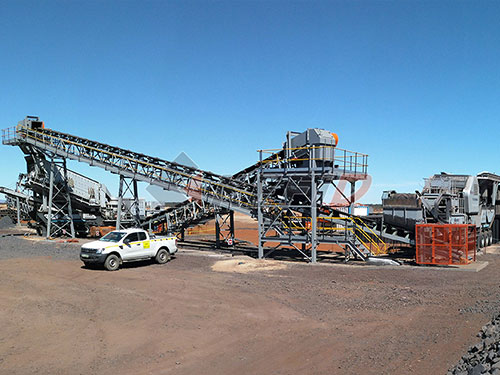
Core Technical Competencies of Leading Manufacturers
The term “iron ore crushing plant” encompasses a wide range of configurations, from stationary modular plants for large-scale open-pit mines to semi-mobile and fully mobile units for smaller or remote deposits. ISO-certified manufacturers typically excel in the following areas:
Primary Crushing (Gyratory and Jaw Crushers): For high-hardness ores (UCS > 200 MPa), gyratory crushers with feed openings up to 1,500 mm are preferred. Top manufacturers offer hydraulic adjustment systems that allow gap settings to be changed under load, minimizing downtime. Jaw crushers, with their simpler maintenance, remain viable for medium-hard ores. The key differentiator is the crusher’s eccentric throw and crushing chamber geometry, which must be optimized using discrete element method (DEM) simulations to maximize throughput while minimizing liner wear per tonne.
Secondary and Tertiary Crushing (Cone Crushers): Modern cone crushers from ISO-certified manufacturers feature hydraulic tramp release, automatic setting regulation (ASRi), and anti-spin systems. The ability to maintain a closed side setting (CSS) of 6–10 mm with a product P80 of 12–15 mm is critical for downstream ball mill efficiency. Manufacturers that offer in-house metallurgical development of manganese liners—rather than outsourcing to third-party foundries—provide a significant advantage in wear life consistency.
Screening and Classification: High-frequency vibrating screens with polyurethane or rubber deck panels are standard. ISO-certified manufacturers must demonstrate that their screen designs account for the specific moisture content (typically 2–8% in iron ore) and the presence of clay or fines, which can cause blinding. Advanced designs incorporate self-cleaning mechanisms, such as ball decks or air-blast systems.
Conveying and Transfer Points: The plant’s reliability is often dictated by its conveyor system. ISO-certified manufacturers design transfer chutes using continuum mechanics to minimize material impact, reduce dust generation, and prevent blockages. They also integrate metal detectors and magnetic separators to protect downstream crushers from tramp iron.
Automation and Control: A modern crushing plant is a cyber-physical system. Leading manufacturers supply PLC-based control systems with remote monitoring, vibration sensors on crusher bearings, and load cells on conveyor belts. The integration of these systems with the mine’s broader SCADA network is a hallmark of a mature ISO-certified supplier.
Evaluating Manufacturer Credentials: A Structured Approach
For a mining company or EPC contractor, the evaluation of ISO-certified iron ore crushing plant manufacturers should follow a multi-criteria decision analysis (MCDA) framework. The following objective parameters are recommended:
Installed Base and Reference Projects: A manufacturer with over 200 operating plants in iron ore (e.g., in Australia’s Pilbara, Brazil’s Carajás, or India’s Odisha belt) demonstrates proven reliability under diverse climatic and logistical conditions. Request specific reference lists with contact details of plant managers, not just marketing brochures.
After-Sales Service Network: The geographical proximity of spare parts warehouses and the response time for field service engineers (typically < 48 hours for major mining regions) is a critical, often underestimated, factor. ISO 9001 certification does not guarantee local presence; verify this separately.
Engineering Customization: No two iron ore deposits are identical. A competent manufacturer will offer a process flow sheet tailored to the ore’s specific mineralogy (e.g., hematite vs. magnetite), moisture content, and abrasiveness. They should provide a performance guarantee, typically stating a minimum throughput (t/h) and maximum product size (P80) with a defined tolerance (e.g., ±5%).
Safety in Design: ISO 45001 (Occupational Health and Safety) is a complementary certification. Look for manufacturers that incorporate safety features such as anti-jam mechanisms on crushers, emergency stop pull-cords along conveyors, and maintenance platforms with guardrails and anti-slip grating. The plant’s design should allow for safe access to all wear parts without requiring confined space entry.
Financial Stability and Warranty Terms: A crushing plant has a design life of 20–30 years. The manufacturer’s financial health, evidenced by audited annual reports, is a proxy for their ability to honor long-term warranties (typically 12–24 months for mechanical components) and provide consumables (liners, screens) for the plant’s lifetime.
Case Study: Comparative Analysis of Two ISO-Certified Manufacturers
To illustrate the objective evaluation process, consider two hypothetical but representative manufacturers:
Manufacturer A (European-based): Holds ISO 9001, 14001, and 45001. Specializes in high-capacity gyratory crushers (up to 6,000 t/h). Their reference list includes three Tier-1 iron ore mines in Western Australia. They offer a 24-month warranty and a 10-year parts availability guarantee. However, their lead time for a complete plant is 14 months, and their pricing is 15–20% above the market average. Their automation package includes advanced predictive maintenance algorithms using AI.
Manufacturer B (Asian-based): Holds ISO 9001 and 14001. Focuses on modular, containerized plants with capacities of 500–2,000 t/h. They have 50+ installations in India and Southeast Asia. Lead time is 8 months, and pricing is 25% lower. However, their after-sales service in Africa or South America relies on third-party agents, and their cone crusher liners have a 10% shorter wear life compared to Manufacturer A, based on independent testing.
Decision Matrix: For a large-scale greenfield project (50 Mtpa), Manufacturer A’s higher reliability and lower specific energy consumption (kWh/t) may justify the premium. For a mid-tier operation (5 Mtpa) with limited capital, Manufacturer B offers a more attractive payback period, provided the buyer secures a robust service contract with guaranteed response times.
Emerging Trends and Future Outlook
The iron ore crushing plant market is evolving under three major pressures: decarbonization, digitalization, and ore grade decline.
Decarbonization: ISO-certified manufacturers are increasingly offering electric-drive systems (replacing diesel-hydraulic) and energy recovery through regenerative conveyors. Some are piloting hydrogen-ready burners for any thermal processes. The ISO 50001 (Energy Management) certification is becoming a differentiator.
Digitalization: The integration of digital twins—virtual replicas of the physical plant—allows operators to simulate wear patterns, optimize crusher settings, and predict failures before they occur. ISO-certified manufacturers that provide open APIs (Application Programming Interfaces) for data exchange with third-party optimization software are preferred by technologically advanced miners.
Ore Grade Decline: As high-grade hematite deposits deplete, plants must handle more abrasive, lower-grade ores (e.g., itabirite with 40–50% Fe). This requires more robust crusher designs, higher installed power, and more frequent liner changes. Manufacturers that offer wear-resistant materials such as chromium carbide overlay (CCO) on chutes and hoppers, and that can adjust their plant design for higher recirculation loads, will gain market share.
Conclusion: The Imperative of Due Diligence
ISO certification is a necessary but not sufficient condition for selecting an iron ore crushing plant manufacturer. It provides a baseline of quality management and environmental responsibility, but it does not guarantee technical superiority, commercial competitiveness, or operational reliability. Professional procurement teams must conduct rigorous technical audits, site visits to existing installations, and financial due diligence. They must also negotiate performance-based contracts with liquidated damages for failure to meet throughput or product size guarantees.
The leading ISO-certified manufacturers—whether European, Asian, or North American—share common traits: a deep understanding of ore-specific crushing dynamics, a commitment to continuous R&D in wear materials and automation, and a global service network that treats downtime as a shared risk. In an industry where a single unplanned stoppage can cost $500,000 per day in lost production, the true value of an ISO-certified manufacturer lies not in the certificate on the wall, but in the engineering discipline, traceability, and accountability that the certificate represents. For any mining company serious about long-term asset performance, the selection process must be as rigorous as the crushing process itself—methodical, data-driven, and intolerant of ambiguity.
If you have any questions about our products, please feel free to contact us. We take all inquiries and suggestions very seriously.