Jc5000 Jaw Crusher Suppliers: A Comprehensive Analysis of R&D Capabilities, Technological Advancements, and Market Dynamics
Introduction
The global mining, aggregate, and recycling industries are perpetually in pursuit of higher throughput, lower operational costs, and enhanced equipment reliability. At the heart of primary crushing operations, the jaw crusher remains the undisputed workhorse. Among the various models available, the Jc5000 jaw crusher—a designation typically associated with a 5000-series heavy-duty primary crusher—has carved a distinct niche for itself, particularly in large-scale open-pit mining and high-tonnage quarrying applications. However, the true differentiator in this competitive landscape is not merely the machine’s nominal capacity, but the Research and Development (R&D) prowess of its suppliers. This article provides a professional, objective, and detailed examination of Jc5000 jaw crusher suppliers, focusing on their R&D strategies, engineering innovations, material science applications, and the evolving market forces that shape their development roadmaps.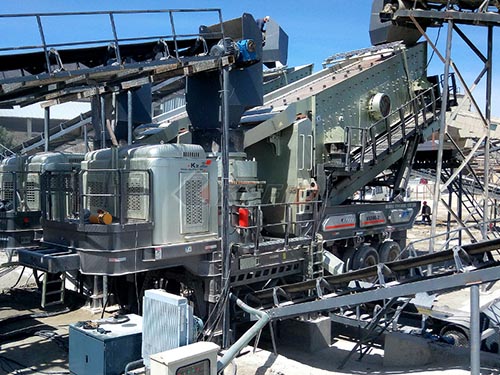
1. The Jc5000 Platform: Defining Parameters and Engineering Challenges
Before delving into supplier R&D, it is critical to establish what the Jc5000 represents. Typically, this class of crusher features a feed opening of approximately 1,500 mm × 1,200 mm (or similar metric equivalents), capable of accepting run-of-mine (ROM) ore with a top size exceeding 1,000 mm. The machine is designed to deliver a throughput ranging from 400 to 800 metric tons per hour, depending on the closed side setting (CSS) and material characteristics. The primary engineering challenges inherent to this platform are multifaceted:
- High Impact Fatigue: The crushing chamber experiences cyclical, high-amplitude stress loads, leading to potential fatigue failure in the frame, pitman, and toggle plates.
- Abrasive Wear: The fixed and movable jaw dies must withstand extreme abrasive wear from silica-bearing ores, requiring advanced metallurgy.
- Energy Efficiency: With motor power typically exceeding 250 kW, reducing specific energy consumption (kWh/t) is a critical R&D objective.
- Maintenance Accessibility: Downtime is the enemy of profitability. R&D must focus on reducing the time required for liner changes, bearing replacement, and hydraulic adjustments.
2. R&D Organizational Structures Among Leading Suppliers
The landscape of Jc5000 jaw crusher suppliers is dominated by a mix of multinational heavy-equipment conglomerates and specialized niche manufacturers. Their R&D approaches, while distinct, converge on similar goals.
2.1. Tier-1 Multinationals (e.g., Sandvik, Metso Outotec, Terex MPS, ThyssenKrupp)
These suppliers operate dedicated, globally distributed R&D centers. Their R&D budgets are substantial, often exceeding 3-4% of annual heavy-equipment revenue. For these entities, R&D on the Jc5000 is not an isolated project but part of a modular platform strategy. They employ:
- Finite Element Analysis (FEA) and Discrete Element Method (DEM): R&D teams use FEA to simulate stress distribution in the cast steel frame, optimizing rib placement and reducing overall weight without compromising structural integrity. DEM is used to model the rock flow through the crushing chamber, predicting liner wear patterns and throughput bottlenecks.
- Virtual Prototyping: Before physical prototypes are built, digital twins of the Jc5000 are created. These virtual models are subjected to simulated millions of crushing cycles to identify potential fatigue hotspots.
- Pilot Plant Testing: Tier-1 suppliers maintain full-scale test facilities where Jc5000 prototypes are fed with controlled ore blends. This allows for empirical validation of wear life, power draw, and product gradation curves.
2.2. Specialized Regional Manufacturers (e.g., Chinese and Indian OEMs)
Suppliers from emerging economies, particularly China (e.g., Shanghai Shibang, Zhengzhou Yifan, and others) and India, have adopted a more agile R&D approach. Their focus is on cost-effective innovation. Their R&D is characterized by:
- Reverse Engineering and Benchmarking: While they do not copy directly due to IP laws, they benchmark Tier-1 designs and integrate improvements in high-wear areas.
- Material Substitution Research: A significant portion of their R&D budget is allocated to metallurgical testing. They experiment with high-manganese steel (Hadfield steel) with varying carbon and chromium content, and increasingly, with bi-metallic composite liners that offer a hard outer layer and a tough inner core.
- Hydraulic System Simplification: R&D efforts focus on simplifying the hydraulic toggle adjustment system. Instead of complex multi-valve systems, they develop robust, single-cylinder tension rod assemblies that are easier for local technicians to maintain.
3. Key R&D Focus Areas in Jc5000 Technology
The R&D efforts of Jc5000 suppliers can be categorized into four primary technological pillars:
3.1. Advanced Crushing Chamber Geometry (Cavity Design)
The traditional straight-line crushing chamber is being replaced by curved or “sleeve” profiles. R&D has demonstrated that a curved jaw plate design significantly increases the effective nip angle at the feed opening while reducing it at the discharge zone. This results in:
- Higher reduction ratios (up to 6:1).
- Reduced slabby product generation.
- More uniform wear on the jaw dies, extending their service life by up to 30%.
Suppliers are now using 3D laser scanning of worn liners to feed data back into CAD models, creating “self-sharpening” liner profiles that maintain a constant CSS throughout the liner’s life.
3.2. Metallurgical Innovation and Wear Life Extension
The jaw dies and side liners are the most consumable parts. R&D in this area is relentless.
- High-Manganese Steel (Mn14, Mn18, Mn22): The industry standard remains austenitic manganese steel. However, R&D has led to the addition of molybdenum (Mo) and vanadium (V) to refine grain structure, increasing yield strength from 350 MPa to over 500 MPa.
- Composite and Carbide-Impregnated Liners: For extremely abrasive applications, suppliers are developing liners with tungsten carbide inserts embedded in the manganese matrix. This is a high-cost solution but can extend wear life by 100-150% in silica-rich ores.
- Heat Treatment Processes: R&D has optimized the water toughening process for large castings. Controlled cooling rates prevent carbide precipitation at grain boundaries, which is the primary cause of premature liner cracking.
3.3. Structural Integrity and Frame Design
The frame of a Jc5000 is a massive casting or fabricated steel structure. R&D has shifted from traditional box-section frames to finite-element-optimized “ribbed” structures.
- Stress Relieving: Suppliers now employ advanced vibratory stress relief (VSR) techniques in addition to thermal stress relief. VSR reduces residual stresses without the risk of distortion associated with high-temperature furnace treatment.
- Fabricated vs. Cast Frames: R&D is evaluating the use of high-strength, low-alloy (HSLA) steel plates with full-penetration welds for the frame. This allows for faster production and easier repair in the field compared to monolithic castings, which are prone to hidden internal porosity.
3.4. Automation and Intelligent Monitoring (Industry 4.0)
The modern Jc5000 is no longer a dumb mechanical device. R&D is heavily invested in:
- Crusher Control Systems (CCS): These systems monitor the power draw, oil temperature, and pressure in real-time. R&D algorithms now predict the optimal CSS adjustment to maintain a constant product tonnage even as the feed material hardness fluctuates.
- Predictive Maintenance via Vibration Analysis: Accelerometers mounted on the main bearing housings transmit data to cloud-based servers. Machine learning algorithms analyze vibration signatures to detect early signs of bearing spalling or pitman crack propagation, alerting operators weeks before a catastrophic failure.
- Hydraulic Relief Systems: R&D has refined the “tramp iron” relief system. Modern Jc5000s use an accumulator-based hydraulic system that allows the jaw to open momentarily when an unbreakable object (e.g., a rock bolt) enters the chamber, then instantly returns to the set position. This reduces downtime and prevents structural damage.
4. The Role of Simulation and Digital Twins in R&D
The most advanced Jc5000 suppliers are now utilizing Digital Twin technology. This involves creating a virtual replica of the physical crusher that operates in parallel with the real machine. The digital twin receives real-time operational data (feed size distribution, moisture content, power draw) and runs simulations to predict:
- Remaining liner life.
- Optimal crusher speed (RPM) for the current ore type.
- Energy consumption per ton.
This R&D capability allows suppliers to offer “performance contracts” rather than just equipment sales. By guaranteeing throughput and wear life, the supplier assumes the risk, which is only possible through rigorous R&D validation.
5. Sustainability and Environmental R&D
Regulatory pressure is driving R&D in the environmental performance of Jc5000 crushers.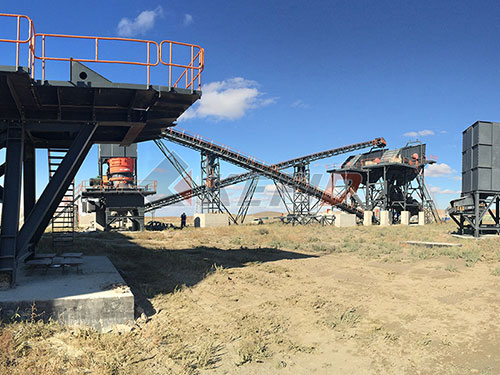
- Noise Reduction: R&D is focused on enclosing the crushing chamber with sound-dampening panels and designing quieter hydraulic power units. The target is to reduce operational noise levels from 95 dB(A) to below 85 dB(A) at 1 meter.
- Dust Suppression: Integrated water spray systems are being redesigned with ultrasonic atomizers that use 40% less water while achieving better dust capture. R&D is also exploring the use of foam-based dust suppression that adheres to fine particles more effectively.
- Energy Recovery: While still in the experimental phase, some suppliers are researching regenerative braking systems for the flywheel. By using a variable frequency drive (VFD) and a synchronous motor, the kinetic energy of the heavy flywheel can be recovered during the “idle” stroke and fed back into the grid, reducing net energy consumption by up to 10%.
6. R&D Challenges and Future Outlook
Despite the advancements, Jc5000 suppliers face significant R&D hurdles:
- Cost vs. Performance: High-alloy liners and advanced automation increase the capital cost. R&D must find a balance where the total cost of ownership (TCO) is lower, even if the initial purchase price is higher.
- Supply Chain Constraints: The specialized castings required for Jc5000 frames are limited to a few foundries globally. R&D is exploring additive manufacturing (3D printing) for complex wear parts, although scaling this to 5-ton components remains a challenge.
- Skilled Workforce: The operation of automated Jc5000 systems requires a higher skill level. R&D must therefore also focus on user interface simplification and augmented reality (AR) maintenance guides.
Future R&D Directions:
- Hybrid Drive Systems: Combining electric motors with diesel backup for remote sites, optimizing fuel efficiency.
- Self-X Liner Systems: Liners that can be changed by robotic arms without human entry into the crushing chamber.
- AI-Driven Ore Sorting Integration: Linking the crusher’s R&D control system with upstream ore sorting sensors to reject waste rock before it enters the Jc5000, reducing wear and increasing effective capacity.
7. Conclusion
The Jc5000 jaw crusher market is a testament to the fact that heavy machinery is as much a product of software and material science as it is of mechanical engineering. The suppliers leading this market are those that treat R&D not as a cost center but as a strategic weapon. Through advanced simulation, metallurgical breakthroughs, and digital integration, they are transforming a century-old crushing concept into a highly efficient, intelligent, and sustainable machine.
For buyers and operators, the choice of a Jc5000 supplier should be based not solely on the price list but on the depth of the supplier’s R&D pipeline. A supplier with a robust R&D program will offer lower operating costs, higher uptime, and a clear upgrade path as technology evolves. The future of primary crushing is not in brute force alone, but in the intelligent application of that force—a principle that remains the core focus of R&D among the world’s leading Jc5000 jaw crusher suppliers.
