Industrial JC5000 Jaw Crusher: Comprehensive Quotation Analysis and Technical Specification Review
Introduction
In the realm of heavy-duty mineral processing and aggregate production, the jaw crusher remains the undisputed workhorse of primary size reduction. Among the myriad of models available globally, the Industrial JC5000 Jaw Crusher occupies a distinctive niche, positioned between mid-tier stationary units and the ultra-large gyratory-class machines. This article provides a detailed, professional, and objective examination of the JC5000, with a specific focus on its quotation structure, total cost of ownership (TCO), technical parameters, application suitability, and the factors that influence its market pricing. The objective is to equip procurement managers, project engineers, and quarry operators with the necessary data to evaluate a quotation for this specific equipment, moving beyond the bare price tag to understand the full economic and operational implications.
1. Technical Architecture and Core Specifications
Before dissecting the quotation, it is imperative to understand what the JC5000 offers technically. The “JC” designation typically refers to a heavy-duty, single-toggle jaw crusher design, optimized for high-throughput primary crushing of hard and abrasive rocks (e.g., granite, basalt, quartzite) and metallurgical ores.
The JC5000 is characterized by the following core parameters (industry-standard estimates, as exact figures vary by OEM):
- Feed Opening: Approximately 1,200 mm x 1,000 mm (48” x 40”). This allows for a maximum feed size of around 900 mm, making it suitable for ROM (Run of Mine) material from surface or underground operations.
- CSS (Closed Side Setting) Range: Typically adjustable from 75 mm to 200 mm, offering flexibility for downstream secondary crushers.
- Throughput Capacity: Depending on the CSS and material density (typically 1.6 t/m³ for limestone, 2.7 t/m³ for basalt), the JC5000 can process between 250 and 450 metric tons per hour (MTPH).
- Motor Power: A high-torque electric motor in the range of 160–200 kW (approximately 215–270 HP) drives the eccentric shaft.
- Weight: The crusher body, excluding motor and base frame, typically weighs between 45 and 55 metric tons. This mass is critical for inertia and stability.
The design philosophy of the JC5000 emphasizes a deep, symmetrical crushing chamber, a heavy-duty forged eccentric shaft with oversized bearings, and a hydraulic wedge adjustment system for CSS changes. The toggle plate is designed as a sacrificial overload protection device, though modern versions incorporate hydraulic relief systems to reduce downtime.
2. The Anatomy of a Quotation: What Is Included?
A professional quotation for the Industrial JC5000 is not a single line item. It is a structured document that breaks down costs into several distinct categories. A typical quotation from a reputable OEM or authorized dealer will include the following sections:
- Base Machine Price: This is the cost of the crusher itself, including the main frame, jaw dies (fixed and movable), toggle plate, pitman, flywheels, and the hydraulic adjustment system. It excludes the electric motor and the lubrication system if they are not factory-integrated.
- Drive System: The electric motor (IP55 or higher), V-belt drive, pulleys, and a motor base frame with tensioning rails. This is often quoted separately because the client may have a preferred motor brand (e.g., Siemens, ABB, WEG) or a specific voltage requirement (e.g., 380V, 660V, 11kV).
- Lubrication and Hydraulic Unit: A centralized grease lubrication system for the bearings and a separate hydraulic power pack for the toggle plate adjustment and safety relief. These are critical for automated operation and are often optional add-ons.
- Chassis and Support Structure: A heavy-duty I-beam or fabricated steel skid frame, vibration dampers, and anchor bolts. For stationary installations, this may be a concrete foundation design package instead.
- Feed Hopper and Chutes: The feed hopper with wear liners and the discharge chute to the downstream conveyor.
- Electrical Control Panel: A PLC-based control panel with motor starters, overload relays, and remote monitoring capability (SCADA interface). This is a significant cost component in modern quotations.
- Freight and Logistics: The cost of shipping from the manufacturing plant (often in China, India, Europe, or the USA) to the port of discharge, and then inland transport to the site. For a 50-ton crusher, this is a substantial line item, often representing 5-10% of the total equipment cost.
- Installation and Commissioning: Supervision by a factory technician for 2-4 weeks, including alignment, testing, and operator training. This is usually quoted on a per-diem basis plus travel expenses.
- Spare Parts Package: A mandatory initial spare parts kit, including jaw dies (one set), toggle plate, springs, and a set of bearings. This is crucial for minimizing downtime during the warranty period.
3. Price Range and Market Positioning
The quotation price for an Industrial JC5000 is highly variable, influenced by the OEM’s country of origin, brand reputation, and the specific configuration. Based on 2023-2024 market data, the following ranges are indicative:
- Chinese OEMs (e.g., SBM, Zenith, Liming Heavy Industry): These manufacturers offer the most competitive pricing. A base JC5000 machine (without motor and controls) may be quoted between USD 180,000 and USD 250,000. A fully integrated system with motor, controls, and skid frame typically ranges from USD 280,000 to USD 380,000.
- European OEMs (e.g., Sandvik, Metso Outotec, Terex): These are premium products with advanced automation, higher quality steel, and longer warranty periods. The base machine price is significantly higher, ranging from USD 350,000 to USD 500,000. The fully equipped package can exceed USD 600,000.
- Indian OEMs (e.g., Terex India, Puzzolana): These fall between the Chinese and European price points, offering a balance of quality and cost. Expect a base machine quote of USD 250,000 to USD 320,000.
It is critical to note that the “quotation” is often a starting point for negotiation. The final price is influenced by the volume of units ordered, the payment terms (e.g., Letter of Credit vs. Telegraphic Transfer), and the delivery timeline (expedited delivery incurs a premium).
4. Total Cost of Ownership (TCO) Analysis
A professional evaluation of a JC5000 quotation must extend beyond the initial capital expenditure (CAPEX). The operational expenditure (OPEX) over a 10-year lifecycle often exceeds the purchase price. Key OPEX factors to consider when comparing quotations:
- Wear Parts Consumption: The jaw dies (fixed and movable) are the primary wear items. For a JC5000 processing abrasive granite, the wear rate is approximately 0.15-0.25 kg per ton of material crushed. With manganese steel (12-14% Mn) dies costing approximately USD 3,500-4,500 per set, the annual wear cost at 1 million tons throughput can reach USD 40,000-60,000. A quotation that includes a higher-grade alloy (e.g., 18% Mn with chromium) may have a higher upfront cost but lower per-ton wear cost.
- Energy Efficiency: The motor power (200 kW) at full load, operating 6,000 hours per year, consumes 1.2 million kWh. At an industrial electricity rate of USD 0.10/kWh, this is USD 120,000 annually. A quotation that specifies a high-efficiency IE3 or IE4 motor (vs. standard IE2) will have a slightly higher upfront cost but can save 3-5% on energy, translating to USD 3,600-6,000 per year.
- Maintenance Labor and Downtime: The JC5000’s design allows for quick jaw die replacement (typically 8-12 hours for a two-man crew). However, a quotation that includes a hydraulic toggle adjustment system (vs. manual shims) reduces the CSS change time from 4 hours to 30 minutes. This reduction in downtime is worth thousands of dollars per incident in lost production.
- Lubrication Costs: Automatic grease systems reduce grease consumption by up to 30% compared to manual greasing, but they require a higher initial investment and more complex maintenance.
5. Critical Factors That Influence the Quotation Price
When requesting a quotation for the JC5000, the buyer must provide specific technical data to ensure the quote is accurate and comparable. The following variables will significantly alter the price:
- Material Characteristics: The Bond Work Index (Wi) of the feed material determines the required crushing force. A quotation for crushing soft limestone (Wi=12) will use a lighter flywheel and smaller bearings than one for crushing ferrochrome (Wi=25). The latter will command a 10-15% price premium due to heavier construction.
- Feed Size Distribution: If the feed contains a high percentage of oversized material (e.g., >90% of the max feed opening), the crusher may require a deeper crushing chamber or a larger motor, increasing the price.
- Altitude and Climate: For installations above 2,000 meters altitude, the motor derating factor must be considered. A higher-rated motor (e.g., 220 kW instead of 200 kW) may be required, adding cost. Similarly, for tropical or arctic environments, special lubrication oils and heating elements for the bearings are required.
- Compliance and Safety Standards: Quotations for the European market must comply with CE marking and the Machinery Directive 2006/42/EC. This includes safety interlocks, guarding, and documentation, adding 5-8% to the cost. For North America, compliance with OSHA and ANSI standards is mandatory.
6. Negotiation Strategies and Value Engineering
To obtain the most favorable quotation, the buyer should employ a value engineering approach: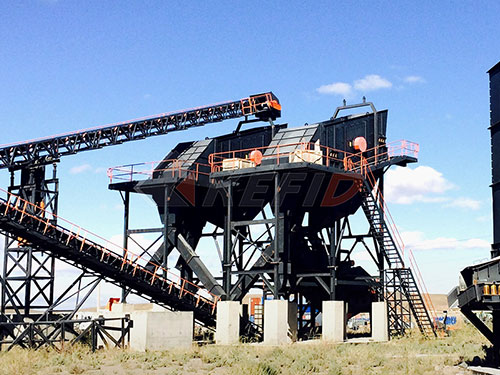
- Request a Performance Guarantee: Insist that the quotation includes a guaranteed throughput rate at a specific CSS and feed size. This shifts the risk of underperformance to the OEM.
- Compare Wear Parts Pricing: Ask for a separate quotation for a 2-year supply of wear parts. Some OEMs offer a “cost per ton” contract, where they supply all wear parts and consumables for a fixed fee per ton of material crushed. This can be more economical than purchasing parts individually.
- Evaluate the Foundation Design: A quotation that includes a reinforced concrete foundation design (with rebar schedules and anchor bolt templates) is more valuable than one that only provides a “typical” drawing. The engineering cost of designing a foundation in-house can be USD 15,000-25,000.
- Consider a Modular or Mobile Variant: If the JC5000 is required for multiple sites, a mobile or semi-mobile version (mounted on a tracked or wheeled chassis) will have a higher quotation (typically 30-40% more) but eliminates the cost of civil works and permits, which can be substantial.
7. After-Sales Support and Warranty
The quotation’s terms and conditions are as important as the price. A professional quotation should include:
- Warranty Period: Typically 12-24 months from commissioning or 18 months from shipment, whichever is earlier. Extended warranties are negotiable.
- Response Time: A guaranteed response time for technical support (e.g., 24 hours for remote diagnostics, 72 hours for on-site service).
- Spare Parts Availability: The OEM should guarantee the availability of critical spare parts (bearings, toggle plates) for a minimum of 10 years. This is a legal requirement in some jurisdictions.
8. Conclusion: Making an Informed Decision
The quotation for an Industrial JC5000 Jaw Crusher is a complex document that reflects not just the cost of steel and labor, but the engineering expertise, after-sales infrastructure, and risk allocation of the manufacturer. A low-priced quotation from an unknown OEM may appear attractive, but it often hides higher wear rates, lower reliability, and poor local support, leading to a higher TCO over the machine’s life.
For a professional procurement decision, the buyer should:
- Standardize the Scope: Ensure all quotations are based on the same technical specification (motor brand, control system, wear part quality).
- Perform a Lifecycle Cost Analysis: Use a spreadsheet to model the CAPEX, OPEX, and downtime costs over a 10-year period.
- Conduct a Site Visit or Reference Check: Ask for the contact details of at least three existing JC5000 users in similar applications. A quotation is only as good as the machine’s track record.
In summary, a realistic budget for a fully operational JC5000 primary crushing unit, including installation and initial spares, should be in the range of USD 350,000 to USD 650,000, depending on the OEM and configuration. The final quotation should be viewed as a starting point for a collaborative engineering discussion, not a final verdict. By understanding the technical nuances and cost drivers outlined in this article, the buyer can negotiate a quotation that delivers not just a machine, but a profitable return on investment.
