Title: China Iron Ore Crushing Plant OEM Factory: Capabilities, Processes, and Strategic Advantages

Introduction

China has long been the world’s largest producer and consumer of iron ore, processing over 1.5 billion tonnes of crude ore annually. Within this vast industrial ecosystem, Original Equipment Manufacturer (OEM) factories specializing in iron ore crushing plants occupy a critical niche. These facilities do not merely assemble machinery; they design, engineer, fabricate, and commission complete crushing systems tailored to specific mine-site conditions. This article provides a professional, objective examination of China’s OEM iron ore crushing plant factories, covering their core capabilities, typical production workflows, engineering standards, quality control mechanisms, and the strategic value they offer to global mining operators.

1. Definition and Scope of an OEM Crushing Plant Factory

An OEM factory in the context of iron ore crushing is a manufacturing entity that produces crushing equipment and integrated plant systems under another company’s brand name or as a direct supplier to mining projects. Unlike a simple equipment reseller, a true OEM factory possesses in-house design, casting, machining, assembly, and testing capabilities. For iron ore, the plant typically includes primary jaw crushers, secondary cone crushers, tertiary high-pressure grinding rolls (HPGR) or vertical shaft impactors (VSI), vibrating screens, feeders, and belt conveyor systems.

The term “OEM” in China is often conflated with “ODM” (Original Design Manufacturer). However, leading Chinese factories offer both: they can build to a client’s proprietary drawings (OEM) or propose their own engineering solutions (ODM). In the iron ore sector, most large-scale plants are semi-custom, because ore hardness (e.g., magnetite vs. hematite), moisture content, and desired product size (typically 0–10 mm for pellet feed or 0–40 mm for blast furnace lump ore) dictate the crushing circuit design.China Iron Ore Crushing Plant Oem Factory
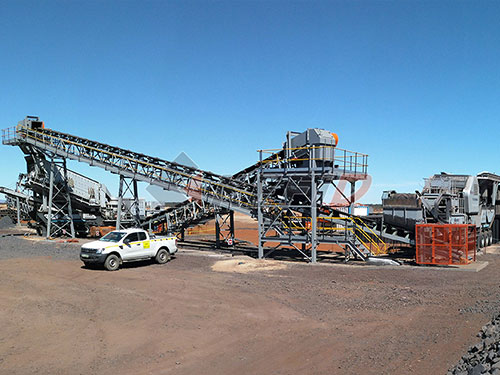
2. Core Engineering and Design CapabilitiesChina Iron Ore Crushing Plant Oem Factory

A professional Chinese OEM iron ore crushing plant factory typically employs a multi-disciplinary engineering team, including:

  • Mining and Mineral Processing Engineers: They conduct ore characterization tests, including Bond Work Index (BWI) and Abrasion Index (AI), to determine the required crushing force and wear liner selection.
  • Mechanical and Structural Engineers: They perform finite element analysis (FEA) on crusher frames, chutes, and support structures to ensure fatigue life under 24/7 operation.
  • Electrical and Automation Engineers: They design PLC-based control systems, motor control centers (MCC), and remote monitoring interfaces.

The design phase begins with a detailed process flow diagram (PFD) and piping and instrumentation diagram (P&ID). For a typical iron ore plant with a capacity of 500–2,000 tonnes per hour (tph), the factory will simulate the circuit using software such as JKSimMet or Bruno to predict throughput and product gradation. This simulation-driven approach minimizes field adjustments and ensures that the OEM factory can guarantee performance metrics, such as a reduction ratio of 4:1 to 6:1 for primary crushing.

3. Manufacturing Infrastructure and Key Processes

China’s leading OEM factories are located in industrial clusters such as Shenyang (Liaoning), Luoyang (Henan), and Shanghai. These facilities often exceed 50,000 square meters of workshop space and are equipped with heavy-duty CNC machining centers, 5-axis milling machines, and large-capacity induction furnaces for casting manganese steel wear parts.

The manufacturing process for an iron ore crushing plant involves several distinct stages:

  • Pattern Making and Casting: Crusher wear parts (jaw plates, cone mantles, concave liners) are cast from high-manganese steel (Mn13Cr2 or Mn18Cr2) or chromium-molybdenum alloy steel. The factory uses sand casting or lost-foam casting for complex geometries. After casting, parts undergo heat treatment (solution annealing and water quenching) to achieve a hardness of 170–220 HB for manganese steel, which work-hardens to over 500 HB under impact.
  • Machining and Fabrication: Main shafts, eccentric sleeves, and bearing housings are machined to tolerances of ±0.02 mm. Structural steel frames (e.g., skid-mounted bases) are cut, welded, and stress-relieved in a controlled furnace to prevent distortion.
  • Sub-Assembly and Pre-Assembly: Before shipping, the factory performs a “dry run” assembly of the entire crushing plant on the workshop floor. This includes aligning the crusher pulleys, installing the lubrication system, and checking belt tension. This pre-assembly reduces on-site installation time by up to 30%.
  • Electrical and Hydraulic Integration: Hydraulic systems for cone crusher adjustment and tramp iron relief are assembled with high-pressure hoses and accumulators. The control panel is wired and tested using a simulated load.

4. Quality Control and International Standards

Objective assessment of a Chinese OEM factory requires scrutiny of its quality management system. Reputable factories hold ISO 9001:2015 certification, and many also comply with CE (European Conformity) or GOST (Russian) standards for export. Key quality control (QC) checkpoints include:

  • Incoming Material Inspection: Spectrometer analysis of steel chemistry for each heat of casting.
  • Non-Destructive Testing (NDT): Ultrasonic testing (UT) of welds on critical load-bearing structures; magnetic particle inspection (MPI) of shafts and gears.
  • Dimensional Verification: Coordinate measuring machines (CMM) for critical crusher bores and mating surfaces.
  • Performance Testing: A factory test bench with a variable-frequency drive (VFD) motor runs the crusher empty for 4–8 hours to check vibration levels (typically below 2.5 mm/s), bearing temperature rise (max 40°C above ambient), and oil pressure stability.

For complete plants, the OEM factory often provides a “Factory Acceptance Test” (FAT) report, including a simulated load test using a torque meter. This documentation is essential for mining companies that require traceability for insurance and regulatory compliance.

5. Customization for Iron Ore Specifics

Iron ore presents unique challenges that a generic crushing plant cannot handle. A specialized OEM factory offers tailored solutions:

  • High Abrasion Resistance: For hematite ores with high silica content (SiO2 > 10%), the factory increases the thickness of wear liners and uses ceramic-composite wear plates in chutes and transfer points.
  • Moisture and Sticky Ore Handling: For ores with high clay content (e.g., limonite), the factory designs vibrating grizzly feeders with variable stroke and anti-clogging screen media (polyurethane or rubber panels) to prevent blinding.
  • Magnetic Separation Integration: For magnetite ores, the crushing plant is often integrated with magnetic separators. The OEM factory can design the crusher discharge chute to feed directly into a wet drum separator, ensuring a seamless flow.
  • Mobile vs. Stationary: Chinese OEM factories produce both stationary and semi-mobile crushing plants. Semi-mobile units are mounted on hydraulic walking platforms or multi-axle trailers, allowing relocation within the open pit. This requires the factory to design for dynamic load distribution and rapid disconnection of conveyors.

6. Supply Chain and Cost Advantages

One of the primary reasons global mining companies source from Chinese OEM factories is the cost-performance ratio. The factory benefits from:

  • Vertical Integration: Many factories own their foundries and forging shops, eliminating middleman costs for castings and forgings.
  • Localized Raw Materials: China produces over 60% of the world’s manganese ore, reducing the cost of alloying elements.
  • Economies of Scale: High domestic demand for iron ore crushers (from Chinese steel mills) allows factories to run continuous production lines, lowering per-unit overhead.

A typical 1,000 tph iron ore crushing plant from a Chinese OEM factory costs 20–35% less than an equivalent European or Japanese system, excluding shipping and import duties. However, the total cost of ownership (TCO) must include after-sales service. Leading factories maintain overseas warehouses in Australia, Brazil, and West Africa, stocking critical spare parts (e.g., main shafts, eccentric bushings) to reduce downtime.

7. After-Sales Support and Technical Services

An OEM factory’s responsibility does not end at the factory gate. Professional Chinese suppliers offer:

  • Erection and Commissioning Supervision: Sending a team of 5–10 engineers to the mine site for 4–8 weeks to oversee installation, alignment, and cold commissioning.
  • Operator Training: Providing comprehensive training modules, including 3D interactive simulations of crusher maintenance procedures.
  • Remote Diagnostics: Modern plants are equipped with IoT sensors that transmit vibration, temperature, and power draw data to the factory’s cloud platform. The OEM’s engineers can analyze this data in real-time and recommend adjustments to the CSS (closed side setting) or feed rate.
  • Lifecycle Management: Offering performance-based contracts where the factory guarantees a certain wear life (e.g., 12,000 hours for jaw plates) and replaces components proactively.

8. Challenges and Risk Mitigation

While Chinese OEM factories are highly capable, objective analysis must acknowledge potential risks:

  • Intellectual Property (IP) Concerns: Some factories have been accused of copying foreign designs. To mitigate this, clients should sign strict non-disclosure agreements (NDAs) and conduct regular audits.
  • Logistics Complexity: Shipping large crusher components (e.g., a 50-tonne jaw crusher frame) requires specialized flat-rack containers and heavy-lift vessels. The factory should provide detailed packing lists with center-of-gravity markings and lashing plans.
  • Cultural and Communication Barriers: Technical documentation may be initially provided in Chinese. Reputable factories employ bilingual project managers and provide English versions of all drawings, manuals, and FAT protocols.

9. Case Study: A Typical 800 TPH Hematite Plant

To illustrate the factory’s role, consider a hypothetical but representative project: an Australian iron ore miner orders an 800 tph hematite crushing plant. The OEM factory in Shenyang executes the following timeline:

  • Week 0–4: Ore samples are sent to the factory’s lab for BWI testing (result: 14 kWh/t). Process design is completed.
  • Week 5–12: Fabrication of the primary jaw crusher (PE-1200×1500) and secondary cone crusher (HP500). Casting of manganese liners begins.
  • Week 13–20: Pre-assembly of the entire plant on the workshop floor. A FAT is conducted with a 200-tonne load cell to verify the conveyor tension.
  • Week 21–24: Disassembly, marine packing, and loading onto a bulk carrier at Tianjin Port.
  • Week 25–30: On-site erection by the factory’s team. The plant achieves first ore at week 30, with a throughput of 820 tph, exceeding the guarantee by 2.5%.

Conclusion

China’s iron ore crushing plant OEM factories are not low-cost copycats; they are sophisticated engineering and manufacturing entities that combine metallurgical expertise, heavy fabrication capacity, and digital service capabilities. For mining companies seeking to balance capital expenditure with operational reliability, these factories offer a compelling value proposition. However, success depends on rigorous supplier qualification, clear technical specifications, and robust contract management. When engaged correctly, a Chinese OEM factory can deliver a crushing plant that meets international safety and performance standards, while significantly reducing project lead times and costs. As global iron ore demand shifts toward lower-grade deposits requiring more complex beneficiation, the role of these OEM factories will only grow in strategic importance.

Leave Message

*

If you have any questions about our products, please feel free to contact us. We take all inquiries and suggestions very seriously.