
Gyratory Crusher Producer Testing: A Comprehensive Framework for Factory Acceptance and Performance Validation
Abstract
Gyratory crusher producer testing constitutes a critical phase in the manufacturing and quality assurance cycle of primary crushing equipment. Unlike site acceptance testing, which occurs after installation, producer testing is conducted at the manufacturing facility to verify that the equipment meets design specifications, operational requirements, and contractual performance guarantees before shipment. This article examines the methodological framework, key test parameters, instrumentation requirements, and industry standards governing gyratory crusher producer testing, with emphasis on the technical and procedural elements that ensure reliable equipment performance in mining and aggregate applications.
1. Introduction
Gyratory crushers are among the most critical pieces of equipment in primary crushing circuits, handling high-tonnage throughputs in mining operations and large-scale aggregate production. Given their substantial capital cost, long lead times, and the operational consequences of premature failure, producer testing at the manufacturing facility serves as a fundamental risk-mitigation measure. The objective of producer testing is to demonstrate, under controlled factory conditions, that the crusher satisfies mechanical integrity requirements, hydraulic and lubrication system functionality, control system responsiveness, and—where feasible—crushing performance characteristics.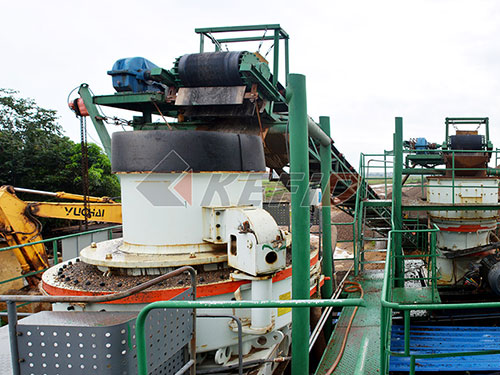
Producer testing differs from commissioning in that it is conducted without full process feed conditions and often employs no-load or partial-load verification protocols. Nevertheless, modern testing regimes increasingly incorporate instrumented no-load runs, hydraulic pressure verification, and dimensional inspection to approximate operational conditions as closely as practicable.
2. Scope and Test Categories
A comprehensive producer testing program for gyratory crushers typically encompasses the following categories:
2.1 Mechanical Assembly Verification
This phase confirms that the crusher has been assembled in accordance with engineering drawings and tolerances. Key checks include verification of the eccentric assembly clearances, main shaft vertical positioning, concave and mantle geometry, spider arm alignment, and shell section bolting torque values. Dimensional inspection of the crushing chamber profile is performed using templates or laser metrology to confirm the open-side and closed-side settings specified in the design.
2.2 Hydraulic System Testing
Modern gyratory crushers employ hydraulic systems for main shaft positioning, setting adjustment, tramp release, and clamping. Producer testing verifies hydraulic circuit integrity through pressure-hold tests, relief valve calibration, flow rate measurement, and leak inspection. The hydraulic power unit is operated across its design pressure range, and response times for setting adjustment are recorded. Tramp release accumulator pre-charge pressures are verified against specification.
2.3 Lubrication System Verification
The lubrication system—comprising the oil tank, pumps, filters, heat exchangers, and distribution piping—is tested for flow rate, pressure, temperature control, and contamination levels. Oil samples are analyzed for particulate content to confirm cleanliness prior to shipment. Interlock logic between lubrication parameters and main drive operation is functionally tested to ensure that the crusher cannot operate without adequate lubrication.
2.4 Drive Train and No-Load Running Tests
The main drive motor, coupling, and gear train are subjected to no-load running tests, during which vibration signatures, bearing temperatures, and power consumption are monitored. Vibration analysis using accelerometers at designated measurement points provides baseline data for later site comparisons. Runout measurements of the eccentric assembly and main shaft are recorded. Thermal stabilization behavior is observed over extended run periods, typically four to eight hours.
2.5 Control System and Instrumentation Testing
The crusher control system, including programmable logic controllers, human-machine interfaces, and sensor networks, is subjected to functional testing. All interlocks, alarms, and trip setpoints are verified. Communication protocols between the crusher control system and plant-level distributed control systems are tested for compatibility. Instrumentation calibration certificates are reviewed and archived.
3. Performance Testing Considerations
Full-load performance testing at the producer’s facility is generally limited by the absence of a complete crushing circuit and feed material supply. However, where contractual requirements mandate performance verification, producers may conduct partial-load tests using prepared feed material in a closed test loop. Parameters recorded during such tests include throughput rate, power draw, product size distribution, and crushing force. These results are compared against guaranteed performance curves, with allowance for scale-up uncertainties documented in the test protocol.
4. Standards and Documentation
Producer testing is typically conducted with reference to international standards, including ISO 21873 for mobile and stationary crushing equipment, applicable sections of ASME and API standards for pressure vessels and piping where relevant, and IEC standards for electrical components. Documentation deliverables include the factory acceptance test report, dimensional inspection records, material certificates, non-destructive examination reports for critical welds, calibration certificates, and as-built drawings. Witness testing by the purchaser’s representatives is commonly stipulated in supply contracts.
5. Conclusion
Gyratory crusher producer testing represents a structured, multi-disciplinary verification process that bridges design intent and operational reality. By systematically validating mechanical assembly, hydraulic and lubrication systems, drive train behavior, and control functionality under factory conditions, manufacturers and purchasers jointly reduce the probability of site commissioning delays and early-life failures. As crusher designs evolve toward higher capacity and greater automation, producer testing protocols must correspondingly advance in instrumentation sophistication and data analytics capability, ensuring that factory verification remains a meaningful predictor of field performance.
If you have any questions about our products, please feel free to contact us. We take all inquiries and suggestions very seriously.