Gold Mining Equipment Exporters Catalog: A Comprehensive Industry Overview
The global gold mining industry is a cornerstone of the modern economy, supplying not only jewelry and investment assets but also critical components for electronics, aerospace, and medical technologies. Behind every ounce of gold extracted lies a complex network of machinery, technology, and logistical expertise. For mining operators, procurement managers, and project developers, navigating the landscape of gold mining equipment exporters is a task of strategic importance. This article provides a detailed, professional, and objective examination of the gold mining equipment export sector, covering major categories of equipment, key exporting regions, selection criteria, regulatory considerations, and emerging trends.
1. The Structure of the Gold Mining Equipment Market
The market for gold mining equipment is highly specialized and segmented. It ranges from small-scale artisanal tools to massive, fully automated industrial systems. Exporters typically operate in one or more of the following tiers:
- OEMs (Original Equipment Manufacturers): These are the global giants that design and manufacture core machinery, such as crushers, mills, and excavators. Examples include Caterpillar, Komatsu, Metso Outotec, and Sandvik. They export directly to large mining corporations or through regional distributors.
- Specialized Process Equipment Suppliers: These companies focus on the mineral processing circuit—thickening, leaching, carbon adsorption, electrowinning, and smelting. Notable names include FLSmidth, Weir Group, and Multotec.
- Modular and Containerized Plant Builders: A growing segment that exports pre-assembled, plug-and-play processing plants, particularly for medium-sized or remote operations. These exporters offer rapid deployment and reduced on-site construction costs.
- Component and Consumable Exporters: These firms supply wear parts (liners, grinding media), chemicals (cyanide, activated carbon), and filtration media. They are essential for ongoing operations and often have global supply chains.
2. Major Categories of Exported Equipment
An objective catalog of gold mining equipment must be organized by function. The following are the primary categories that dominate export volumes and value:
a) Crushing and Grinding Equipment
This is the first stage of ore size reduction. Exporters offer:
- Jaw crushers and gyratory crushers for primary crushing.
- Cone crushers and impact crushers for secondary and tertiary stages.
- SAG (Semi-Autogenous) mills and ball mills for fine grinding. These are often the most expensive single items in a processing plant, with export prices ranging from $1 million to over $20 million depending on capacity.
- High-Pressure Grinding Rolls (HPGR), which are increasingly popular for energy efficiency.
b) Classification and Screening Equipment
After grinding, ore must be classified by size. Exporters supply:
- Vibrating screens (multi-deck, high-frequency).
- Hydrocyclones for slurry classification.
- Spiral classifiers and desliming equipment.
c) Gravity Separation and Dense Media Separation
For free-milling gold or as a pre-concentration step, gravity equipment is critical:
- Jigs (e.g., Kelsey jigs, Pan-American jigs).
- Shaking tables (e.g., Gemini tables) for fine gold recovery.
- Centrifugal concentrators (e.g., Knelson and Falcon concentrators), which are flagship export products for many Canadian and Australian suppliers.
- Dense media separation (DMS) plants for bulk ore sorting.
d) Flotation Equipment
For refractory or sulfide-bound gold, flotation is used to concentrate the ore:
- Mechanical flotation cells (outokumpu-type, Wemco).
- Column flotation cells for higher-grade concentrates.
- Reagent dosing systems and froth pumps.
e) Leaching and Adsorption Equipment
This is the heart of modern gold processing (CIL/CIP circuits):
- Leach tanks with agitators and oxygen injection systems.
- Carbon-in-leach (CIL) and Carbon-in-pulp (CIP) interstage screens.
- Elution columns and electrowinning cells.
- Carbon regeneration kilns.
f) Dewatering and Tailings Management
Exporters also provide:
- Thickeners (high-rate and high-density).
- Filter presses (plate-and-frame, membrane).
- Vacuum belt filters.
- Tailings storage facility (TSF) equipment, including spigotting systems and cyclone stations.
g) Mobile and Surface Mining Equipment
For open-pit operations, exporters supply:
- Hydraulic excavators (20-800 ton class).
- Rigid and articulated dump trucks (40-400 ton payload).
- Wheel loaders and dozers.
- Drilling rigs for blast holes (rotary and DTH).
h) Underground Mining Equipment
For deep deposits:
- LHD (Load-Haul-Dump) machines.
- Underground haul trucks.
- Raise borers and jumbo drills.
- Rock bolting and shotcreting equipment.
i) Sampling and Analytical Equipment
- On-line analyzers (PGNAA, XRF).
- Sample preparation stations (pulverizers, splitter).
- Fire assay furnaces and cupellation equipment.
3. Key Exporting Regions and Their Specializations
The global export landscape is not uniform. Different regions have developed distinct competitive advantages:
- United States and Canada: Dominant in advanced gravity concentrators, high-tech sensor-based sorting, and autonomous mining systems. Canadian exporters (e.g., FLSmidth Canada, Sepro Mineral Systems) are renowned for modular plants. The US leads in large-scale crushing and grinding technology (Metso Outotec has major US operations).
- Europe (Germany, Sweden, Finland): These countries excel in engineering precision and heavy machinery. German exporters (ThyssenKrupp, Hazemag) are strong in crushers and bulk handling. Swedish (Sandvik, Epiroc) and Finnish (Metso Outotec, Normet) firms lead in underground equipment and process automation.
- China: The world’s largest exporter by volume. Chinese manufacturers (e.g., CITIC Heavy Industries, Weihai Haiwang, Yantai Xinhai) offer cost-competitive equipment across all categories, from ball mills to flotation cells. They have gained significant market share in Africa, Central Asia, and South America due to lower prices and bundled engineering services.
- Australia: Specializes in mining technology, services, and equipment (METS). Australian exporters are leaders in mineral processing simulation software, wear-resistant linings, and innovative gravity separation (e.g., Gekko Systems).
- South Africa: Historically strong in deep-level mining equipment, including winders, shaft sinking gear, and specialized drilling rigs. Companies like DRA Global and Multotec export globally, though the sector has faced domestic challenges.
4. Critical Selection Criteria for Buyers
When evaluating exporters, professional procurement teams must apply objective, multi-criteria analysis. The following factors are paramount: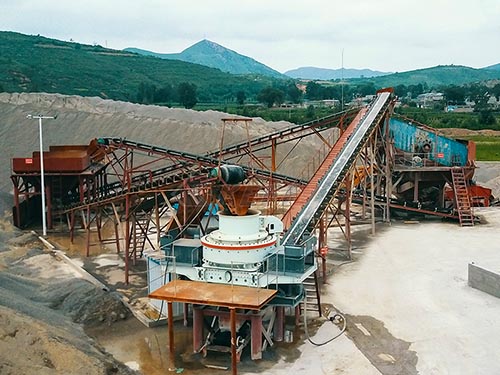
- Technical Compliance and Standards: Equipment must meet ISO 9001 (quality), ISO 14001 (environmental), and local safety standards (e.g., CE marking for Europe, MSHA for the US). Exporters must provide detailed technical datasheets, GA drawings, and performance guarantees.
- After-Sales Support and Spare Parts Availability: A crusher is useless without a reliable supply of wear liners. Exporters with regional warehouses or local service centers are preferred. Lead times for critical spares should be under 4 weeks.
- Customization Capability: Gold ores vary drastically (free-milling, refractory, high-clay, high-arsenic). Exporters must demonstrate the ability to tailor equipment to specific ore characteristics, often through pilot plant testing.
- Financial Terms and Payment Security: Exporters often require Letters of Credit (L/C) for large orders. Buyers should assess the exporter’s creditworthiness and willingness to offer performance bonds or bank guarantees.
- Logistics and Incoterms: Understanding FOB (Free on Board), CIF (Cost, Insurance, Freight), and DDP (Delivered Duty Paid) is essential. Exporters with experience in landlocked mining regions (e.g., Mali, Mongolia) can advise on containerization, break-bulk shipping, and overland transport.
- Sustainability and ESG Compliance: Increasingly, lenders and host governments require equipment that minimizes water usage, energy consumption, and carbon footprint. Exporters offering electric or hybrid drives, high-efficiency motors, and closed-loop water systems have a competitive edge.
5. Regulatory and Trade Considerations
Exporting gold mining equipment is subject to complex international trade laws:
- Export Controls: Certain high-tech equipment (e.g., advanced sensor-based sorters with AI) may be subject to dual-use export controls (e.g., US EAR, EU Dual-Use Regulation). Exporters must obtain licenses if the equipment could be used in weapons programs.
- Sanctions and Embargoes: Exporters must screen end-users against OFAC (US), EU, and UN sanctions lists. Selling to mining operations in sanctioned jurisdictions (e.g., certain regions of Sudan, Venezuela) is prohibited.
- Customs Tariffs and Trade Agreements: Tariffs on mining equipment vary. For example, under the African Continental Free Trade Area (AfCFTA), tariffs on machinery are being phased down. Exporters should provide accurate HS codes (e.g., 8474 for crushing and screening machinery) to facilitate customs clearance.
- Local Content Requirements: Many resource-rich countries (e.g., Tanzania, Indonesia, Ghana) mandate that a percentage of equipment value be sourced locally or that technology transfer agreements be signed. Exporters must navigate these rules, often by partnering with local fabricators.
6. Emerging Trends in Equipment Export
The gold mining equipment export sector is evolving rapidly. Key trends include:
- Automation and Remote Operation: Exporters are increasingly offering autonomous haulage systems (AHS), remote-controlled LHDs, and AI-driven process control. This reduces labor costs and improves safety in hazardous environments.
- Electrification: Battery-electric underground loaders and trucks are now commercially available from major exporters (e.g., Epiroc, Sandvik). Surface equipment is moving toward hybrid diesel-electric drives.
- Modular and Scalable Designs: Exporters are shifting from bespoke, site-erected plants to modular units that can be expanded. This reduces initial capital expenditure and allows phased project development.
- Digital Twins and Predictive Maintenance: Leading exporters now provide digital twin software that simulates equipment performance in real-time, enabling predictive maintenance and reducing downtime.
- Circular Economy and Re-manufacturing: Some exporters offer re-manufactured or refurbished equipment with new-equipment warranties, providing a cost-effective entry point for junior miners.
7. Challenges Facing Exporters
Despite robust demand, exporters face significant headwinds:
- Supply Chain Volatility: The prices of steel, copper, and rare earth magnets fluctuate wildly. Exporters must hedge commodity costs or pass them through via price adjustment clauses.
- Freight Costs and Port Congestion: Post-pandemic, ocean freight rates remain volatile. Exporters of oversized components (e.g., mill shells) face limited vessel availability and high heavy-lift charges.
- Talent Shortage: There is a global shortage of mining engineers and field service technicians. Exporters struggle to provide on-site commissioning support in remote locations.
- Currency Risk: Exporters invoicing in USD but manufacturing in EUR or CNY face exchange rate exposure. Sophisticated exporters use forward contracts to mitigate this.
8. How to Use an Exporters Catalog Effectively
A professional catalog is more than a list of products. It should include:
- Detailed specifications (capacity, power, dimensions, weight).
- Performance curves (e.g., throughput vs. particle size).
- Reference installations with contactable clients.
- Spare parts lists with part numbers and lead times.
- Service offerings (installation, training, maintenance contracts).
- Certifications (CE, ATEX, GOST-R, etc.).
Buyers should request a “pre-qualification questionnaire” (PQQ) from shortlisted exporters, covering financial stability, manufacturing capacity, and past project references. Site visits to the exporter’s factory are strongly recommended before placing large orders.
9. Conclusion
The gold mining equipment export industry is a dynamic, high-stakes global business. From massive grinding mills to precision gravity concentrators, the equipment that enables gold extraction is as diverse as the geology it processes. Exporters who succeed are those who combine engineering excellence with robust logistics, transparent pricing, and unwavering after-sales support. For buyers, a systematic approach—based on technical validation, financial due diligence, and regulatory compliance—is essential to avoid costly procurement errors. As the gold price remains strong and new mines are developed in frontier regions, the role of reliable, innovative equipment exporters will only grow in importance. This catalog serves as a foundational guide for navigating this complex but rewarding market.
