
Title: Advancing Aggregate Production: The Role of the Stone Crusher Plant Fabricator in Research and Development
Introduction
The global construction and mining industries are fundamentally reliant on the efficient production of aggregates. From the concrete foundations of high-rise buildings to the asphalt layers of highway systems, crushed stone serves as the skeletal structure of modern infrastructure. At the heart of this supply chain lies the stone crusher plant—a complex assembly of feeders, crushers, screens, and conveyors. However, the efficacy of these plants is not solely determined by the machinery’s end-user. It is profoundly shaped by the Stone Crusher Plant Fabricator R&D (Research and Development) processes. This article explores the critical role that fabricators play in innovating plant design, improving operational efficiency, and addressing the evolving challenges of the aggregate industry through rigorous research and development.
The Evolving Role of the Fabricator
Historically, a stone crusher plant fabricator was viewed primarily as a welder and assembler of heavy steel structures. The design was often static, based on tried-and-true templates that prioritized durability over adaptability. However, the modern industrial landscape demands more. Today, a fabricator must function as an engineering hub, integrating mechanical engineering, material science, and digital technology.
The R&D division of a fabrication firm is no longer a peripheral cost center; it is the engine of competitiveness. This shift is driven by three primary factors: the depletion of easy-to-access mineral deposits, increasingly stringent environmental regulations, and the demand for higher quality, cubical aggregate shapes.
Core Areas of R&D in Fabrication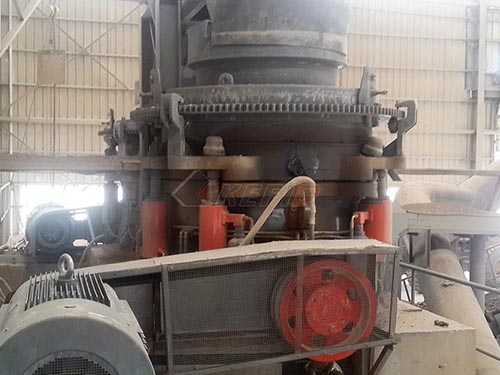
The research and development undertaken by a stone crusher plant fabricator spans several distinct but interconnected disciplines.
1. Material Science and Wear Resistance
One of the most persistent operational costs in a crushing plant is wear parts—jaw plates, cone liners, blow bars, and screen meshes. R&D efforts focus heavily on metallurgy. Fabricators are experimenting with high-chromium alloys, manganese steel composites, and ceramic inserts to extend the lifespan of these components.
Research is not merely about hardness; it is about balancing hardness with toughness to prevent catastrophic fracture. For example, the development of “smart” wear liners that have variable thickness profiles based on discrete element method (DEM) simulations allows for even wear distribution. This directly reduces downtime for maintenance, a critical metric for plant profitability.
2. Structural Dynamics and Modular Design
The fabrication of the plant structure itself is a subject of intense R&D. Traditional plants were welded on-site, a process that was labor-intensive and difficult to quality-control. Modern fabricators are pioneering modular designs. This involves research into bolted and pinned connections that can withstand the extreme dynamic loads of a vibrating screen or a jaw crusher without fatigue failure.
Finite Element Analysis (FEA) is now a standard tool in the R&D phase. Before a single piece of steel is cut, fabricators simulate stress points, vibration frequencies, and thermal expansion. This allows for the optimization of the chassis and frame, reducing steel weight without compromising structural integrity. A lighter plant reduces transportation costs and foundation requirements, offering a significant competitive advantage.
3. Process Optimization and Flow Simulation
A crusher plant is a system, not just a collection of machines. R&D focuses on the “flow” of material through the plant. Fabricators use advanced Discrete Element Method (DEM) software to simulate how rocks interact with each other and the machinery.
This research addresses bottlenecks. For instance, if the discharge conveyor is too narrow or the screen deck angle is incorrect, the entire plant’s capacity is throttled. R&D allows fabricators to test different configurations virtually. They can optimize the choke feeding of cone crushers, the stroke and speed of screens, and the transition points between conveyors to minimize spillage and dust generation. This holistic approach ensures that the plant meets specific gradation requirements while maximizing tons-per-hour throughput.
4. Automation and Digital Integration
The integration of the Internet of Things (IoT) into fabricated plants is a growing area of R&D. Fabricators are now designing plants with embedded sensors that monitor bearing temperatures, vibration levels, and motor loads. This data is transmitted to a central control system.
Research is focused on developing algorithms that predict maintenance needs before a failure occurs. For a fabricator, this means designing electrical panels and hydraulic systems that are “smart-ready.” The R&D challenge lies in creating a standardized interface that can accommodate different brands of crushers and sensors, ensuring the plant is future-proof.
5. Environmental Sustainability and Dust Control
Environmental regulations regarding silica dust and noise pollution are becoming stricter globally. Fabricators are investing in R&D for dust suppression systems that are integrated into the plant’s design rather than added as an afterthought. This includes research into enclosed conveyor transfer points, dry fog systems, and advanced baghouse filtration.
Furthermore, R&D is exploring the use of recycled materials in the fabrication of the plant itself. The concept of the “green plant” extends to the manufacturing process, where fabricators seek to reduce their carbon footprint through efficient cutting and welding techniques.
The R&D Process: From Prototype to Production
The R&D cycle for a stone crusher plant fabricator typically follows a structured path: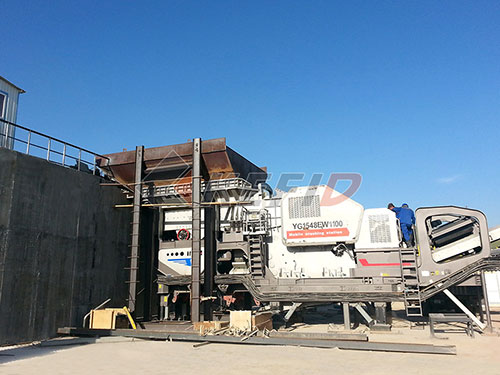
Challenges Facing Fabricator R&D
Despite the advancements, fabricators face significant hurdles. The cost of advanced simulation software and the need for highly skilled engineers are substantial barriers. There is a global shortage of metallurgists and mechanical engineers specializing in aggregate processing.
Additionally, the cyclical nature of the construction industry means R&D budgets can be volatile. During downturns, fabricators may cut R&D, which can lead to a lack of innovation when the market recovers. Furthermore, the rise of electric and hybrid drives presents a new frontier; fabricators must research how to integrate high-torque electric motors into plants that were traditionally diesel-hydraulic.
Case Study: The Mobile Jaw Plant
A pertinent example of fabricator R&D in action is the evolution of the mobile jaw crusher plant. Early models were heavy and difficult to maneuver. Through R&D, fabricators have developed track-mounted units with remote control movement. Research into hydraulic systems has allowed for the “self-loading” of the plant onto a trailer. The latest R&D focuses on hybrid drives that allow the plant to operate on electric power when near a grid, reducing diesel consumption and emissions. This required fabricators to research and develop new power management systems and cooling circuits.
Conclusion
The stone crusher plant fabricator is no longer just a builder; it is an innovator. The integration of R&D into the fabrication process is essential for meeting the demands of modern aggregate production. By focusing on material science, structural dynamics, process simulation, and digital integration, fabricators are creating plants that are more efficient, durable, and environmentally friendly.
The future of the industry lies in the ability of fabricators to collaborate with end-users and technology providers to push the boundaries of what is possible. As the demand for aggregates continues to rise, the R&D efforts of fabricators will be the cornerstone of a sustainable and productive supply chain. The companies that invest in research today will be the ones that define the standard for the crushing plants of tomorrow.
If you have any questions about our products, please feel free to contact us. We take all inquiries and suggestions very seriously.