
Title: Comprehensive Analysis of Export Crushing and Screening Equipment Pricing: Market Dynamics, Cost Drivers, and Global Trends
Introduction
The global market for crushing and screening equipment is a cornerstone of the mining, quarrying, construction, and recycling industries. As infrastructure development accelerates in emerging economies and mature markets focus on equipment modernization, the demand for high-performance crushers, screens, feeders, and conveyors continues to rise. For exporters, understanding the pricing landscape of this equipment is critical for competitive positioning, contract negotiation, and supply chain optimization. This article provides a detailed, professional, and objective examination of the factors influencing export prices for crushing and screening equipment, current market trends, regional price variations, and future outlook.
1. Overview of Crushing and Screening Equipment
Crushing and screening equipment encompasses a broad range of machinery designed to reduce large rocks, ore, or construction waste into smaller, manageable sizes, and to separate materials by particle size. Key categories include:
Export prices for these machines vary significantly based on type, capacity, brand, technology level, and compliance with international standards.
2. Key Factors Influencing Export Pricing
Export prices are not arbitrary; they are determined by a complex interplay of manufacturing costs, market demand, logistics, and regulatory requirements. The following are the primary drivers:
2.1 Raw Material and Manufacturing Costs
The cost of steel, cast iron, and wear-resistant alloys (e.g., manganese steel) directly impacts the base price of crushing equipment. In 2023–2024, global steel prices have experienced volatility due to fluctuating iron ore costs, energy prices, and supply chain disruptions. High-quality crushers require precision casting and machining, which adds to labor and overhead costs. For example, a heavy-duty jaw crusher with a capacity of 200–300 tons per hour may have a manufacturing cost ranging from $80,000 to $150,000, depending on the complexity of the design.
2.2 Technology and Automation Level
Modern crushing and screening equipment increasingly incorporates advanced automation, remote monitoring, and IoT capabilities. Features such as automatic adjustment of crusher settings, real-time performance analytics, and predictive maintenance systems raise the export price by 15–30% compared to conventional models. Exporters targeting developed markets (e.g., Europe, North America) often need to meet higher automation standards, which drives up the final price.
2.3 Brand Reputation and After-Sales Support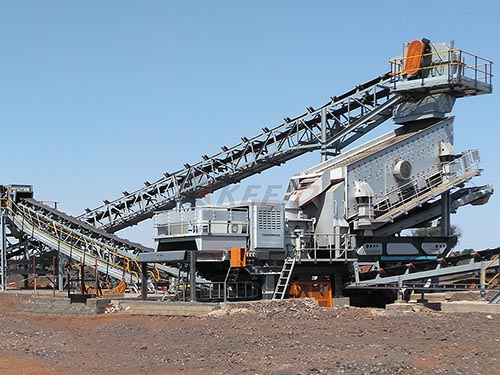
Established global brands such as Metso Outotec, Sandvik, Terex, and Kleemann command premium prices due to their proven reliability, extensive dealer networks, and comprehensive spare parts availability. In contrast, emerging manufacturers from China, India, and Turkey offer lower prices (often 30–50% less) but may face skepticism regarding durability and service support. Export prices reflect this brand premium, with a Sandvik mobile cone crusher potentially costing $400,000–$600,000, while a comparable Chinese model might be priced at $200,000–$350,000.
2.4 Capacity and Specifications
Larger capacity machines naturally command higher prices. For instance, a primary jaw crusher with a feed opening of 1,200 mm x 1,500 mm and a capacity of 500–800 tons per hour can cost $500,000–$1,000,000, whereas a smaller unit (600 mm x 900 mm) may be priced at $100,000–$200,000. Similarly, screening equipment prices increase with deck size, number of decks, and screening efficiency. High-frequency screens and banana screens are more expensive than conventional inclined screens.
2.5 Compliance with International Standards
Exporters must ensure their equipment meets the safety, environmental, and operational standards of the destination country. For example, CE certification (required for the European Union), ISO 9001 quality management, and OSHA compliance in the United States add costs for testing, documentation, and design modifications. Equipment destined for regions with strict emission regulations (e.g., Tier 4 Final engines in North America) will have higher prices due to advanced engine technology and exhaust after-treatment systems.
2.6 Logistics and Shipping Costs
Crushing and screening equipment is heavy and bulky, making freight a significant component of the export price. A single mobile crushing plant can weigh 40–80 tons, requiring specialized flat-rack containers or break-bulk shipping. In 2024, container shipping rates from Asia to Europe or North America have stabilized but remain higher than pre-pandemic levels. Additionally, inland transportation from the factory to the port, port handling fees, and insurance add 5–15% to the total export price.
2.7 Tariffs and Trade Policies
Import duties, anti-dumping measures, and trade agreements directly affect the landed cost for buyers. For example, the United States has imposed tariffs on certain Chinese-made machinery under Section 301, which can increase the final price by 10–25%. Conversely, free trade agreements (e.g., between the EU and Turkey) can reduce or eliminate tariffs, making Turkish equipment more competitive in European markets.
3. Regional Price Variations
Export prices differ significantly by region due to local manufacturing capabilities, labor costs, and market maturity.
3.1 Asia-Pacific (China, India, Japan, South Korea)
China is the largest exporter of crushing and screening equipment, offering a wide range of prices from budget to mid-range. A typical Chinese jaw crusher (PE series) for export may be priced at $15,000–$50,000 for small models, while larger units range from $80,000–$200,000. Indian manufacturers, such as Terex India and Puzzolana, offer competitive prices slightly higher than Chinese but with better perceived quality. Japanese and South Korean brands (e.g., Komatsu, Hitachi) are priced at a premium due to advanced engineering and reliability.
3.2 Europe (Germany, Sweden, Finland, UK)
European manufacturers are known for high-end, technologically advanced equipment. Prices are typically 20–40% higher than Asian equivalents. For example, a German-made mobile impact crusher may cost $350,000–$700,000, while a Swedish cone crusher can exceed $1 million for large-scale mining applications. European exporters benefit from strong brand loyalty and stringent quality standards.
3.3 North America (USA, Canada)
The North American market is dominated by domestic brands (e.g., Cedarapids, Eagle Crusher) and European imports. Prices are generally higher due to labor costs, regulatory compliance, and strong demand. A typical US-made portable crushing plant ranges from $400,000–$800,000. Imported equipment from Europe or Asia may be subject to additional tariffs, pushing prices further upward.
3.4 Middle East and Africa
These regions are major importers, with prices heavily influenced by shipping costs and local dealer markups. Buyers often prefer lower-cost Asian equipment, but demand for premium brands exists in large-scale mining projects. Export prices to Africa, for instance, may include a 10–20% premium for logistics and risk mitigation.
3.5 Latin America
Countries like Brazil, Chile, and Peru have growing mining sectors. Import prices are affected by high import duties (often 10–20%) and complex customs procedures. Chinese and Indian equipment is popular due to cost-effectiveness, while European brands are used in high-value copper and gold mines.
4. Current Market Trends and Price Outlook (2024–2025)
4.1 Rising Demand for Mobile Equipment
The shift towards mobile crushing and screening plants is accelerating, driven by the need for flexibility in construction and recycling projects. Mobile units command higher prices (20–30% more than stationary equivalents) but offer lower installation costs. Exporters are focusing on hybrid and electric-powered mobile plants to meet environmental regulations, which further increases prices.
4.2 Impact of Raw Material Costs
Steel prices are expected to remain volatile due to global economic uncertainty and energy transition. This will keep manufacturing costs elevated, leading to a 5–10% annual increase in export prices for heavy machinery. However, competition from low-cost manufacturers may moderate price hikes in the mid-range segment.
4.3 Digitalization and Smart Equipment
The integration of digital technologies is becoming a standard expectation. Equipment with remote diagnostics, automated calibration, and fleet management software will see price premiums of 10–20%. Exporters who fail to offer these features may lose market share in developed regions.
4.4 Sustainability and Circular Economy
Recycling equipment, particularly for construction and demolition waste, is gaining traction. Prices for specialized impact crushers and screens designed for recycling are 15–25% higher than conventional models due to additional wear protection and material handling features.
4.5 Trade War and Geopolitical Risks
Ongoing trade tensions between the US and China, as well as sanctions on Russia, are reshaping export flows. Chinese exporters are increasingly targeting Southeast Asia, Africa, and Latin America, while European and American manufacturers focus on domestic and allied markets. This fragmentation may lead to price disparities and regional shortages.
5. Practical Guidance for Exporters and Buyers
For Exporters:
For Buyers:
6. Conclusion
Export prices for crushing and screening equipment are shaped by a multitude of factors, from raw material costs and technological sophistication to regional trade policies and logistics. While premium brands from Europe and North America command high prices due to reliability and innovation, Asian manufacturers offer cost-effective alternatives that are gaining market share. The market is evolving towards mobile, digital, and sustainable solutions, which will continue to influence pricing dynamics. For both exporters and buyers, a strategic understanding of these factors is essential for successful transactions in this competitive global industry. As infrastructure and mining activities expand worldwide, the demand for efficient crushing and screening equipment will remain robust, with prices reflecting the balance between quality, innovation, and affordability.
If you have any questions about our products, please feel free to contact us. We take all inquiries and suggestions very seriously.