Stone Crusher Machine Processing Plant Customization: Engineering Solutions for Diverse Material Processing Needs
In the modern mining, quarrying, and construction industries, the demand for high-quality aggregates, crushed stone, and manufactured sand has never been greater. However, the raw materials—ranging from hard granite and basalt to softer limestone, river gravel, and recycled concrete—vary significantly in hardness, abrasiveness, moisture content, and particle shape. A one-size-fits-all approach to crushing is rarely optimal. This is where stone crusher machine processing plant customization becomes a critical engineering discipline. Customization is not merely about selecting a different crusher model; it involves a holistic, data-driven design process that tailors every component—from the primary feeder to the final screening deck—to the specific material characteristics, production targets, site constraints, and end-product specifications of a given project.
This article provides a comprehensive, professional, and objective examination of stone crusher plant customization. It will cover the fundamental principles, key customization parameters, common plant configurations, the role of automation, economic considerations, and future trends in modular and mobile custom plants.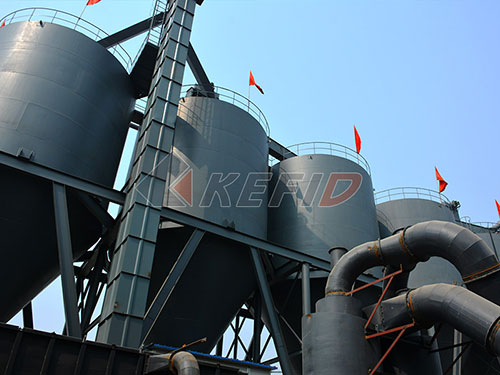
1. The Foundation of Customization: Material Characterization and Site Analysis
Before any equipment is selected, a thorough analysis of the raw material is mandatory. This is the single most important step in plant customization. Key material properties include:
- Abrasiveness (Abrasion Index): Materials like quartzite, granite, and basalt have high silica content and cause significant wear on crusher liners, screens, and conveyors. A plant processing such materials requires heavy-duty, wear-resistant components, often with replaceable liners made of manganese steel or chrome-moly alloys. Conversely, limestone or dolomite, with lower abrasion, allows for lighter-duty, more cost-effective designs.
- Compressive Strength (UCS): The unconfined compressive strength dictates the type of crusher required. For high-strength rock (>300 MPa), a jaw crusher or gyratory crusher is typically used for primary reduction. For medium-strength rock (100-300 MPa), a cone crusher or impact crusher may be suitable. For soft, friable materials, a hammer mill or impactor is often preferred.
- Moisture Content and Clay Content: High moisture or sticky clay can cause blinding of screens, clogging of crusher chambers, and material buildup in chutes and hoppers. Customization here may involve the addition of vibrating grizzly feeders with adjustable bar spacing to scalp out fines, the use of self-cleaning screen media (e.g., polyurethane or rubber), and the incorporation of spray bars or washing systems.
- Feed Size Distribution (F80): The maximum feed size determines the opening of the primary crusher and the capacity of the feeder. A plant designed for run-of-mine (ROM) material with boulders up to 1 meter must have a robust primary jaw crusher with a large feed opening, whereas a plant processing pre-screened gravel may require a smaller, more efficient secondary crusher.
Site-specific factors also drive customization:
- Available Space and Topography: A plant on a flat, open site can be designed as a linear, horizontal layout. On a steep hillside, a multi-level, terraced design may be necessary to utilize gravity flow and reduce conveyor lengths. For confined urban or industrial sites, a compact, vertical or semi-mobile plant is often required.
- Environmental Regulations: Stringent noise and dust emission standards necessitate the integration of dust suppression systems (water sprays, misting cannons, baghouse filters) and soundproof enclosures. Customization may also include closed-loop water recycling systems for washing plants.
- Power Availability: In remote locations with limited grid power, the plant may need to be designed for diesel-electric hybrid drives or include a dedicated generator set with appropriate load management.
2. Key Customization Parameters for the Crushing Circuit
The core of any stone processing plant is the crushing circuit. Customization here involves selecting the right combination of crushers and configuring their settings.
a) Primary Crushing Stage
The primary crusher is the workhorse. Customization options include:
- Jaw Crusher: Adjustable discharge setting (CSS) to control product size. Options for single-toggle (lighter, more efficient) or double-toggle (heavier, more robust) designs. For high-abrasion materials, a deep-chamber jaw with curved jaw plates is preferred.
- Impact Crusher (Primary): Used for softer, less abrasive materials. Customization includes rotor design (solid vs. open), number of blow bars, and apron adjustment. Impact crushers produce a more cubical product but have higher wear costs.
- Gyratory Crusher: For very high capacity (thousands of tons per hour) and extremely hard rock. Customization involves the mantle and concave profile, eccentric throw, and hydraulic adjustment systems.
b) Secondary and Tertiary Crushing Stages
The secondary and tertiary stages are where the final product shape and size distribution are refined.
- Cone Crusher: The most common choice for hard rock secondary/tertiary crushing. Customization includes:
- Chamber Profile: Short-head (fine crushing) vs. standard (coarse crushing). The chamber can be tailored for specific feed gradation.
- Eccentric Throw: A larger throw increases reduction ratio but reduces capacity; a smaller throw produces finer product.
- Hydraulic Setting Adjustment (HSA): Allows for remote CSS adjustment and tramp iron release, critical for automated plants.
- Vertical Shaft Impact (VSI) Crusher: Used for shaping and producing manufactured sand. Customization includes rotor speed (tip velocity), rotor type (open vs. closed), and cascade ratio (material flow through the rotor vs. around it). A VSI can be configured for rock-on-rock (low wear, high shaping) or rock-on-anvil (higher reduction, higher wear).
- Horizontal Shaft Impact (HSI) Crusher: For secondary/tertiary crushing of medium-hard materials. Customization includes the number of breaker plates, rotor design, and apron gap settings.
c) Screening and Classification
Screens are not passive components; they are active classifiers. Customization includes:
- Screen Type: Vibrating inclined screens (most common), horizontal screens (for limited headroom), banana screens (for high capacity), and dewatering screens (for wet processing).
- Screen Media: Woven wire mesh (low cost, high open area), polyurethane panels (wear-resistant, self-cleaning), rubber mats (noise reduction, impact resistance), and harp wire (for sticky materials).
- Number of Decks: Typically 2 or 3 decks for producing multiple product sizes (e.g., 0-5mm, 5-20mm, 20-40mm). Customization can include a scalping deck to remove oversize before secondary crushing.
3. Plant Layout and Configuration Customization
The physical arrangement of equipment is a critical customization decision. Common configurations include:
- Stationary Plants: Fixed concrete foundations. Ideal for long-term, high-capacity operations. Customization involves optimizing the flow path to minimize conveyor lengths and transfer points, reducing maintenance access issues, and integrating a central control room.
- Mobile Plants: Track-mounted or wheel-mounted units. Customization focuses on mobility: hydraulic folding conveyors, quick-release crusher mounts, and integrated dust control. Mobile plants are often customized for specific applications, such as a mobile jaw + cone combination for hard rock or a mobile impactor for recycling.
- Semi-Mobile Plants: A hybrid approach where the primary crusher is mobile (to follow the mining face) while the secondary/tertiary stages are stationary. This requires customized conveyor systems and transfer stations.
- Modular Plants: Pre-engineered, containerized modules that can be shipped, assembled, and disassembled quickly. Customization here is about selecting standard modules (e.g., a jaw module, a cone module, a screen module) and connecting them with customized chutes, conveyors, and electrical systems. Modular plants offer rapid deployment and scalability.
4. Automation and Control System Customization
Modern stone crusher plants are increasingly automated. Customization of the control system is essential for optimizing performance, reducing downtime, and ensuring safety.
- PLC-Based Control: A programmable logic controller (PLC) manages the start-up sequence, monitors motor currents, bearing temperatures, and oil pressures. Customization includes setting alarm thresholds, interlock logic (e.g., if the conveyor stops, the crusher above it stops), and emergency shutdown protocols.
- Variable Frequency Drives (VFDs): VFDs on conveyors and feeders allow for precise speed control, reducing energy consumption and wear. On crushers, VFDs can control the feed rate to maintain a constant crusher load (choke feeding), maximizing throughput and product quality.
- Remote Monitoring and Diagnostics: Customized SCADA (Supervisory Control and Data Acquisition) systems provide real-time data on production rates, power consumption, wear part life, and material flow. This enables predictive maintenance and remote troubleshooting.
- Load Management: For plants with multiple crushers and screens, the control system can automatically adjust the feed rate to balance the load across all stages, preventing bottlenecks and overloading.
5. Economic and Operational Considerations in Customization
Customization is an investment that must be justified by operational benefits.
- Total Cost of Ownership (TCO): A customized plant may have a higher initial capital expenditure (CAPEX) than a standard off-the-shelf plant. However, the lower operating expenditure (OPEX) from reduced wear, lower energy consumption, and higher uptime often results in a lower TCO over the plant’s life. For example, a plant designed with a specific chamber profile for a given material can reduce liner wear by 20-30%.
- Product Quality and Market Value: Customization directly impacts product quality. A plant designed to produce a high-cubicity, well-graded aggregate for asphalt or concrete can command a premium price in the market. A VSI crusher configured for sand production can yield a manufactured sand that meets strict gradation and shape specifications, reducing the need for natural river sand.
- Scalability and Future Expansion: A well-designed custom plant can be easily expanded. For instance, a primary jaw crusher may be oversized initially to allow for future addition of a secondary cone crusher and a third screen. The conveyor system and electrical infrastructure should be designed with spare capacity.
- Lead Time and Engineering Effort: Customization requires significant engineering time. Detailed drawings, 3D models, and finite element analysis (FEA) for structural components are necessary. This adds to the project lead time. Clients must balance the desire for a perfect fit with the need for timely delivery.
6. Case Study: Customization for a High-Silica Granite Quarry
Consider a quarry in a region with extremely hard, abrasive granite (UCS > 350 MPa, silica content > 70%). A standard plant would suffer from rapid wear and frequent downtime. A customized solution would include:
- Primary: A heavy-duty jaw crusher with a deep chamber, manganese steel jaw plates, and a hydraulic toggle system for quick CSS adjustment.
- Secondary: A robust cone crusher with a coarse chamber, a large eccentric throw, and a hydraulic adjustment system. The crusher would be equipped with a dedicated lubrication and cooling system to handle high heat generation.
- Tertiary: A VSI crusher with a rock-on-rock configuration to minimize wear and maximize cubicity. The rotor would be made of high-chrome alloy, and the cascade ratio would be optimized for the specific feed size.
- Screens: All screens would use polyurethane panels with a high open area to handle the abrasive fines. The screen decks would be inclined at a steeper angle to prevent blinding.
- Conveyors: Belt speeds would be reduced to minimize wear, and impact idlers would be installed at all loading points. A magnetic separator would be placed before the secondary crusher to remove any tramp iron.
- Dust Control: A dry fog dust suppression system would be installed at all transfer points and crusher discharge points, as water-based systems could cause material handling issues in cold climates.
7. Conclusion: The Future of Customization
Stone crusher machine processing plant customization is not a luxury; it is a necessity for achieving optimal performance, profitability, and sustainability in the aggregates industry. As material sources become more variable and environmental regulations tighten, the demand for tailored solutions will only increase. The future lies in digital twin technology, where a virtual model of the plant is created and simulated before any steel is cut. This allows for virtual testing of different crusher settings, screen configurations, and feed rates, ensuring that the final custom plant operates at peak efficiency from day one.
Furthermore, the trend toward modular and containerized plants will enable faster, more flexible customization. Clients will be able to select from a library of pre-engineered modules and have them configured for their specific material and site conditions, combining the benefits of standardization with the precision of customization.
In summary, a well-customized stone crusher plant is a finely tuned machine that transforms raw rock into valuable, marketable products with maximum efficiency, minimum waste, and lowest possible operating cost. It is the result of deep engineering expertise, rigorous material testing, and a commitment to understanding the unique challenges of each project. For any serious operator, investing in professional plant customization is the single most effective way to achieve a competitive edge in the demanding world of mineral processing.
